

Cognac has been a staple of many well-stocked drinks cabinets for generations, but how much do we know about the sumptuous spirit, asks Sam Huff? We spent some time with Delamain Cognac, learning more about the house, the spirit and, most importantly, tasting some of the Cognacs lovingly cared for in its Jarnac cellars.
The house of Delamain has been producing Cognac for almost two hundred years. It was founded in 1748 by James Delamain, an Irish immigrant to France. In 2017 it became part of the Bollinger family, but James’s descendant Charles Braastad still plays a significant role as managing director, and his passion for the house and the spirit it produces is a joy to see.
Jarnac is a commune in southwestern France which has been the home of Delamain Cognac since it was first founded. The house sits cheek by jowl with numerous other producers, including Courvoisier and Thomas Hine & Co, making it a perfect place to visit for the Cognac connoisseur. Delamain is keen to encourage curiosity in Cognac, and in March 2020, began building new offices and a visitor centre to enable it to share the wisdom and knowledge gained across the generations of the house.
Just days after Delamain put the plan into action, the world went into a COVID-19-enforced lockdown. As a result, the work took two years to complete, but the doors finally opened in April 2022, with the first tourists welcomed in at the beginning of August.
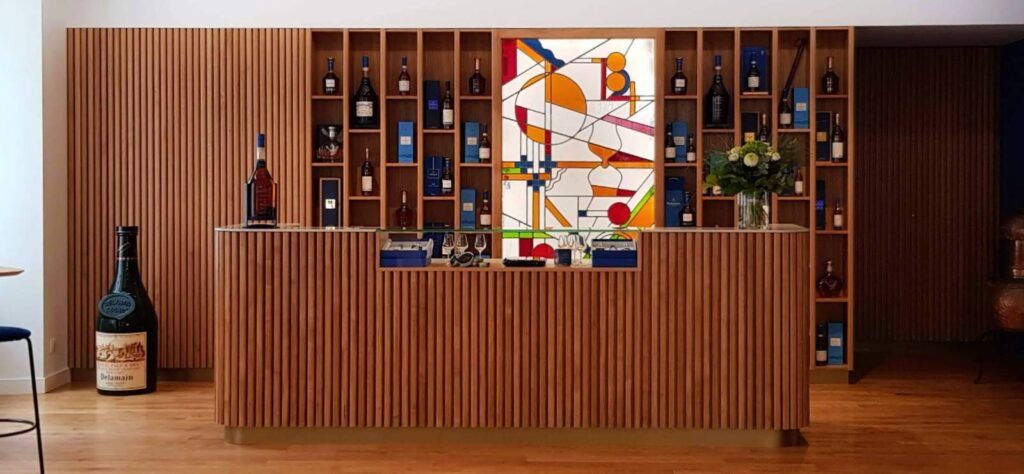
The new building provides an elegant backdrop against which to welcome guests and provide information about the house and host tasting sessions. The flexibility within the new space will also allow Delamain to help visitors explore the pairing of its spirits with local foods – something which Charles is very passionate about – such as the exquisite matching of L’Eguille oysters with XO Cognac. All this takes place within a stone’s throw of the cellars, so visitors can see for themselves the love and care that goes into each bottle of Cognac.
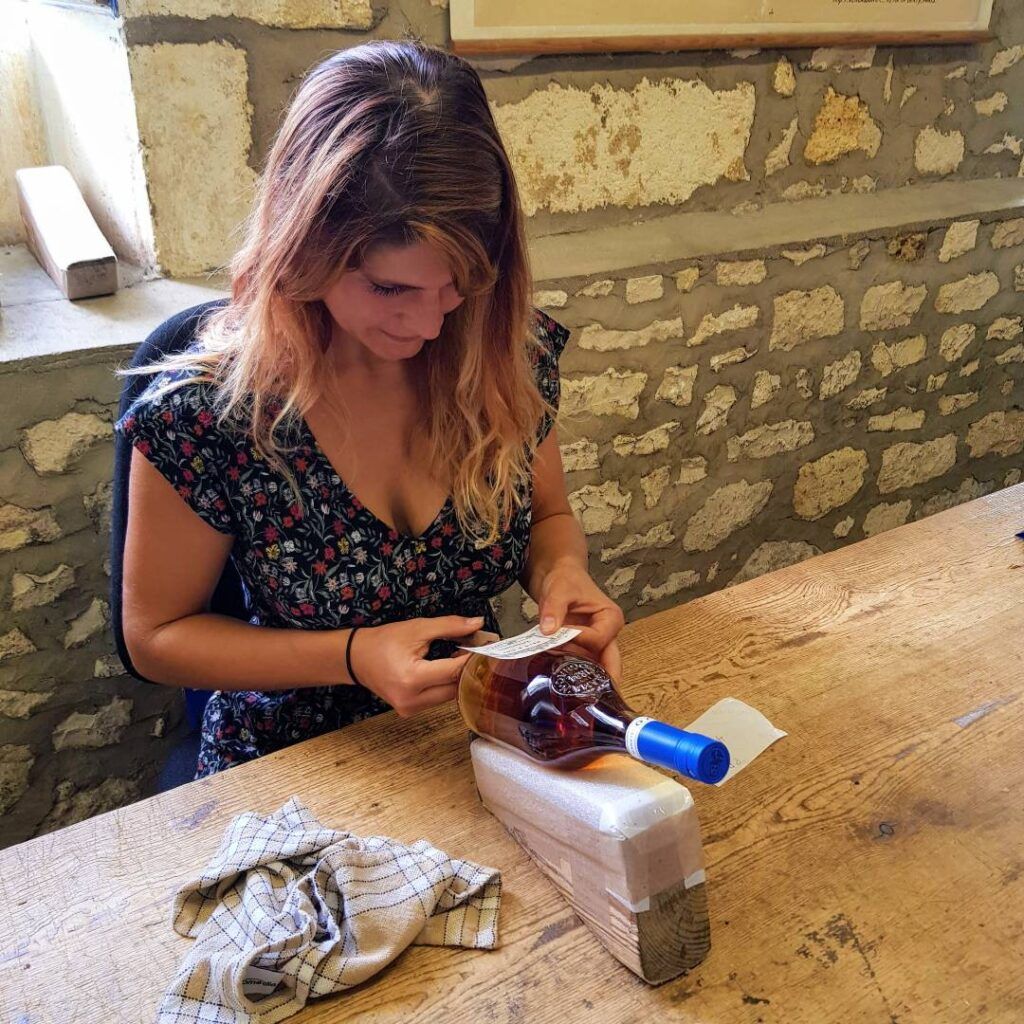
Delamain has a family feel. Everyone, from managing director Charles downward, pitches in to ensure the smooth running of the operation. Nothing is outsourced within the process, and every bottle is labelled and packed in Jarnac before being shipped. Even though production is relatively small at around 100,000 bottles per year, that’s no mean feat.
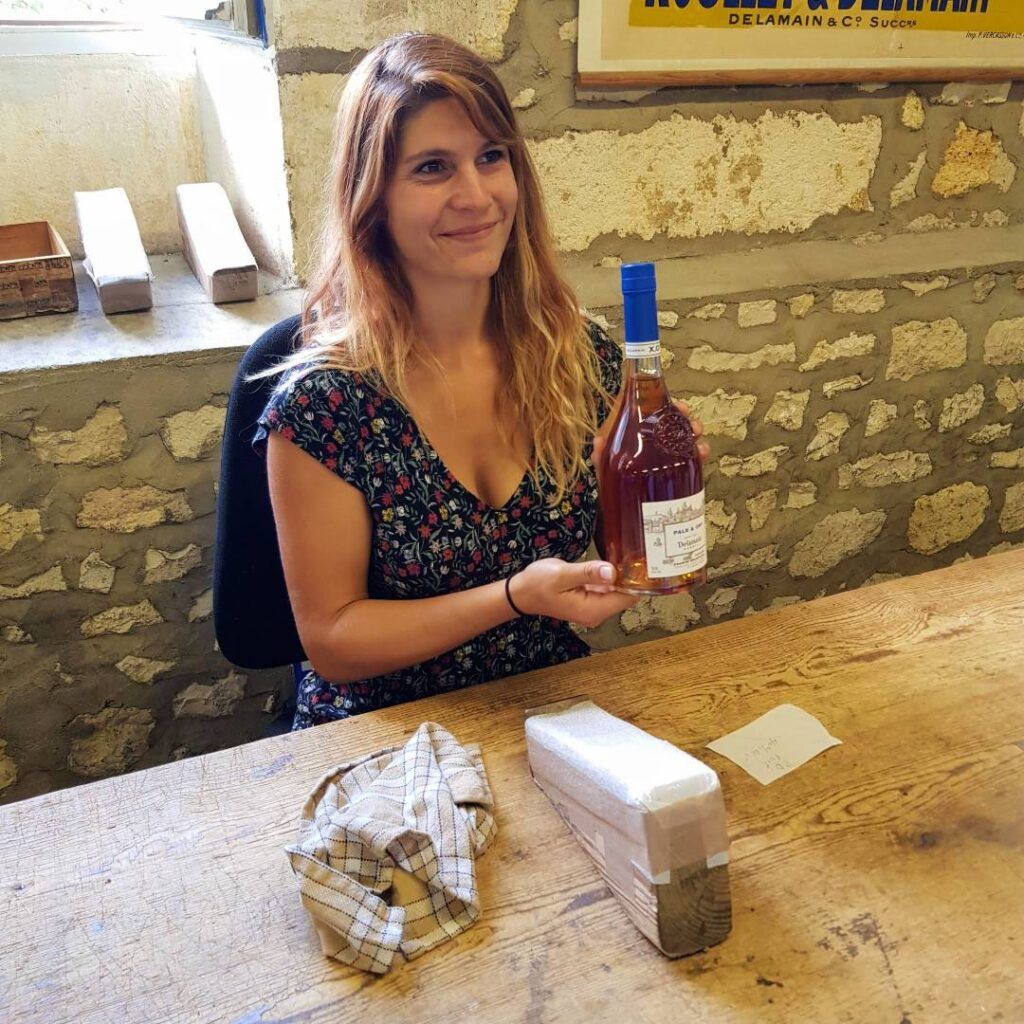
Being a smaller house, Delamain will have to work a little harder to stamp its name on the tourist trail than the big four houses of Courvoisier, Hennessy, Remy Martin and Martell. Still, the offering feels much more intimate and personal than the corporate-led producers. Delamain is working with tourist associations to raise its profile and aims to, with the help of the visitor centre, attract Cognac lovers and curious tourists to the picturesque town.
The Spirit
The spirit, like most others, begins life as a white spirit extracted from grapes in the local region. In 2019, Delamain began cultivating and working its own vineyards so that it won’t need to rely on local growers for fruit production — the number of independent growers is slowly decreasing as larger growers buy them out. Just 20 years ago, there were in the region of 8,000 growers, but today just 4,000 growers are supplying around 30 houses. With more than 90% of the fruit being snapped up by the big four houses, Delamain securing its own supply might be the right idea.
Climate change is also having an impact, particularly on the older grape varieties. Having control of its own vineyards will allow Delamain to react to changes more quickly, working with new, hardier varieties that can withstand the highs and lows more easily. Luckily, the soil around Jarnac is very chalky, so the impact of low rainfall is felt less by these more ageing, deep-rooted vines. At the time of our visit, the region hadn’t seen a drop of rain in more than two months, yet the vines were still green and happy, with no reduction in yield.
Delamain currently has 21 hectares of vines established to produce its own fruit. It doesn’t have its own distillery, as the relatively small output doesn’t make that economically viable, so working with smaller, independent distillers to create the eau de vie is key to the success of Delamain. Good relationships with its partners are an essential part of the process, and traceability of what goes into the spirit is also paramount to producing a quality product.
As well as producing and blending young Cognac, Delamain also procures casks of rare and aged Cognacs from other houses, collectors, and even friends and family, to create special blends. It can be difficult to source and buy these spirits as a smaller house, but treasures are unearthed in cellars now and again. It’s because of the longstanding reputation of Delamain that these are offered to the house; recently, a cask of 1926 Cognac was found through contacts of the family and secured by Delamain for future blends.

The colour of Cognac, as with other darker spirits, mostly comes from the wood of the barrel. Unlike whisky, which is aged in wine barrels, Cognac is only ever aged in Cognac barrels. The older the barrel, the more colour has been extracted from the wood, so the paler the Cognac becomes. Each barrel used will give a slightly different flavour to the spirit, and a good cellar master can determine the quality of the barrel and how well it will flavour the liquor just by smelling it. Barrels are regularly traded second-hand, and this skill is essential to the success of the Cognac produced using them. After 70 years or so, the barrel will end its useful life and be discarded. Second-hand barrels are becoming harder to source, so new barrels are being made and put to use. Before the new barrels can be used for Cognac, they are filled with water and rinsed to prepare the wood to receive the spirit. A younger barrel will provide different flavours to the Cognac, but with careful blending by a skilled cellar master, it will still create something special.
Not all of the colour is naturally derived from the barrel, though. If it is deemed to be a little too pale, but the ageing process is completed and the flavour profile is as the cellar master wants it, then a small quantity of colouring, E150A, is added to enhance the caramel tone.
It isn’t only the colour that is extracted from the barrel either — the sweetness of the Cognac is drawn from the fibres of the wood, not from the grapes. Most Cognac still has some sugar added to enhance the flavour, but in 2020, the 100th anniversary of the production of Pale and Dry, Delamain’s most produced spirit, the house made the choice to stop this process. By increasing the ABV of the blend from 40% to 42%, there is no need to add more sugar. The sweetness of the spirit now relies solely on the natural sugars produced during the distillation and ageing process. After some comprehensive tasting, I can tell you that the spirit tastes as good as ever!

The Cellars
Two types of cellar are used in the ageing of spirits: a damp cellar and a dry cellar.
These are pretty much as they sound. A damp cellar has plenty of moisture in the air so that the spirit will mature more quickly, with less lost to evaporation. The finished spirit is also likely to have a higher alcohol content, which is not always desired, so it’s carefully monitored as it ages. A dry cellar, like those at Delamain, allows the spirit to mature more slowly and, although there is a greater loss to evaporation in a dry cellar, Delamain believes there is a much more significant gain in quality. There are subtle flavour differences due to the cellar type, too, with a damp cellar leading to a softer, rounded flavour, while a dry cellar tends towards a harder, sharper flavour overall.
For the last 30 years, the cellars of Delamain Cognac have been under the watchful eye of Dominique Touteau. For 10 years before becoming cellar master, Dominique worked alongside his predecessor to hone his skills — and nose — before taking the reins.

Delamain sets itself apart from other houses as it still uses many traditional methods within its processes, which the larger producers have long since discarded. Once the distillation process is completed, the spirit is placed in large wooden vats. To lower the ABV levels, a mixture of Cognac and water — known as faibles — is gradually mixed into the spirit. Delamain produces a light Cognac that doesn’t mix with water in the same way a heavier version of the spirit does, so it is essential that this blending is done slowly. Here, the skill of the cellar master comes to the fore, ensuring that the right amount of water is added at the right speed. The process takes time, with the spirit spending as long as 18 months in the vat as the alcohol content is reduced. When blending Pale and Dry, which makes up 80% of the production at Delamain, 60 different spirits are melded together during the time in the vat, emerging at the end of the process as one unified Cognac.
A similar process is used with the vintage spirit, but on a much smaller scale. Here, demineralised water is added to the cask, one glass at a time. It is a slow, methodical process that requires time and effort. Delamain is the only house still using this exacting and costly method, but the consistency that it brings is well worth the effort.

There are now only three houses producing vintage Cognac, of which Delamain is one. A vintage Cognac is a pure liquor, not a blend, and very strictly controlled to ensure that is the case. The vintage cellar at Delamain was started in the 1960s and is kept separate from the main cellar, under lock and key. This rare and valuable commodity is much sought after and a great point of pride for Delamain and Dominique, the cellar master.
If you are a Cognac lover or want to experience something other than the vineyards of Bordeaux on your next trip to France, visit Jarnac. Spend a little time exploring the narrow, cobbled streets and follow the beautiful, intoxicating aroma to the cellars of Delamain Cognac. Cheers!

- Gordon & MacPhail launches the Anniversary Releases collection - 24 September 2026
- Blackstone 36” Griddle with Air Fryer review: Outdoor Cooking Made Easy - 11 September 2026
- VIP Ski Confidence Week: Banishing the nerves and putting the fun back into skiing - 10 September 2026