

When family and friends discovered that I was due to travel to Belgium and Germany relying solely on public transport — predominantly rail — they could hardly contain their mirth. “You’ll be bored witless” (I’ve edited slightly) came one response. “Why would you use trains when the flight is less than one hour?” enquired my undertaker. However, I quickly pointed out that our journey would avoid airport departure queues, surly security staff, traffic jams, lost luggage, delayed takeoffs, turbulence — relax with a book and arrive in the centre of Bruges just in time for a beer. Or ten. Suddenly, the pitch looked a lot more attractive — smugness had been replaced with jealousy.
It’s a sign of the times that the ultimate (and often unobtainable) personal luxury is simply slowing up the pace for a while. Sat in the First Class lounge at Cardiff Central Station, I anticipated a prolonged but extremely pleasant trip to Belgium’s fairy tale city. Yet, at this point, readers may expect a well-worn diatribe about the horrors of using British public transport, but the journey from Cardiff to London Paddington was one of the highlights of our trip. GWR, the firm that runs the South Wales to London franchise, has recently invested in a fleet of Hitachi high-speed trains — these are a massive improvement over the now antiquated diesel locomotives introduced in the 1970s. Enjoying the pampering comfort of the GWR First Class carriage, we arrived earlier than expected with time to spare.
Similarly, after the Eurostar got us safely and comfortably to Belgium in just over two hours, I wondered why anyone would ever bother flying to Northern Europe. Availing ourselves to the very plush Business Premier lounge at London St Pancras International, it was almost too easy. Depart on time, enjoy a pleasant meal, read for a bit and voila — you’re in Brussels. It’s just another short rail transfer to Bruges (55 minutes), so that’s Cardiff to Bruges in just over five hours, travelling in relaxed, pampering comfort. I’d take that over a short flight any day.

And so we found ourselves in glorious, late-afternoon sunshine in the centre of Belgium’s most picturesque city. Transfixed by our first glimpses of this impossibly well-preserved medieval gem, our main priority was quickly checking into the Hotel Dukes’ Palace, Bruges’ most luxurious hotel. By now approaching 6pm, we delayed our exploration of the hotel, and indeed Bruges, instead heading straight to the hotel’s inviting bar and restaurant. The bar is beautiful, theatrical, and relaxed: it makes you feel good just to be there. It serves a full range of drinks and small bites, and the prices are admirably democratic. Warmly welcomed by the effortlessly charming staff, we imbibed copious amounts of Belgian beer and enjoyed a light supper before heading to bed.
We awoke early, the sun shining brightly through our French doors, which I had insisted we leave open during the night. Awoken by the sounds of cathedral bells, we rushed to our terrace to experience our first proper glimpse of Bruges in the early morning sunlight. The streets below were already filling up with students, tourists, suits and aimless amblers. However, the smell of patisserie wafting through our room is my enduring memory of Bruges. Our abode was typical of the hotel’s finer bedrooms (110 in total, including five family rooms and 17 suites), the best of which boast generous balconies. However, regardless of the view factor, all the rooms are furnished to the highest quality standard with luxury fabrics, marble bathrooms and insanely comfortable beds.
After a sumptuous breakfast, we take time to explore the fabled city of Bruges properly. And you’ll have to forgive me at this point because Bruges really is a place that tests a writer’s ability to temper the use of endless cliches. You instantly reach for chocolate box, idyllic, dreamy, and captivating, before quickly realising that millions of writers have done so before you. Instead, let me say that Bruges is a paradise for the aimless ambler. Picturesque cobbled lanes and canals link photogenic market squares lined with soaring towers, historical churches and lane after lane of old whitewashed almshouses. It is almost irritatingly perfect. The centre is also very compact — an afternoon is enough to do Bruges justice. I would add that every person we encountered warned us against returning in summer: “You’ll be sharing Bruges with a constant, overwhelming stream of annoying tourists in the medieval quarter,” they chorused. “Tourists like us,” I muttered guiltily.
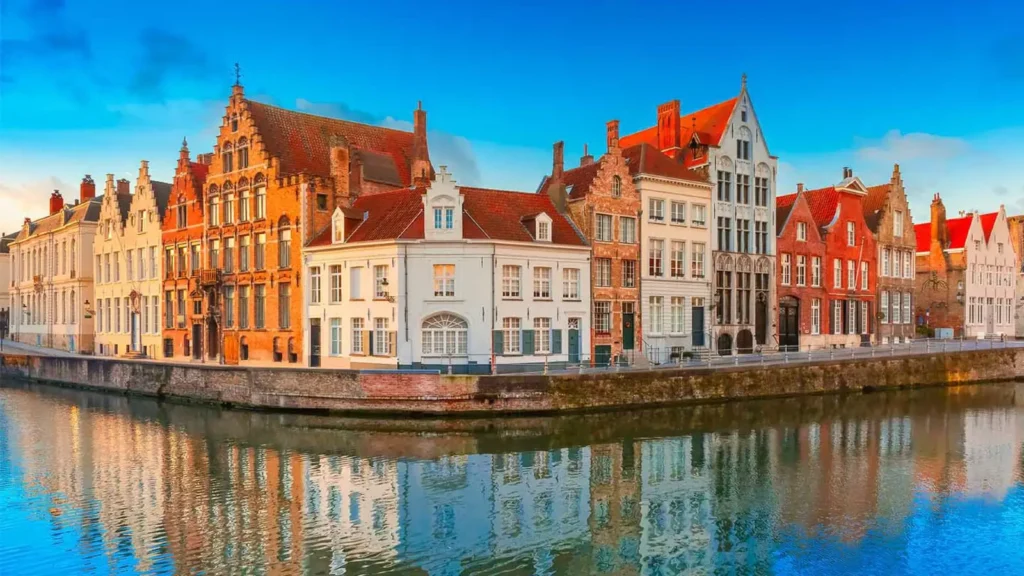
Also, it pays to avoid the weekend — the best times to visit are in spring, when daffodils carpet the tranquil courtyard of the historic Begijnhof retreat, or outside of Christmas in winter, when you’ll have the magnificent, if icy, town almost all to yourself.
After a leisurely lunch, we departed for the next leg of our sojourn — Cologne. A mere two hours by train from Brussels, Cologne is perhaps Europe’s most hedonistic and dynamic city, giving even Berlin a run for its money. Initially founded by the Romans, Cologne (or Köln, locally) is one of Germany’s oldest settlements and is today its fourth-largest city. All and sundry head to the Kölner Dom, the city’s geographical and spiritual heart, and it’s well worth it. With its soaring twin spires, Germany’s largest cathedral is jam-packed with art and treasures. For an exercise fix, climb the 533 steps up the Dom’s south tower to the base of the steeple that dwarfed all European buildings until the Eiffel Tower was built.
But while the Kölner Dom is globally renowned for offering visitors a glorious day’s worth of cultural enrichment, Cologne’s legendary nightlife is what enticed us to visit. After checking into the very comfortable — and ideally situated — Holiday Inn Express, we headed straight to the Altstadt (old town), which buzzed with boisterous revellers sipping beer and Riesling from local vineyards. What struck us the most was how relaxed and friendly everyone seemed — the city’s inhabitants are known for their liberalism and joie de vivre; it rather contradicted the still widespread perception of Germans as humourless workaholics whose only pleasure in life revolves around the office. Germans may work hard, but they play damn hard, too — nowhere is this more apparent than in Cologne.
Of course, in a city where a love of partying is only rivalled by Berlin, it pays to be discerning. Whatever you feel like — you can have it in Cologne. It boasts more bars per capita than any other German city, ranging from grungy to chic, and places best avoided altogether. As we discovered over the weekend, the Altstadt remains the epicentre of nightlife in Cologne; however, in recent years, it has been superseded by trendier less touristy districts. Nevertheless, it remains one of the best places to enjoy Cologne’s inimitable beer halls or “Brauhaus.” Sampling Kölsch — a light, hoppy beer served cool in skinny, straight glasses that only hold 0.2l — is an obligatory part of any trip to Cologne. Just remember the etiquette — in traditional Cologne beer halls, you don’t order beer so much as subscribe; the servers will keep topping you up until you place a beer mat on top of your glass.
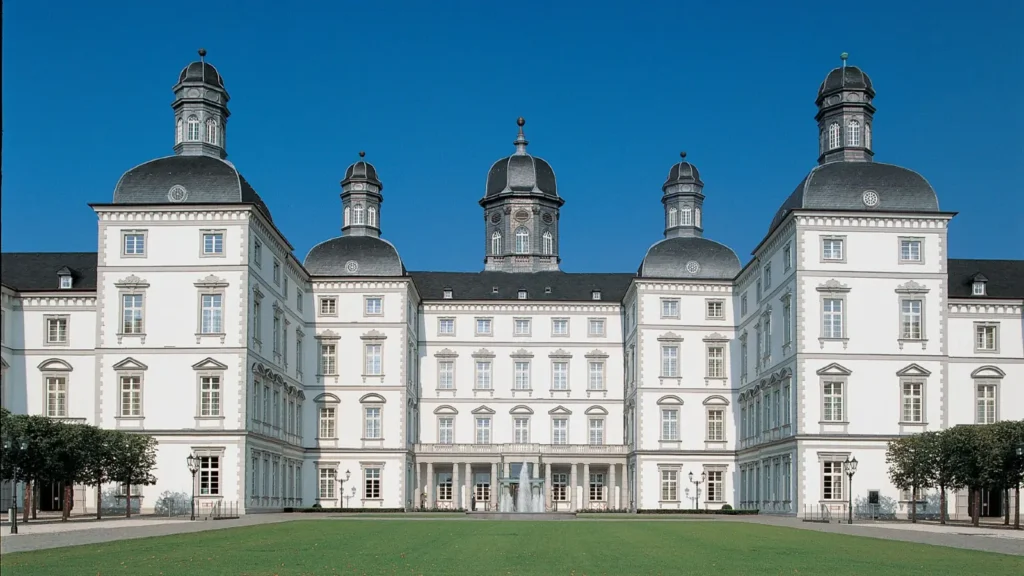
However, head to the leafy satellite town of Bensberg for something totally different. Easily accessible by local train, it houses one of Germany’s finest country hotels — Althoff Grandhotel Schloss Bensberg. We spent our second night at this utterly gorgeous and tranquil hotel, a million miles away from the frenetic energy of the old town — a lovely counterpoint. Set in a grand Baroque palace with scenic gardens, this five-star hotel in Bergisch Gladbach even boasts views of Cologne’s Cathedral. After a painless check-in, we were taken to one of the hotel’s signature suites — a magnificent ode to decadence. Luxury doesn’t do it justice — adorned with antique furniture and more modern pieces, its grandiose air is offset by a vibrant colour scheme and plenty of rich fabrics, not to mention a gigantic marble bathroom and separate living area. Yet what really sets the Grandhotel apart is not so much the rooms and amenities — which are excellent — but the service, which was unfailingly gracious through.
Nevertheless, the hotel does an impeccable job of ensuring you never want to leave. So we didn’t. There are simply too many diversions: lavish spa, two restaurants — including a three-Michelin star extravaganza — numerous bars and expansive grounds. The public areas are the epitome of a stately dream: high ceilings, museum-quality antiques and seemingly endless corridors. But despite the hotel’s grand origins, it feels surprisingly relaxed and informal; there isn’t a hint of pretension about the place. Hard to believe, I know.
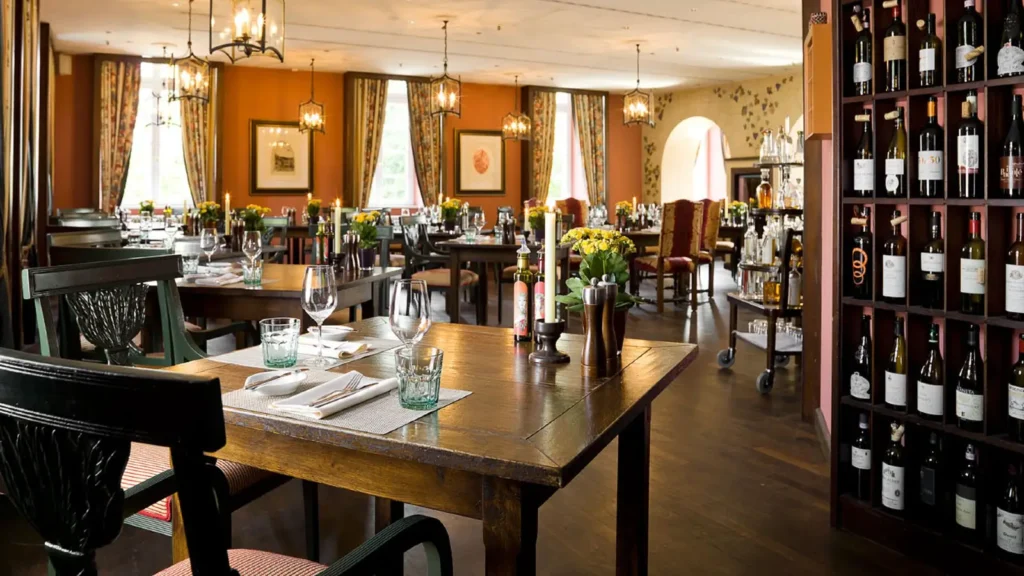
Dinner was at the Trattoria Enoteca restaurant, the more informal of the hotel’s dining choices. A few glasses of Prosecco later, we enjoyed a mouthwatering selection of dishes from across Italy in portions that were the antitheses to irritating, undernourished nouvelle cuisine. Utilising local produce as much as possible, the cooking was all heart and soul — divine, yet intensely nourishing and homely. Feeling guilty about all this slovenly indulgence, we nevertheless ordered a second helping of dessert. It would have been rude not to, really.
Our final day soon arrived, and I’m ashamed to say that we pretty much reran our first night in Cologne, eschewing culture for hedonism. But there is something about the lively din of Cologne’s beer halls that is irresistible. The Hyatt Regency Cologne, the city’s leading five-star address, handled accommodation duties. First impressions? If the Hyatt Regency were up for sale tomorrow, it would pull in a fortune for the location alone, for you couldn’t get closer to the action. It ticks every box, catering to tourists and business travellers with its spacious rooms and suites, free Wi-Fi, excellent gym and numerous bars and restaurants, including the Legends Bar, which was our favourite cocktail bar in Cologne.
The real test, though, is always check-in. Indeed, it’s often quite easy to rate a hotel; just look at the check-in process as it usually all goes up or downhill from there. In this regard, Hyatt Regency gets top marks, the staff were extremely polite and helpful, and check-in was quick and painless. By now approaching 6pm, we headed out to Deutz, a neighbourhood on the right bank of the Rhine. There, we discovered Antik-Brauhaus, a great place for travellers who wish to avoid their own kind. It is the place to immerse yourself in local colour and culture. It’s not achingly trendy or hip, but the only language you’re likely to hear is German, and the friendly service and excellent local beer are available on tap.
Toddy Tapper, a hip but friendly cocktail bar run by Sri Lankan Indika Silva, was similarly tourist-free. Named after India’s signature firewater — a pungent drink fermented from palm sap — Toddy Tapper specialises in Arrack, a little-known spirit made from the fermented sap of the coconut flower. Owner and head bartender Indika Silva makes all manner of superb concoctions based on this powerful spirit, offering a welcome slice of multiculturalism in Cologne. We stayed until closing time, but he was very understanding.
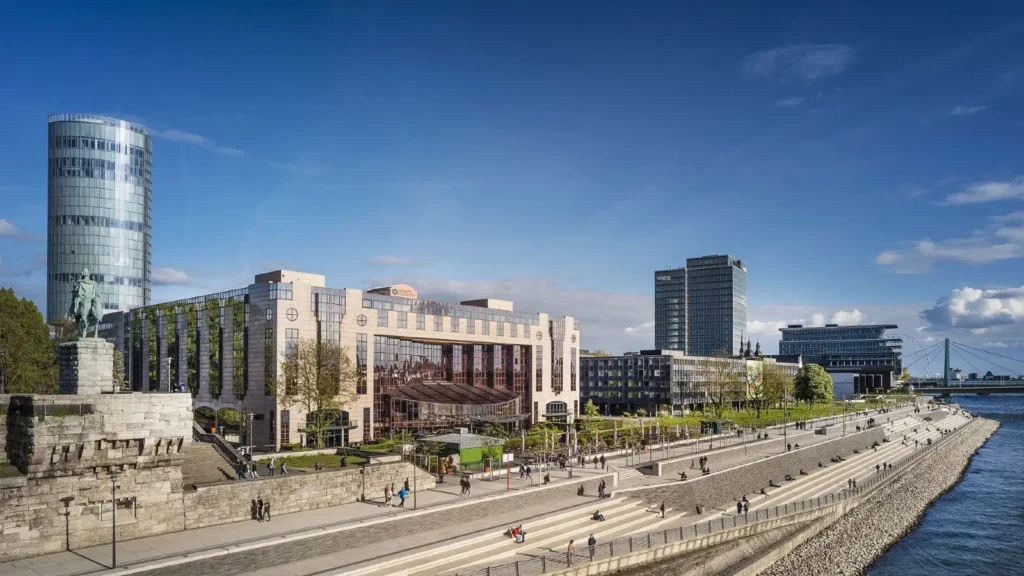
Of course, it couldn’t last. One final lavish breakfast at the Hyatt Regency preceded our return to reality. Yet there were no feelings of dread as we approached Cologne’s beautiful train station — the return journey was also effortless, albeit long by the standards of frequent flyers. Some would regard our decision to eschew air travel as ridiculous. But I must concede that, increasingly, I find airports a drag. For trips to nearby France, Belgium, the Netherlands and west Germany, let the train take the strain.
What: Hotel Dukes Palace
Where: Prinsenhof 8, 8000 Brugge, Belgium
Web: hoteldukespalace.com
What: Schloss Bensberg
Where: Kadettenstraße, 51429 Bergisch Gladbach, Germany
Web: althoffcollection.com
- New Year Sparkle: Champagne and Beyond for 2025 - 30 December 2024
- New Year, New Bubbles: Top Sparkling Wines for 2024 - 28 December 2023
- Masala Zone Piccadilly: A Flavourful Review of London’s Indian Cuisine Gem - 17 November 2023