
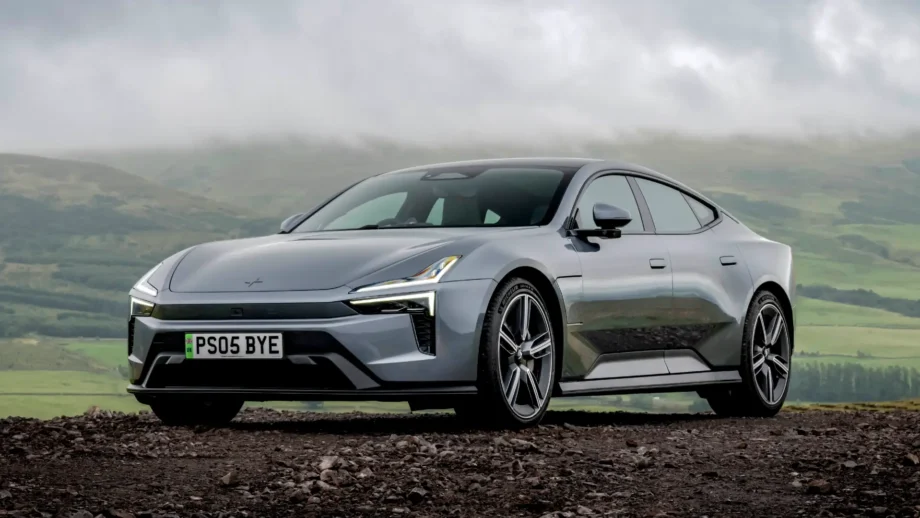
The Polestar 5 Dual Motor has 748hp. That’s the starting point, the version you buy before deciding that perhaps you would like a little more performance. There was a time when figures like that belonged to bedroom posters rather than cars with heated rear seats and somewhere to put the shopping.
Use it all and the surge presses you firmly into your seat, briefly encouraging you to reconsider your understanding of everyday physics. Yet the lasting impression from a day behind the wheel is how precisely the car delivers everything else.
Acceleration is easy, but making a large, heavy car respond this faithfully takes considerably more work. And Polestar has put that work in.

From concept to continent crosser
The 5 is Polestar’s flagship, a four-door electric grand tourer aimed at the Porsche Taycan, Audi e-tron GT and Lotus Emeya. It brings the striking Precept concept of 2020 remarkably close to the road, retaining the low nose, sharp shoulders and low roofline that made the original so arresting. It’s not really a car Polestar is bothered about selling, but rather a marker that this is Polestar — a halo car to make people pay attention.
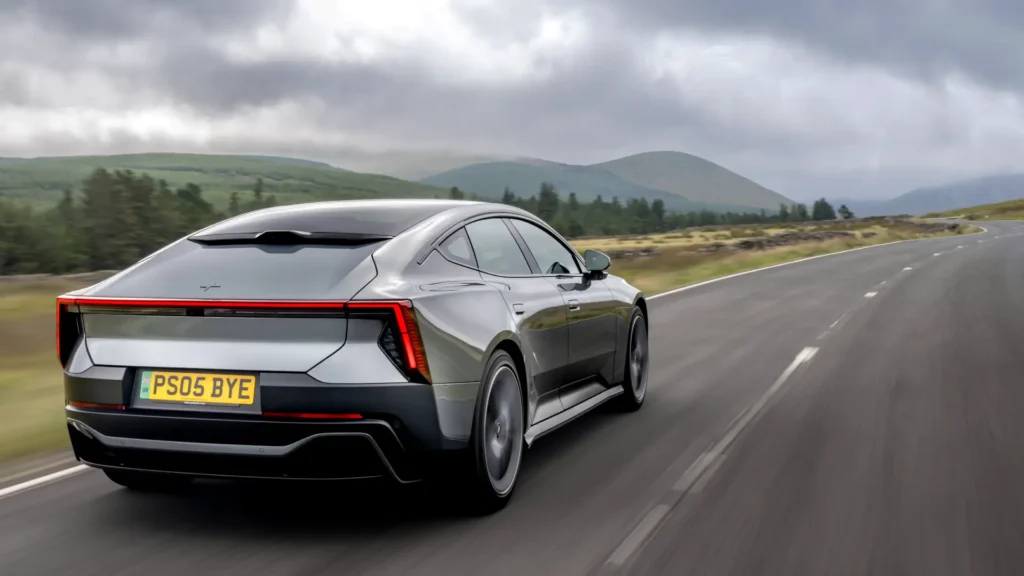
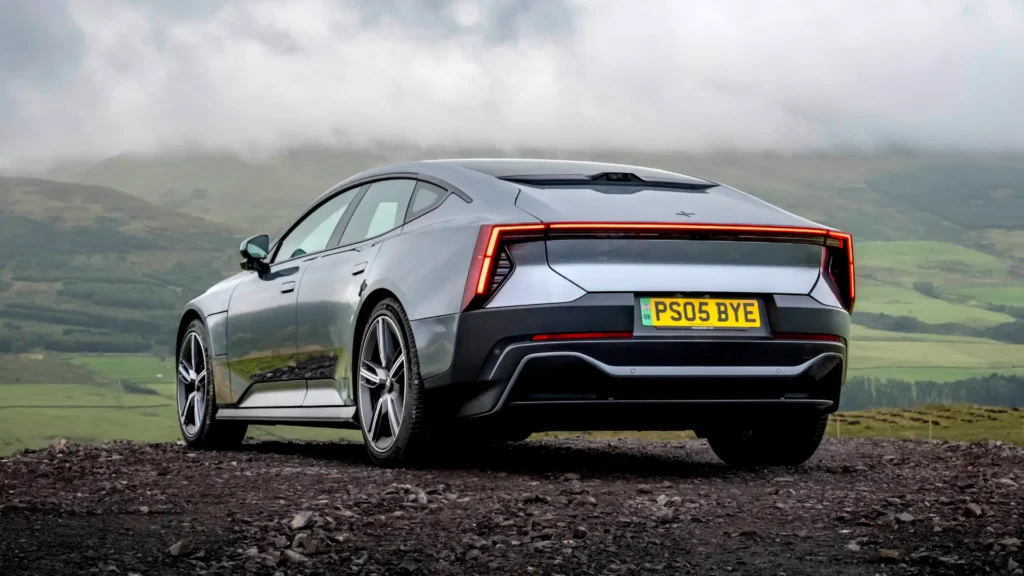
And they will. On our test car’s optional 21-inch wheels — you can pick even larger versions — it looks almost like a limpet attached to the tarmac, appearing unlikely to relinquish its grip on anything even when stationary. The proportions give it considerable presence without relying on decorative aggression.
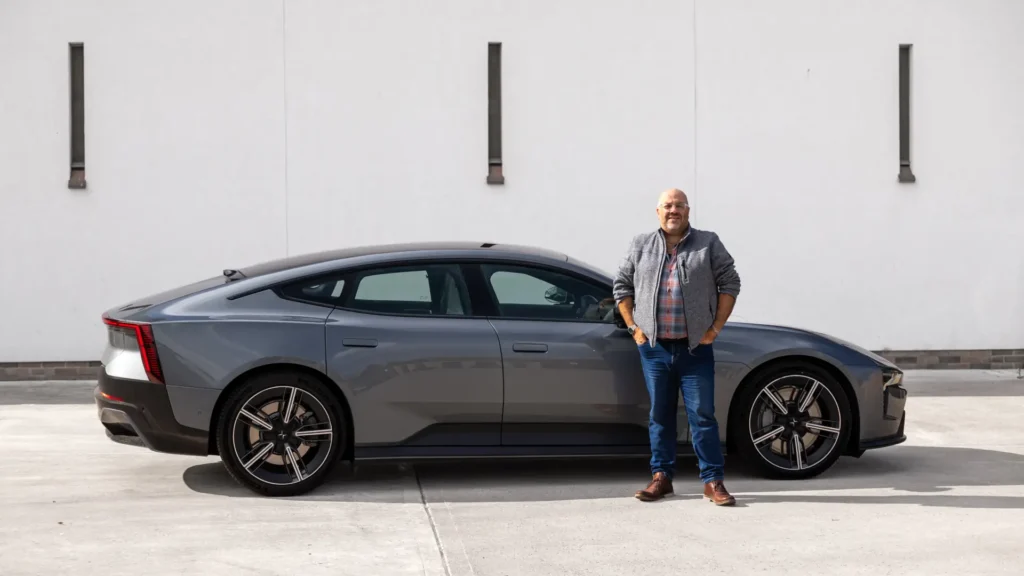
Underneath is a bespoke bonded aluminium platform, developed in-house with engineering input from Sweden and the UK. This gives the 5 its own foundations, rather than adapting the architecture of another Volvo or Geely product to suit a different brief.
That brief is ambitious: accommodate four adults, provide supercar performance and remain comfortable enough to cross continents at pace.
More than enough
Two versions are available, starting with the £89,500 Dual Motor. Its pair of electric motors provides all-wheel drive, 748hp and 812Nm of torque, which is enough to reach 62mph in 3.9 seconds. The £104,950 Performance raises those figures to 884hp and 1,015Nm, cutting the sprint to 3.2 seconds.
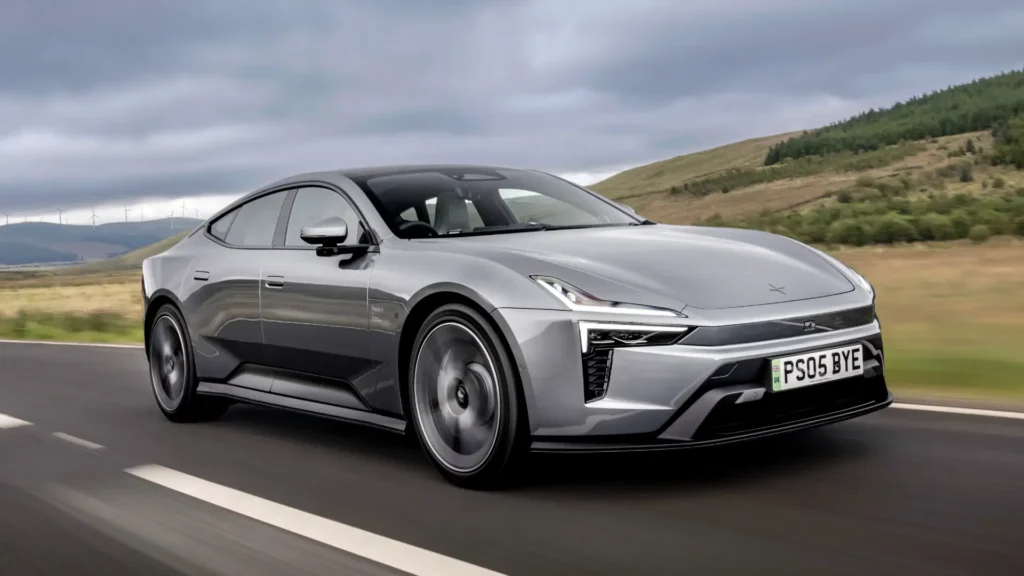
We spent most of our time in the Dual Motor, with a short drive in the Performance for comparison. The latter is certainly quicker, but the difference feels marginal in practice, and adds little you can use away from the racetrack. The standard car already accelerates with an intensity that makes overtaking opportunities require restraint rather than ambition.
Its chassis is what makes that performance convincing. The bespoke Michelin tyres seem to have an inexhaustible supply of grip, at least within the limits of driving on public roads, and the car’s responses are consistently exact. You place it where you want it, and it follows your instructions with inch-perfect precision.
Joakim Rydholm, Polestar’s head of driving dynamics, told us that a final 1.5% adjustment to the front dampers gave him goosebumps when he experienced the result. It is an unusually revealing detail, the sort of tiny change that rarely makes a brochure, but helps explain the coherence you feel from behind the wheel.
The Dual Motor’s passive suspension is firm, but supple enough to make a long drive comfortable. The Performance’s adjustable MagneRide dampers improve matters, giving the more expensive car an additional layer of composure. They are a worthwhile advantage, but the standard setup is good enough that we would happily live with it.
There are limits to the magic. The 5 remains too long, wide and heavy to feel like an outright sports car. Its talents make more sense in the context of a grand tourer, as a car that can cover substantial distances without leaving its occupants exhausted, while making the interesting sections between motorways something to anticipate.
A comfortable place to cover miles
The low roofline might suggest an awkward descent into the cabin, but the frameless doors make getting in and out easy. Once ensconced, it’s comfortable, with a driving position that suits the car’s purpose.
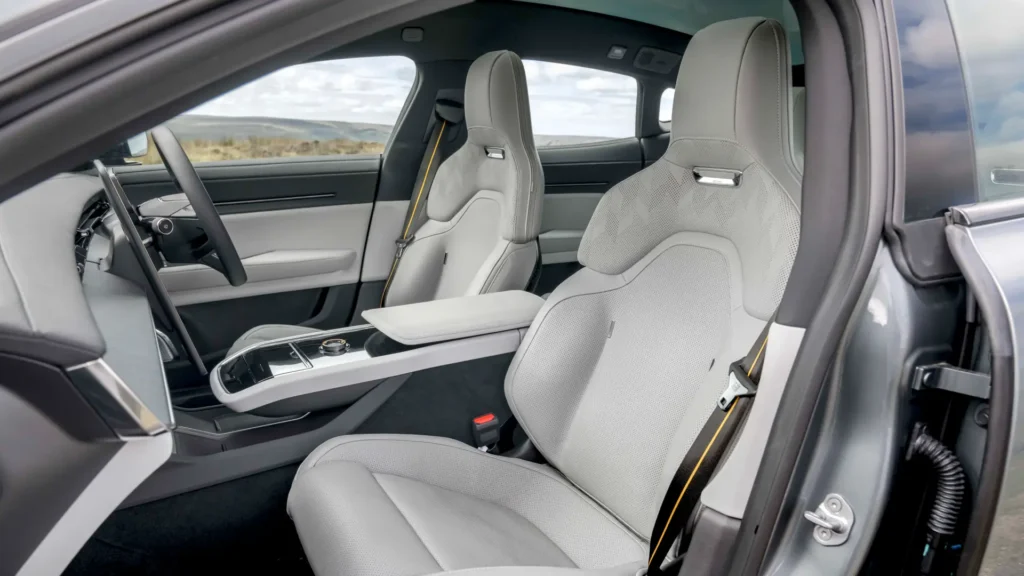
Our Dual Motor wore Storm paint and the optional Bridge of Weir leather in Zinc, paired with Black Ash trim. The £5,300 leather upgrade brings ventilation and massage functions for the front and rear seats, adding to the appeal of settling in for a lengthy journey. A panoramic glass roof, with a subtle Polestar highlight, helps maintain the sense of space.
Polestar describes the seating as 4+1, which is a sensible way to approach it. It has four seats, with an uncomfortable-looking fifth seat available when needed. You won’t want to use it.
Luggage capacity is a relatively modest 365 litres by the ISO measurement, supplemented by a useful 62-litre compartment beneath the bonnet. Folding the rear seats expands the main load space to 1,128 litres.

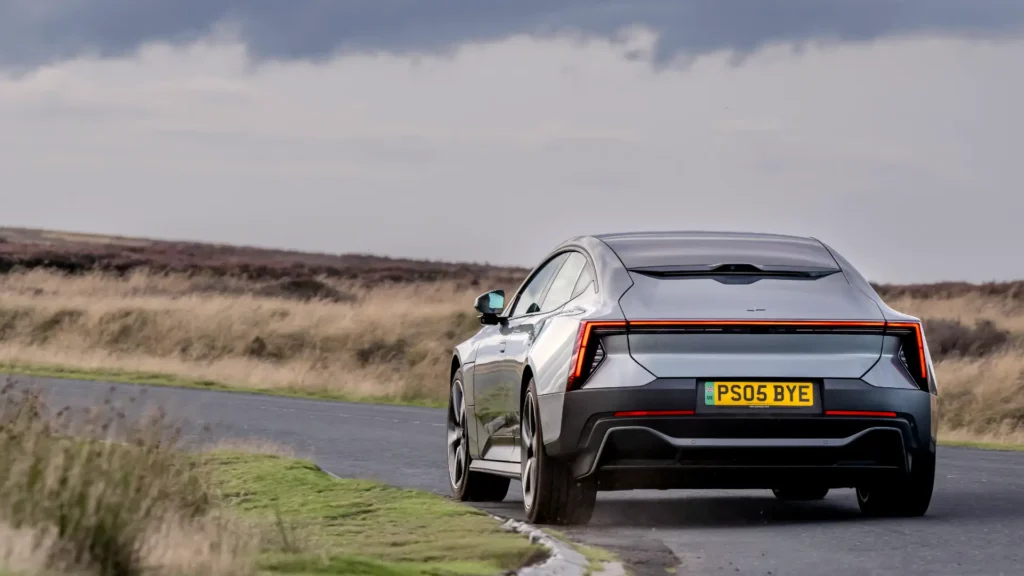
There is no rear window. As with the Polestar 4, a camera feeds the digital rear-view mirror, and in use its absence simply doesn’t matter. It is a design decision that attracts more attention in conversation than it demands behind the wheel.
The central touchscreen is harder to forgive. Polestar’s preference for routing functions through a display leaves the interface unnecessarily awkward, particularly when making swift progress and wanting to make a quick adjustment. Likewise, touch-sensitive steering wheel buttons register accidental touches and require a glance away from the road to operate. It is manageable, but a car this carefully resolved mechanically deserves controls that require less thought.
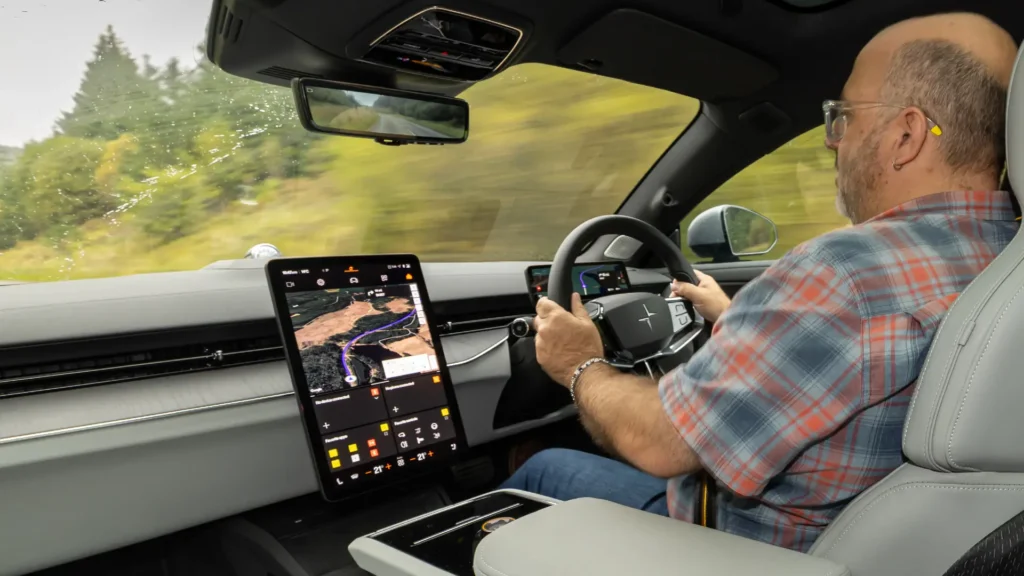
There’s better news directly ahead of the driver. Different instrument display modes let you choose useful information, complemented by the head-up display fitted to our car. That is more helpful than devoting the view to the usual animated depiction of surrounding traffic and driver assistance systems.
The long-distance equation
Both versions use a 112kWh battery, with 106kWh usable, and an 800-volt electrical system. Polestar quotes up to 421 miles of WLTP range for the Dual Motor, although our test car’s specification sheet lists 406 miles thanks to its optional wheels. The Performance’s maximum is 346 miles.
Those are official figures, and figures we fell well short of. There’s an obvious temptation to deploy more of that power than an efficiency test would recommend, and we undoubtedly fell for it. At 2.11 miles per kWh, we’d have got through a full charge in 224 miles.
Fortunately, charging peaks at 350kW, with a claimed 10–80% stop taking as little as 22 minutes under suitable conditions. That gives the 5 a credible basis for longer journeys, provided the infrastructure can deliver the required power.
Polestar 5: The CALIBRE first drive verdict
Our car was listed at £103,000 as tested, with its leather, upgraded Bowers & Wilkins audio and other additions. This is expensive territory, and its appeal needs to extend well beyond a specification-sheet contest.
Fortunately, it does. The Polestar 5 combines distinctive design with a chassis whose precision is apparent throughout a drive. The Performance improves the suspension, but the Dual Motor already delivers the pace, comfort and control needed to fulfil the grand touring brief.
There’s still work to do on the interface. Give the physical controls the same care as those front dampers, and Polestar would have an even more compelling flagship.
As it stands, this is a car we would happily point towards the far side of Europe. The difficult part would be resisting the temptation to take the scenic route.

- Polestar 5 first drive review: Precision at pace - 6 October 2026
- Subaru dealers offer free home PSA prostate cancer screening test to men over 50 - 27 August 2026
- Andersen brings English Heritage design to the domestic EV charger - 20 July 2026