
Italy’s sparkling wine industry has long been a victim of Prosecco’s stratospheric success. There probably isn’t anyone who hasn’t sampled a glass of Prosecco, the delicious and affordable Italian fizz from the northeast. But what about the superlative sparkling wines of Franciacorta, Trento DOC, or even Alta Langa? You would hear a pin drop in the room for the embarrassed silence.
Ironically, despite the singular fame of this globally ubiquitous wine style, Italy boasts over 90 appellations that are entitled to make sparkling wine. Some of these are confined to mere local curiosities, but other designations like Trento DOC and the emerging brilliance of Oltrepò Pavese have stolen a march with sophisticated Italian consumers, looking for a domestic equivalent to Champagne.
The analogy is not an unreasonable one. All the best Italian bubbles are made in the northern half of the country, especially in the regions of Trentino and Lombardy. The vast majority of winemakers benchmark their aspirations on the Champagne formula: blend chardonnay with pinot noir (and occasionally pinot blanc, which is seldom found in Champagne), and embrace the ‘traditional method’ of making sparkling wine.
This refers to a process whereby the wines undergo a secondary fermentation in bottle – yeast gobbles up sugar added to the wine, producing CO2 as a by-product. After ageing the wine for typically over 15 months, the producer then removes the dead yeast cells from the bottle (via a process known as disgorgement) and voilà, you’ll have sparkling wine. By law, both Champagne and top Italian sparklers have to be made this way. In contrast, Prosecco undergoes a relatively brief secondary fermentation in stainless steel tanks, before being bottled and sold. Simple, quick and easy.
However, I’m not here to knock Prosecco. It’s a quaffable delight on a warm summer’s evening, the perfect antidote to a hectic workday. Yet the inexorable triumph of the category has undoubtedly blinded UK drinkers to the awesome diversity of Italian sparkling wine. Simply put, the best of Italy’s bubbles are not made in the Prosecco regions. For Champagne-like depth, concentration and supreme quality, you need to search elsewhere.
Cynicism and/or disbelief is the standard response to this sales pitch. Although Italians are acolytes of their homegrown premium brands, styles like Trento DOC have yet to create a lasting impression in markets such as the UK and the US. Often priced at between £25-30, consumers understandably wonder why they should pay more. That is, at least, until a sommelier or bartender offers them a glass of Ferrari (no relation to the car brand) or perhaps Bellavista Franciacorta Brut.
At first, they can’t quite believe that their flute doesn’t contain Champagne; those telltale aromas of brioche and nougat, and the deep golden colour and tiny bubbles racing out of the glass. However, there are stylistic differences between top Italian sparklers and France’s signature export. Trento DOC, for example, is typically richer in flavour and texture, with an exotic ripeness that Champagne often lacks. Nevertheless, the refinement, depth and racy acidity do very much ‘reek’ of Champagne. You’re drinking a marriage between Italian exuberance and Gallic refinement – a very enticing package.
Such magnificent wines can’t compete on relative value, of course. Producing a bottle of long-aged Franciacorta costs a lot more than making supermarket Prosecco, and this is naturally reflected in the final RRP. But for the consumer who seeks premium quality at a fair price, Italy stands head and shoulders above the rest. Thirty years ago, there was no contest, but now there is no excuse for not giving Champagne a night off.
Franciacorta
Welcome to the heartland of upmarket Italian sparkling wine. Made in the province of Brescia in Lombardy, Franciacorta’s success is quite a recent development. Still, wines have been produced in Brescia for centuries, but a small, successful industry only really began to emerge in the 1970s. The pioneer of the style was Franco Ziliani, who made a small number of wines for the Berlucchi brand in 1961. His success attracted wealthy investors such as the Zanella family and the industrialist Vittorio Moretti, who invested in the industry’s largest players, Ca’ del Bosco and Bellavista.
The principal grapes grown – chardonnay and pinot noir – and the production methods largely mirror those of Champagne. However, the Italian region is far smaller, with just over 2,800 hectares of vineyards, compared to approximately 34,600 hectares in Champagne. However, over 2,000 hectares of vineyards are either certified as organic or are undergoing conversion. But most importantly, Franciacorta rarely produces a duff bottle. Concentrated, ripe and structured sparkling wines are the order of the day here.
| What? | Where? | How much? |
|---|---|---|
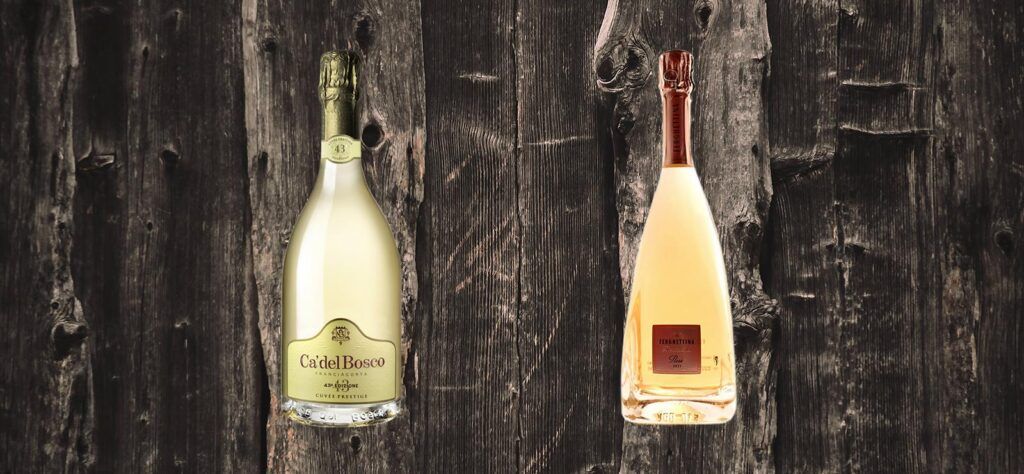
| Ca del Bosco Cuvee Prestige | Hedonism | £35 |
| 2016 Ferghettina Rose Brut | N.D. John Wine Merchants | £27 |
Trento DOC
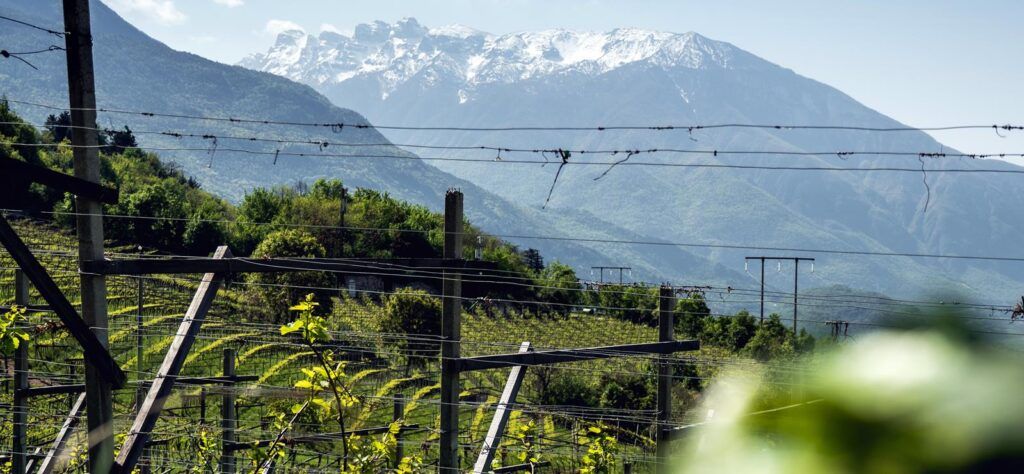
Trento DOC competes with Franciacorta for the title of Italy’s most prestigious fizz. It is made in the Trentino-Alto Adige region, home to the spectacular Dolomite mountains, and a surfeit of winter sports. Vineyards carpet the slopes on both sides of a thunderous valley, occasionally planted at altitudes as high as 900 meters above sea level. Such conditions are very conducive to producing sparkling wines that balance ripeness with racy acidity. Like their counterparts in Franciacorta, the critical mass of growers make traditional method wines by blending chardonnay and pinot noir, ageing their wines for several years before release.
The market leader is undeniably Ferrari, a wine brand created in 1902 by entrepreneur Giulio Ferrari. His bold idea was to transplant chardonnay to the Trentino region in the hope of emulating the finest wines of Champagne. A recent tasting of Ferrari’s brilliant line-up confirmed that Giulio’s vision continues apace today. However, the car namesake increasingly faces stiff competition in the region – there are now over 30 wineries making delicious Trento DOC wines. Krug-like quality at a knockdown price awaits.
| What | Where? | How much? |
|---|---|---|
| Ferrari Perlé Brut 2015 | Simply Wines Direct | £27 |
| Ferrari Maximum Blanc de Blancs | Drinks&Co | £22 |
| Cesarini Sforza Classico Brut | Drinks&Co | £16 |
| Letrari Rose Brut | Drinks&Co | £24 |

Alto Adige
Head north from the town of Mezzocorona in Trentino, and you’ll encounter the beautiful city of Bolzano, the capital of the Alto Adige region. The suffix to Trentino has traditionally lacked the pedigree of its fierce rival, however, a growing number of producers are starting to craft excellent sparkling wines, once again closely emulating the French model. Situated at the southern tip of Austria’s Tyrol region, Alto Adige is Italy’s most northerly vineyard. Winegrowing largely takes place on the slopes of the Adige Valley, rising to an elevation of 1000 metres above sea level. The top vineyard sites are capable of producing chardonnay and pinot noir blending material of the highest quality. A region to watch!
| What? | Where? | How much? |
|---|---|---|
| Cantina Kurtatsch 600 Blanc de Blancs Pas Dose | Vivino | N/A |
Alta Langa
In 2002, a group of like-minded producers got together to create a new designation for the traditional method sparkling wines of Piedmont. They called it Alta Langa. The appellation, although still in the nascent stages of development, has gone from strength to strength in recent times, with quality soaring over the past five years. Indeed, Alta Langa was upgraded to DOCG (Denominazione di Origine Controllata e Garantita) status in 2011, the highest tier of Italian wine. The vineyards are found on the right bank of the River Tanaro, in the provinces of Asti, Alessandria and Cuneo, southeast of Turin. The best labels offer an unbeatable price-to-quality ratio. Tenuta Carretta is among the names to look out for.
| What? | Where? | How much? |
|---|---|---|
| Tenuta Carretta Airali Pas Dose | Vivino | £23 |
Oltrepò Pavese
In addition to hosting Franciacorta, Lombardy is increasingly renowned for the world-class sparkling wine being made in the burgeoning Oltrepò Pavese region. It is a rising star of northwest Italy, situated in the province of Pavia, south of the river Po. In addition to the climate and favourable soils, the zone benefits from the extensive promotional activities of the Vistarino family, who planted pinot noir in 1850. The firm now cultivates over 200 hectares of vineyards, including 140 of pinot noir. According to company director Ottavia Giorgi di Vistarino, there are approximately 3,000 hectares now planted with pinot noir in Oltrepò.
“The diurnal temperature variation is our secret weapon; here, it is cold at night and warm during the day, meaning a big thermal excursion occurs preserving the grapes’ skin. Our soil is calcareous and rich in clay, and we rarely have high yields,” explains di Vistarino. Their sparkling offers incredible value – a moreish and classy concoction stuffed full of orchard fruit.
| What? | Where? | How much? |
|---|---|---|
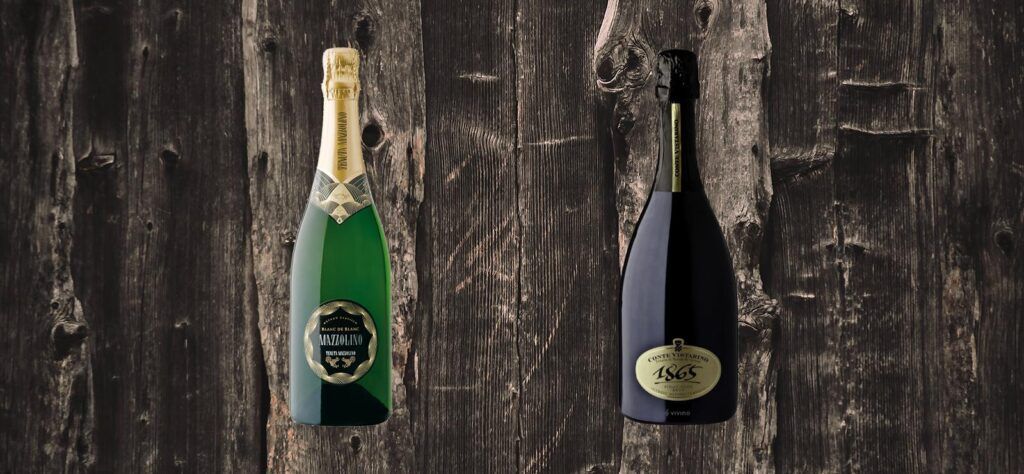
| Conte Vistarino Pinot Noir 1865 Pas Dose | Cellar Door Wines | £30 |
| Mazzolino Blanc de Blancs | Vivino | £13 |
Other regions
Although Northern Italy is the nation’s flag bearer for excellent fizz, a small but growing number of brands are making good wines in locations as diverse as Tuscany, Sicily and Emilia-Romagna. These recent initiatives are helping to change the Italian sparkling wine scene, adding breadth and depth to a formerly neglected category. In the mosaic of soils, aspects, elevations and permitted grape varieties (although many producers rigidly stick to the Champagne mould), there is a wealth of choice for the curious oenophile.
Yet Italy does have its share of outliers. The gloriously left-field sparkling wines of Venturini Baldini, made in Emilia-Romagna, do not remotely resemble Champagne. The red Lambrusco grape is their signature USP, used to make powerful and full-bodied sparkling wines with pungent flavours of allspice, cherry and balsamic vinegar. The rosé is similarly excellent, packed full of raspberry and plum fruit, supported by lively acidity and a wonderfully fresh palate. If you seek a true point of difference, then Baldini should be your first port of call. Purists, however, will be delighted to hear that the company also makes a 100% chardonnay style.
| What? | Where? | How much? |
|---|---|---|
| Venturini Baldini Cadelvento Blanc de Blancs | Tannico | £17 |
| Venturini Baldino Lambrusco Semisecco Montelocco | Vinissimus | £12 |
| Frescobaldi Leonia Pomino Brut 2016 | Drinks&Co | £27 |

- New Year Sparkle: Champagne and Beyond for 2025 - 30 December 2024
- New Year, New Bubbles: Top Sparkling Wines for 2024 - 28 December 2023
- Masala Zone Piccadilly: A Flavourful Review of London’s Indian Cuisine Gem - 17 November 2023