

There is a particular satisfaction in owning something that works well. A comfortable chair, a well-cut jacket, a bag with its pockets in the right places. Their appeal becomes clearer with use, as thoughtful details reveal themselves and small frustrations fail to materialise.
The new Volkswagen T-Roc has something of that quality. It’s an easy car to underestimate, particularly in a market where every new arrival promises to transform some aspect of your life. Its ambitions seem rather more achievable, and they are to provide enough space, make travelling comfortable, and feel reassuringly competent whenever you get behind the wheel.
We found plenty to like. It feels mature, accommodating and pleasantly resolved. In fact, it raises a question that might once have seemed unlikely: is this now a more convincing Volkswagen Golf than the Golf?
Familiarity has its advantages
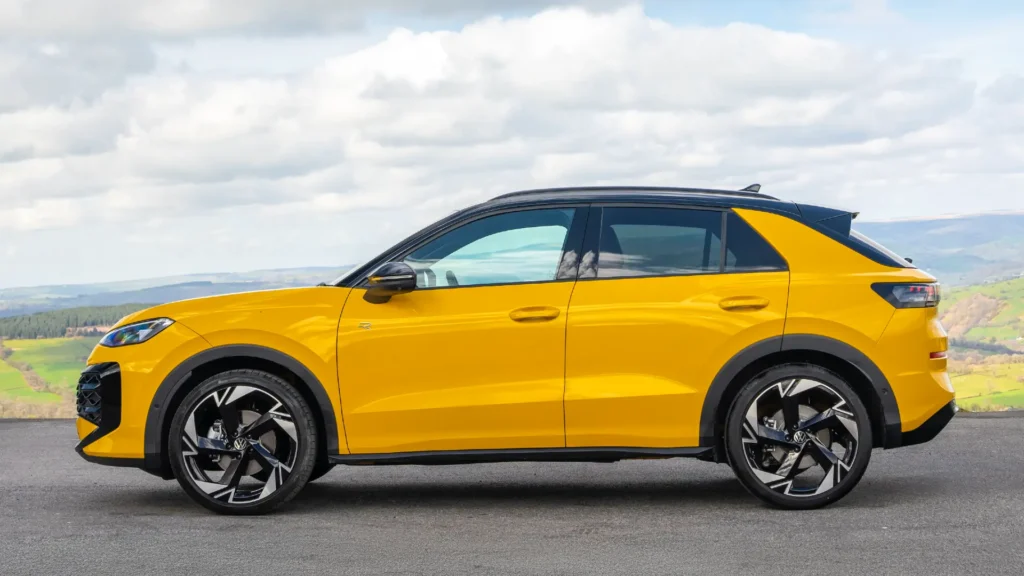
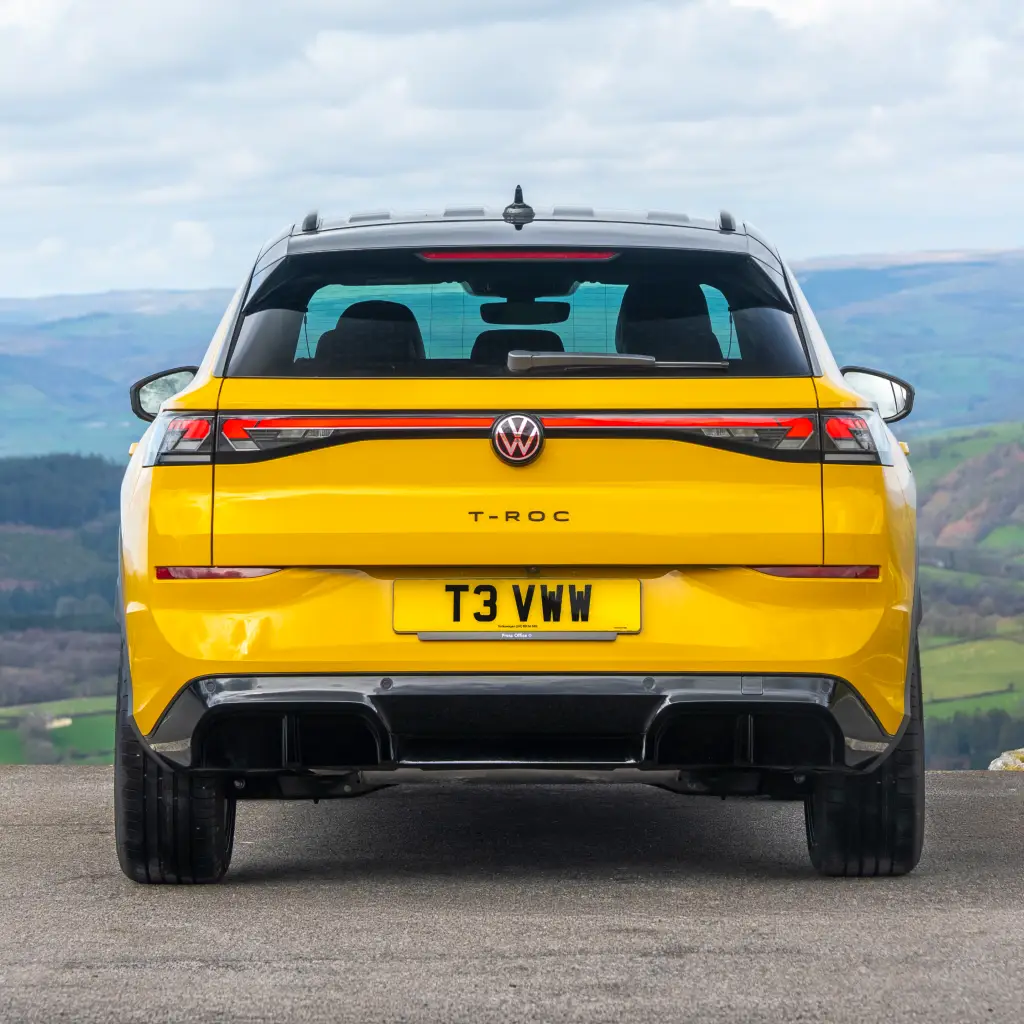
The original T-Roc attracted more than two million buyers, giving Volkswagen little incentive to abandon its successful formula — although it’s abandoned the flawed but liked T-Roc Convertible. This second generation remains recognisable, with the substantial rear pillars and compact SUV proportions of its predecessor, although the surfaces are smoother and the lighting more elaborate.
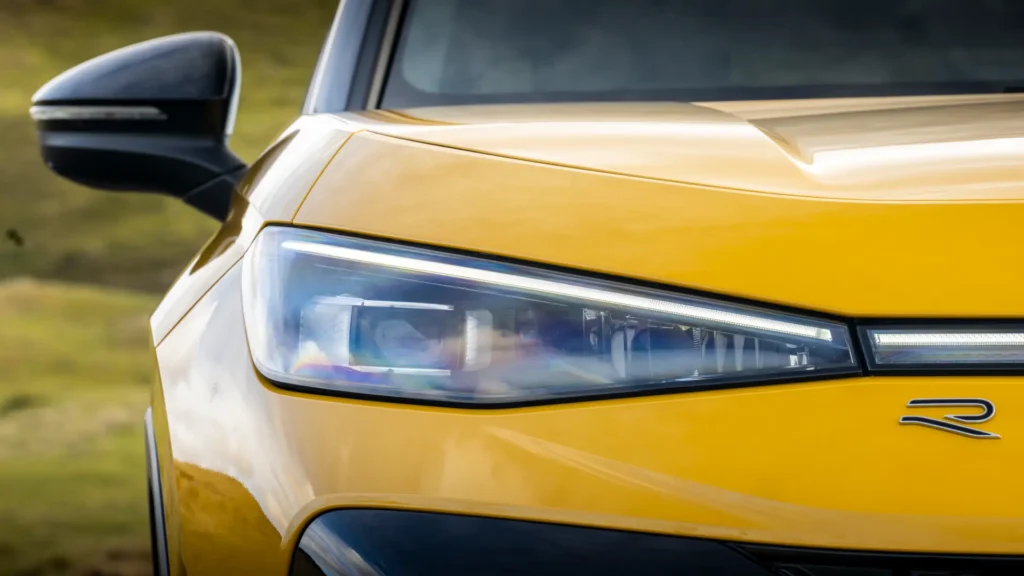
On our R-Line model, there are illuminated Volkswagen badges joining the full-width lighting. They add a little theatre, although the car’s more worthwhile changes become apparent when you open a door.

An increase in length of around 12cm has created a more accommodating interior. There’s ample space to settle comfortably into the front seats, with enough adjustment to find a driving position that feels natural. You sit appreciably higher than in a conventional hatchback, which improves the view ahead and makes getting in and out straightforward.
Adults have sufficient room in the rear, too. The centre seat remains the compromise, as usual, with a raised floor tunnel restricting foot space, but four people can travel without the cabin feeling stretched to capacity.
The boot has grown by 30 litres to 475 litres, giving it a useful advantage over a conventional Golf hatchback. Its adjustable floor makes loading easier, while the folding rear seats provide flexibility for larger purchases and weekends requiring rather more luggage than originally planned.
A more convincing cabin
Interior quality was a weakness of the first T-Roc. Its exterior suggested a certain sophistication that the hard dashboard plastics struggled to support.
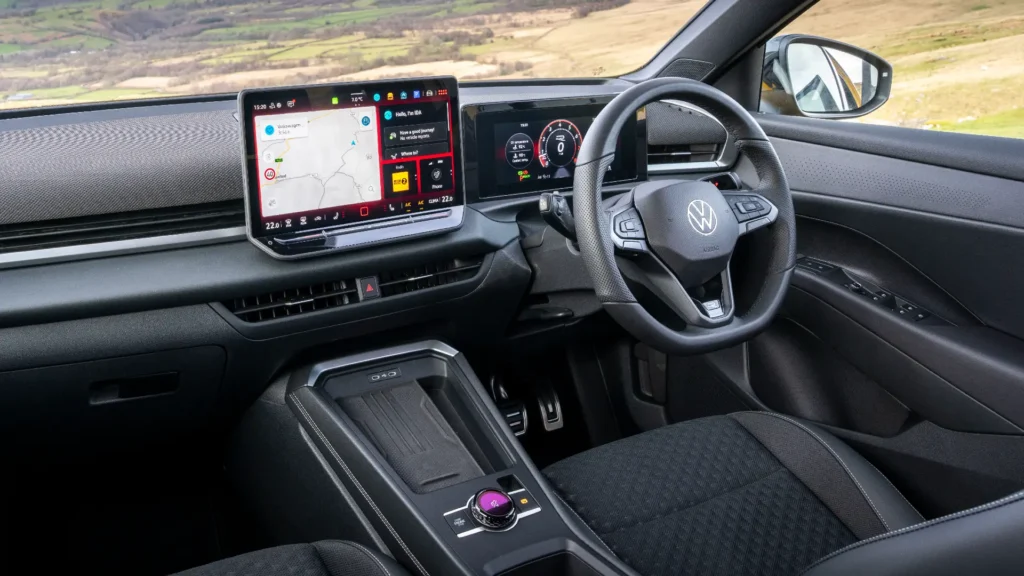
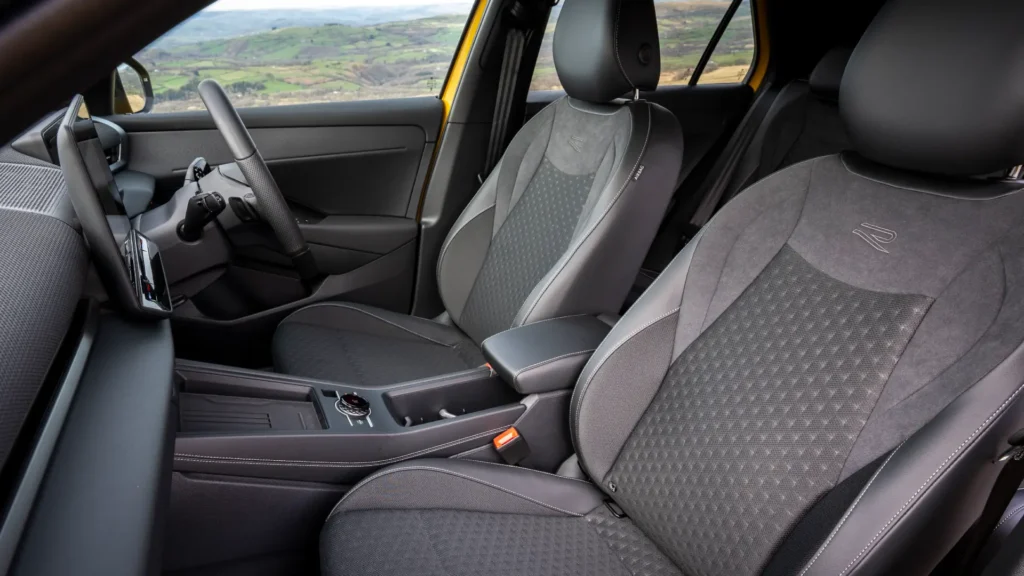
This replacement makes a better impression. Fabric trim and softer surfaces bring warmth to the cabin, while the general sense of solidity feels appropriate for the badge and the price. There are still less expensive plastics lower down, but the areas you see and touch most frequently have received greater attention.
The restrained colour palette will suit some tastes better than others. A little more imagination would have been welcome, although the overall effect is calm and cohesive.
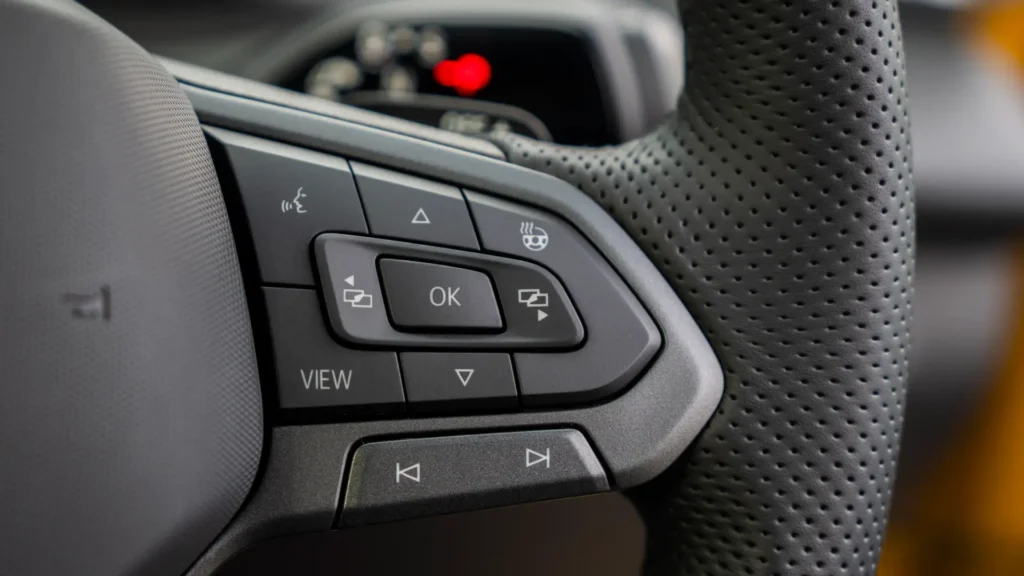
More significant is the return of physical steering-wheel buttons. These are easier to operate by feel than Volkswagen’s previous touch-sensitive controls, making a routine interaction suitably routine again.
The 12.9-inch central touchscreen is clear and responsive, with smartphone connectivity providing familiar access to navigation, calls and music. Some functions still require exploration through menus, and adjusting the temperature involves the screen or touch-sensitive sliders. Conventional climate controls would be more convenient.
A rotary controller on the centre console provides a useful physical means of adjusting the volume and switching driving modes. It is a welcome detail, even if temperature adjustment would arguably be a more valuable assignment.
Composure comes as standard
The T-Roc’s driving manners are among its strongest qualities. It feels reassuringly composed, with predictable steering and well-contained body movement. The higher seating position brings little sense of awkwardness when the road begins to turn.

There is enough precision to make driving enjoyable, although anyone prioritising agility will find a Ford Puma more engaging. The Volkswagen is particularly persuasive over longer distances, where its refinement and settled character become easier to appreciate.
Wheel choice influences that impression. Smaller wheels with chunkier tyres allow the suspension to deal more comfortably with imperfect surfaces. The larger alternatives, particularly the optional 20-inch wheels, introduce a firmness that seems at odds with the car’s otherwise relaxed nature.
The familiar 1.5-litre turbocharged petrol engine is offered with mild-hybrid assistance in 116hp and 150hp forms. Both drive the front wheels through a seven-speed DSG automatic gearbox.
The 150hp version looks the more appealing choice for regular longer journeys. Its additional flexibility is useful when joining a motorway or overtaking, and an 8.9-second 0–62mph time provides sufficient pace for a family car.
The seven-speed automatic gearbox operates smoothly, while the engine remains discreet unless asked to work hard. Official economy is around 50mpg, and it’s not unreasonable to expect to match that when driving gently, aided by a mild-hybrid system that supports efficiency rather than performance.
The appeal of restraint
With prices starting at under £32,000, the T-Roc needs to offer more than a familiar badge. Fortunately, its strongest qualities are available without climbing to the top of the range.
Life trim includes useful everyday equipment such as adaptive cruise control, a reversing camera and climate control. Paired with the more powerful engine and smaller wheels, it makes a persuasive case for keeping the specification modest.
More expensive versions, like our £38,935 R-Line grade, add comfort features and visual distinction, but neither elaborate wheels nor sporting decoration improves the fundamental proposition.
That proposition is compelling enough. The T-Roc combines much of the Golf’s reassuring character with a larger boot, convenient access and a higher driving position. For buyers whose priorities have shifted towards comfort and practicality, it could be the more satisfying choice.
Its qualities may take longer to describe than its appearance takes to register, but they’re also the qualities likely to matter after the novelty of a new car has faded.

- Custom Made by Moss review: A suit with personality sewn in - 22 October 2026
- Lexus takes luxury travel airborne with new helicopter service - 20 October 2026
- Polestar 5 first drive review: Precision at pace - 6 October 2026