
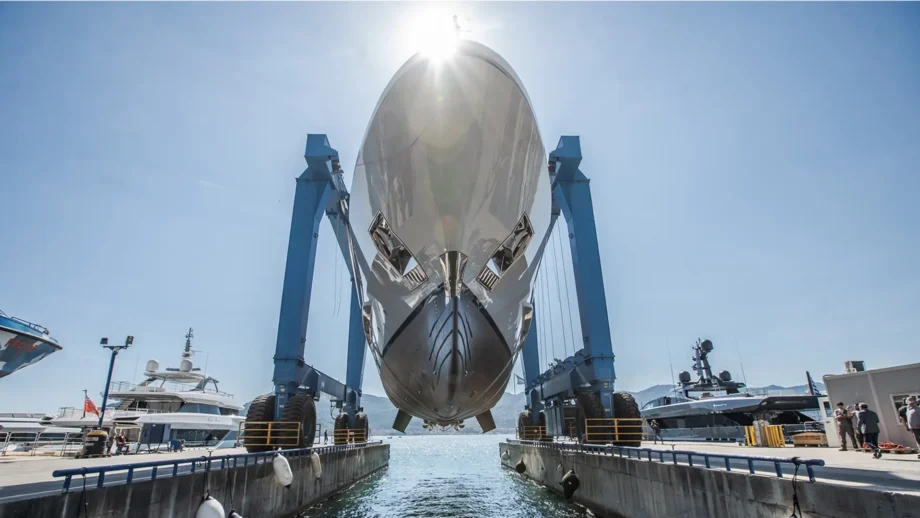
There are places in Italy where time seems to slow down – not because they’re sleepy, but because they’re precise. La Spezia is one such place. Nestled on the Ligurian coast between pastel-painted fishing villages and the marble quarries of Carrara, it’s home to one of Italy’s quietest luxury brands: Baglietto.
Founded in 1854, Baglietto isn’t just a shipyard. It’s a workshop of the imagination of the rich, a place where vague thoughts from customers are translated and turned to metal, movement, and meaning. Standing in front of a huge boat shed, the frame of a new build taking shape in front of me, it feels like its yachts are sculpted rather than built.

Baglietto: A name that means something
The name Baglietto carries weight in Italian maritime circles. It conjures up images of sleek hulls slicing through Mediterranean waters, and of private yachts commissioned by quietly powerful individuals who prefer understatement over spectacle. For those who know their history, it means wartime military boats.
But for all its heritage, Baglietto doesn’t rest on reputation. In fact, the modern chapter of the shipyard begins just over a decade ago, when the Gavio Group stepped in to save it from bankruptcy.
The Gavio Group is best known for leading major infrastructure projects and operating toll roads across Europe. So why would they get involved in yacht building? Because the story made more sense than the numbers.
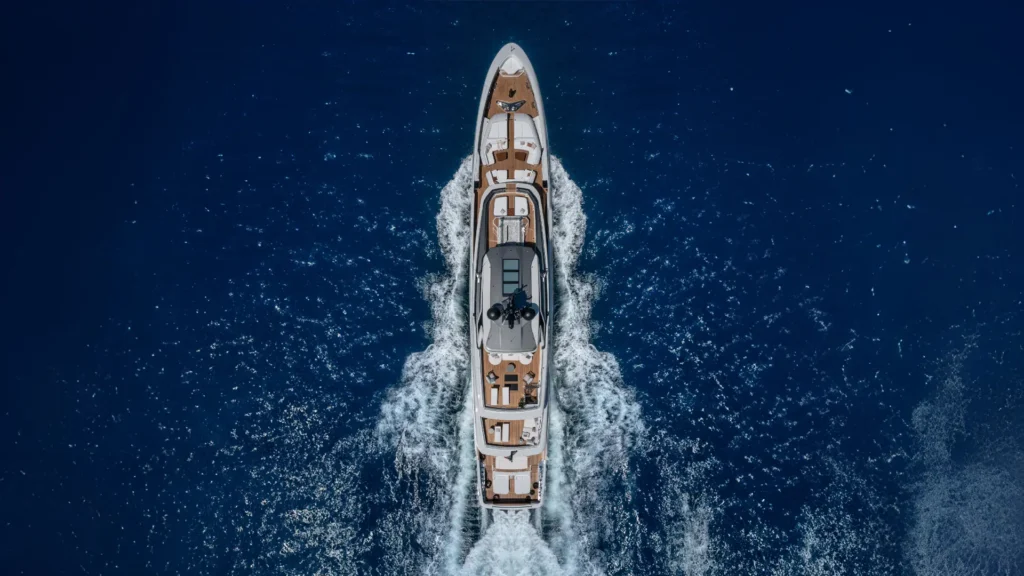
“The owner bought Baglietto the same way he bought a basketball team,” Raffaella Daino explained with a smile. “Not because it made sense on paper, but because he couldn’t bear to see something this important disappear.”
Since then, the brand has quietly reinvented itself: leaner, more ambitious, and still rooted in the same Ligurian soil.
Crafted, not manufactured
Walk through Baglietto’s facility in La Spezia and you won’t find a factory line. You’ll find something closer to a couture atelier; teams of designers, engineers, welders, and painters collaborating on just five or six yachts each year. This year’s a big one, with seven boats expected to be delivered.

Each one takes years to realise, not just because of the complexity involved, but because every project is different. Some are built from the shipyard’s signature design families, like the timeless T-Line, the sleek Fast Line, or the contemporary DOM Line, whose name derives from domus, Latin for home. Around a third are entirely custom, crafted to the exact vision of a single owner. Order now, and you might expect delivery in 2029.
“We don’t call ourselves builders, we’re constructors,” explained Daino. There’s a difference. Builders make things, constructors create them.
This mindset also explains why Baglietto limits its output. “You can only really offer that level of care if you’re working on a small number of yachts,” Daino added. “We’re a niche yard, a small shipyard. We never want to be a volume brand.”
A glimpse behind the scenes of a private build
During our visit, I was given rare access to one of Baglietto’s current builds, a 40.6-metre DOM133 yacht nearing completion in the La Spezia dock. It’s a customer yacht, and I was politely sworn to secrecy on many of the specifics, but some details were impossible to miss.
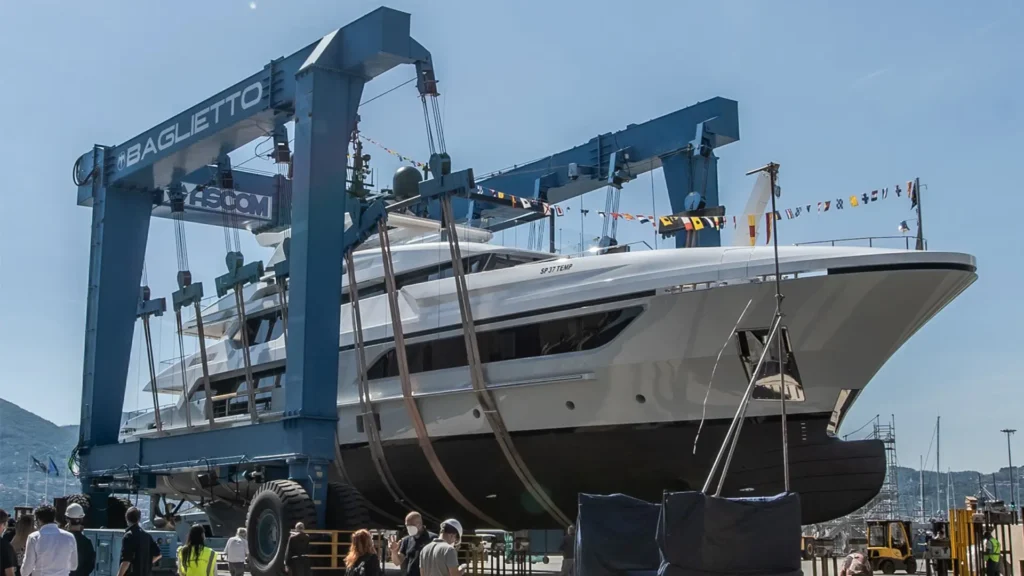
The yacht’s sleek aluminium form is unmistakably Baglietto: elegant, assertive, and unmistakably Italian. Her customised exterior, shaped by Stefano Vafiadis, balances athletic lines with a sculptural presence. It’s angular, yet poised. Inside, the interior was being finished to a design by Giorgio Cassetta, where soft curves and natural materials were already beginning to shape a warm, relaxed atmosphere.
Built for ten guests across five suites, with space for nine crew, the yacht is engineered for both indulgence and performance. Twin 1,622hp Caterpillar diesel-electric engines promise a cruising speed of 15 knots, a top speed of 17, and a transoceanic range of 3,500 nautical miles. Her shallow 2.15-metre draft means she can navigate close to the coastline – an asset for quieter anchorages and spontaneous detours.
Walking her decks, even mid-build, it was easy to imagine the finished experience: breakfast on the aft terrace, sea breezes through the main salon, and sunlit afternoons dreaming that, wherever she goes next, it will be somewhere worth arriving slowly.
A yacht that feels like more than home
Baglietto’s philosophy goes beyond technical excellence. Its yachts are designed to feel lived in, and if not quite like home, then at least like an ideal version of one. The living spaces are shaped around light, movement, and comfort, not just spectacle.
There’s a distinct absence of flashiness and a quiet sense of restraint that, ironically, makes these vessels feel even more luxurious.
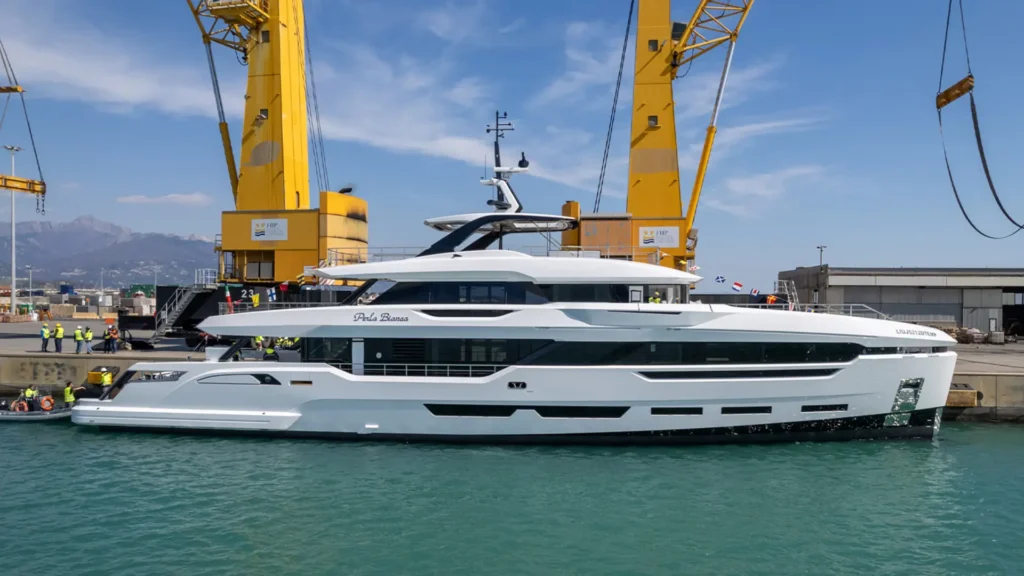
In recent years, the shipyard has invited young designers into its orbit, not just for furniture and lighting commissions, but to keep evolving the Baglietto world beyond yachts. The results are quietly impressive: I tried a supremely comfortable sculptural chair with a pivoting backrest, lit by a floating bedside lamp, both destined to join future interiors.
“We’re trying to create a world around the core business of yachting,” explained a director. “Not just yachts, but also design objects that reflect our style, things like lamps, chairs, and spaces that feel part of the Baglietto identity.”
A modular museum is being designed around repurposed shipping containers, offering an archive of Baglietto’s story that can be moved around the world. From military boats to modern superyachts, the firm wants to showcase its history. “It’s not nostalgia, but part of our identity.”
Building a future Baglietto
In the shipyard’s corner offices, alongside piles of blueprints and brushed steel samples, something more radical is underway. Baglietto has committed to green propulsion – not with vague goals, but with practical engineering.
“Everyone’s talking about sustainability. We wanted to do it.”
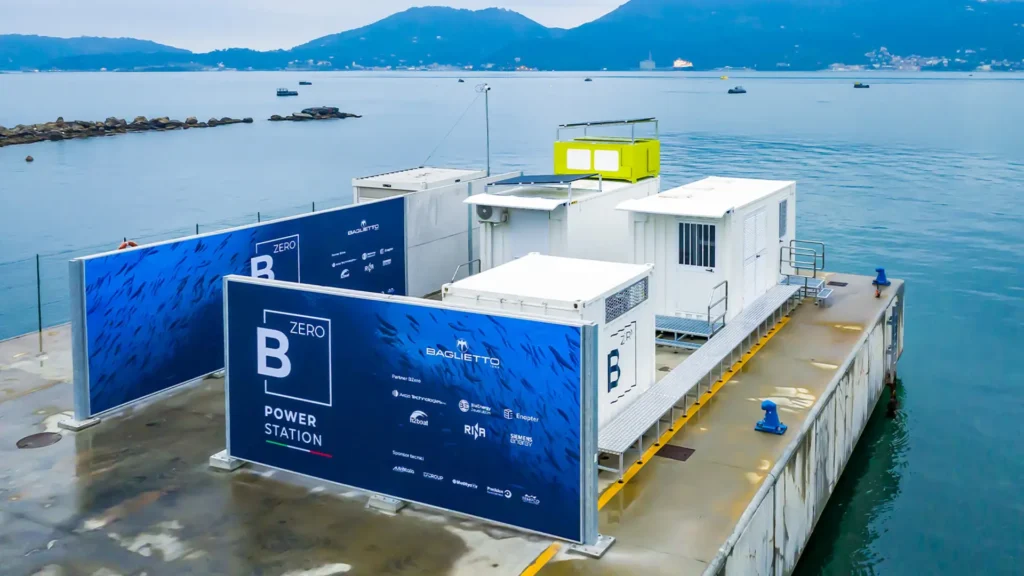
The team has already built and tested a full-scale hydrogen-electric system at the yard itself, a prototype of what will eventually be installed on the next-generation DOM 60. Solar panels power an electrolyser, which splits water into hydrogen, stored and used to run a fuel cell. The result is up to a week of zero-emissions cruising.
“We wanted to learn how this system worked before we put it on a yacht,” I was told. “Not just on paper, but in our hands.”
In a world where ‘sustainability’ is often just a buzzword, this is the real thing. However, how much impact this will have compared to the energy demands of building, maintaining and operating a luxury yacht remains to be seen.
Global clients in a taxing world
Despite being rooted in Italy, Baglietto has an international client base. North America is a key market, though most Baglietto yachts ordered by US-based buyers are never actually registered there.
At a time when a Trump presidency is chaotically introducing, raising, scrapping, and delaying tariffs, owners typically opt to flag their vessels offshore, often in Bermuda or the Cayman Islands. By never crossing the customs border, owners avoid steep US fees.
“It’s not unusual. Many of our American clients keep their boats in the Med or Caribbean. They don’t cross that import line, and they don’t need to.”
It’s a pragmatic approach that speaks to the realities of modern yacht ownership. Eye-watering taxes can be enough to make a difference, even when a buyer is happy to spend $30 million (£22.5m) on a build.
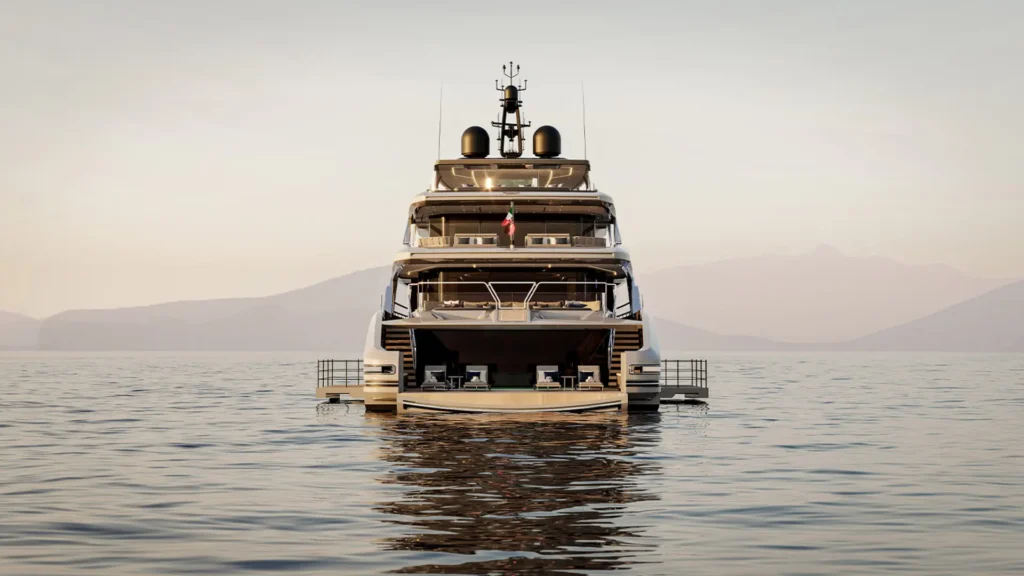
Baglietto: The quiet allure
Unlike flashier names in yachting, Baglietto doesn’t shout. Its clients come from Eastern Europe, the US, Latin America, and Australia, often introduced by word of mouth rather than ad campaigns.
And while competitors might churn out dozens of yachts a year, Baglietto prefers the long game. There are waiting lists, yes, but also a sense of intimacy between builder and buyer.
“When someone calls us, they’re not buying a product. They’re starting a conversation,” said Daino. “That’s what luxury is, it’s the freedom to take your time.”

- Custom Made by Moss review: A suit with personality sewn in - 22 October 2026
- Lexus takes luxury travel airborne with new helicopter service - 20 October 2026
- Polestar 5 first drive review: Precision at pace - 6 October 2026