

Tequila is a spirit with a history dating back at least 500 years. Mexican producers are, quite rightly, extremely proud of their products, and many distilleries have been owned by the same families for generations. One such distillery is Sierra .
.
Despite all of the love and care that it takes to produce a batch of tequila, there are a good number of consumers who only know the spirit from rounds of shots and the “does the salt or the lime come first” debate.
As it has done over recent years with gin and rum, the spotlight is now shining bright on tequila, and drinkers are discovering that there’s more to the spirit than shots and Margaritas. We spent an evening with Graciela Gonzalez, one of the master distillers at Sierra, and learned a lot about this fascinating spirit.

Don’t get me wrong, there’s nothing wrong with a great Margarita or enjoying a few shots now and then, but there are so many other ways to enjoy the complex flavours within a good tequila that if that’s what you’re sticking to, you’re missing out.
Things you may not know about tequila
The designation of origin for tequila is highly regulated. We all know that certain products can only be given a name if they are produced in a particular region, such as champagne, cognac, and tequila is no different. Tequila is made from the agave plant, of which there are over 120 varieties, but to be called tequila, the spirit must be made from Agave tequiliana Weber Azul, or Blue Agave.
Not only is the type of agave controlled, but it must also be grown in the specific region. Jalisco is the heart of agave production for tequila, but the legal designation of origin also includes the municipalities in Guanajuato, Michoacán, Nayarit, and Tamaulipas.
The CRT (Consejo Regulador del Tequila) or Tequila Regulatory Council, issues permits to growers and governs the planting and harvesting of every agave plant. Even the name tequila is owned by the Mexican government, making it one of the most tightly regulated and controlled spirits in the world.
Is there more than one type of tequila?
Tequila actually falls into two different categories: tequila and 100% agave tequila. Tequila must, by law, contain at least 51% agave, which, during the distillation process, produces the sugars that ferment into alcohol. The rest can be at the discretion of the distillery. Sierra uses 60% agave sugar, which is more than the legal requirement. The rest comes from Mexican sugar cane. These subtle distinctions are what give different producers distinct flavour profiles.
A tequila should have just four ingredients: agave (51% min), water, yeast, and sugar. 100% agave tequila has only three ingredients: water, yeast, and agave.
How does Sierra ensure the quality of its spirit?
Unlike many producers, Sierra owns almost all of the plantations from which it gets its agave. This helps to ensure the quality of the agave is consistent. For the plantations it doesn’t own, Sierra creates partnerships with growers, teaching them its tried-and-tested growing techniques and even supplying them with agave plants to nurture.
Agave plantations don’t need to be watered, but they do need to be kept clear of weeds and pests. Sierra was among the first to move away from pesticides, opting for more manual methods to keep things under control and to adjust the soil pH around the plants using natural methods such as garlic and grapefruit extract.
As soon as the agave is considered mature (which can take anything from 5 to 7 years), it’s harvested and shipped whole to the distillery, where it’s chopped and cooked within 24 hours of its arrival on site. This helps ensure the agave is as fresh as possible when cooking begins.
How is Sierra tequila produced?
Graciela Gonzalez and her family have been producing tequila for almost 150 years. 40 years ago, her father decided to branch out and start his own distillery, and so Sierra was born.
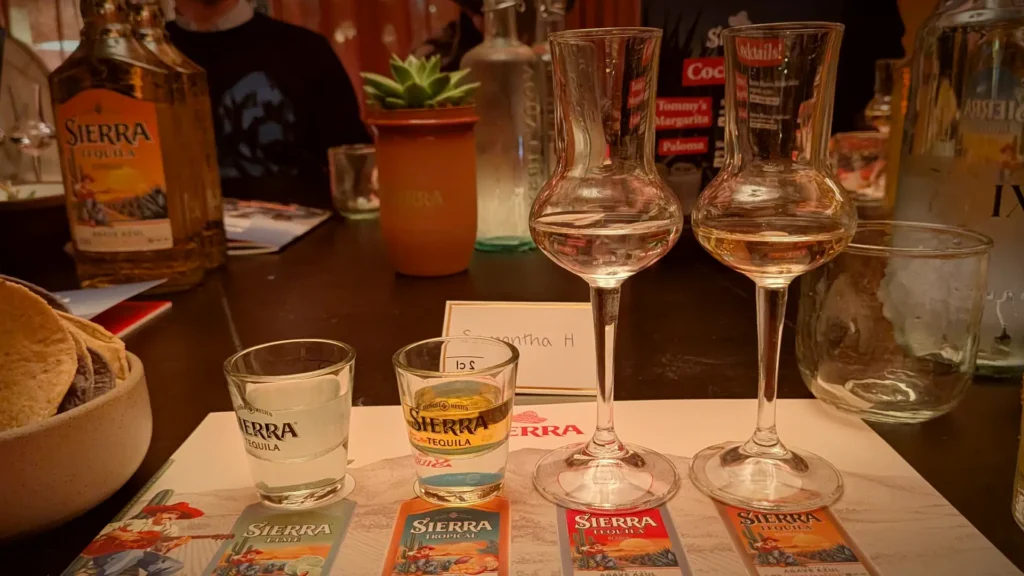
Sierra has been using fundamentally the same recipe, methods and yeast strain since Graciela’s great-grandfather began in the industry. As each generation produces a new master distiller, the secrets, or golden recipe, are handed down to keep the family legacy moving forward. While this might sound like a wonderfully romanticised notion, Graciela dismisses it. “The only reason why we have kept it is because it’s extremely efficient,” she says, although she does admit that the recipe is kept locked in the company vault, which does give the story back just a little more of its exciting charm.
Sierra produces tequila the traditional way, which might be more labour-intensive at certain points in the process, but produces the flavours that Sierra is famed for. Once cooked, the agave is put through a milling system to extract the juice, which is then fermented and distilled, before maturation if it’s needed.
The methods are traditional, but that doesn’t mean that technology isn’t a part of the process. Traditional brick ovens to cook the agave have been replaced by stainless steel ones to provide the consistency Sierra needs in its products. “Brick ovens look amazing, but they don’t help our consistency,” said Graciela. “And for us, it’s extremely important that it doesn’t matter where you are in the world. If you’re in London, if you’re in Spain, if you’re in Hamburg or Guadalajara, every time you open a bottle of Sierra, it has exactly the same taste.”

In order to keep the same flavour profile as it was first created using the brick ovens, Sierra ensures that the agave is cooked gently and slowly, mimicking the actions of the brick oven, but with greater efficiency and consistency.
Once cooked, the agave goes into a five-step milling system, and that’s where Sierra starts to do things a little differently. The juice is gently squeezed from the agave, with as little contact with the plant’s fibres as possible. The more contact there is, the more the flavour profile changes, impacting the spirit’s traditional earthy and spicy notes. Sierra wants to keep the flavours, but with a smoothness that makes it friendly to the palate, whether you sip it or shoot it.
The extracted juice is pumped into the fermentation tanks and mixed with yeast to begin fermentation, which takes about 3 days, once the sugar is added. The liquid is then distilled twice in pot stills, which retain the traditional flavours for which Sierra is known.
After distillation, the tequila is either rested or bottled immediately, depending on the expression. For Sierra Blanco, the focus remains on purity and clarity of flavour, allowing the agave’s natural sweetness, peppery spice and subtle earthiness to take centre stage. For aged expressions, time in American oak ex-bourbon barrels adds layers of vanilla, caramel and soft spice, but the agave remains unmistakably present.
What becomes clear when you look closely at tequila production is just how much patience, regulation and human input go into every bottle. From agave plants that take years to mature, to family recipes passed down through generations, tequila is not a spirit designed for haste.

That doesn’t mean tequila needs to be precious. It can still be fun, sociable and occasionally raucous. Sipped neat, paired with food, or used thoughtfully in cocktails beyond the Margarita, tequila reveals itself as a spirit of depth and versatility.
As more drinkers move beyond the salt-and-lime ritual, tequila’s long history and careful production are finally getting the recognition they deserve. And perhaps that’s the biggest shift of all: tequila is no longer just a drink. It’s a drink you take the time to appreciate.

- Late summer wines to toast the end of the season - 28 August 2026
- Havana Club Golden Mojito: Should you mess with a classic? - 10 August 2026
- Sipping summer spritz with a Cotswolds Distillery twist - 4 August 2026