

When you think about whisk(e)y, your mind probably goes to Scotland, America, Ireland, Japan… probably anywhere other than India. But India has recently overtaken France to become the world’s biggest market for Scotch and now accounts for almost one in every two bottles of whisky sold worldwide.
It’s not just buying and drinking the stuff, though — India is a huge whisky producer, too. If you look at the top 10 global whisky brands by volume, seven on the list are Indian, with staggering volumes consumed in the country.
Until recently, my only experience of Indian whisky was being delivered some dodgy Indian-made foreign liquor (IMFL) on the back of a motorbike to the desert outside Pushkar in Rajasthan in 2010. It was rough. Fortunately, my tastes have developed somewhat since then, as has the quality of Indian whisky. With the growth of the country’s industry, more premium producers — like Rampur, Indri and Amrut — have emerged with their eyes firmly fixed on the global market.
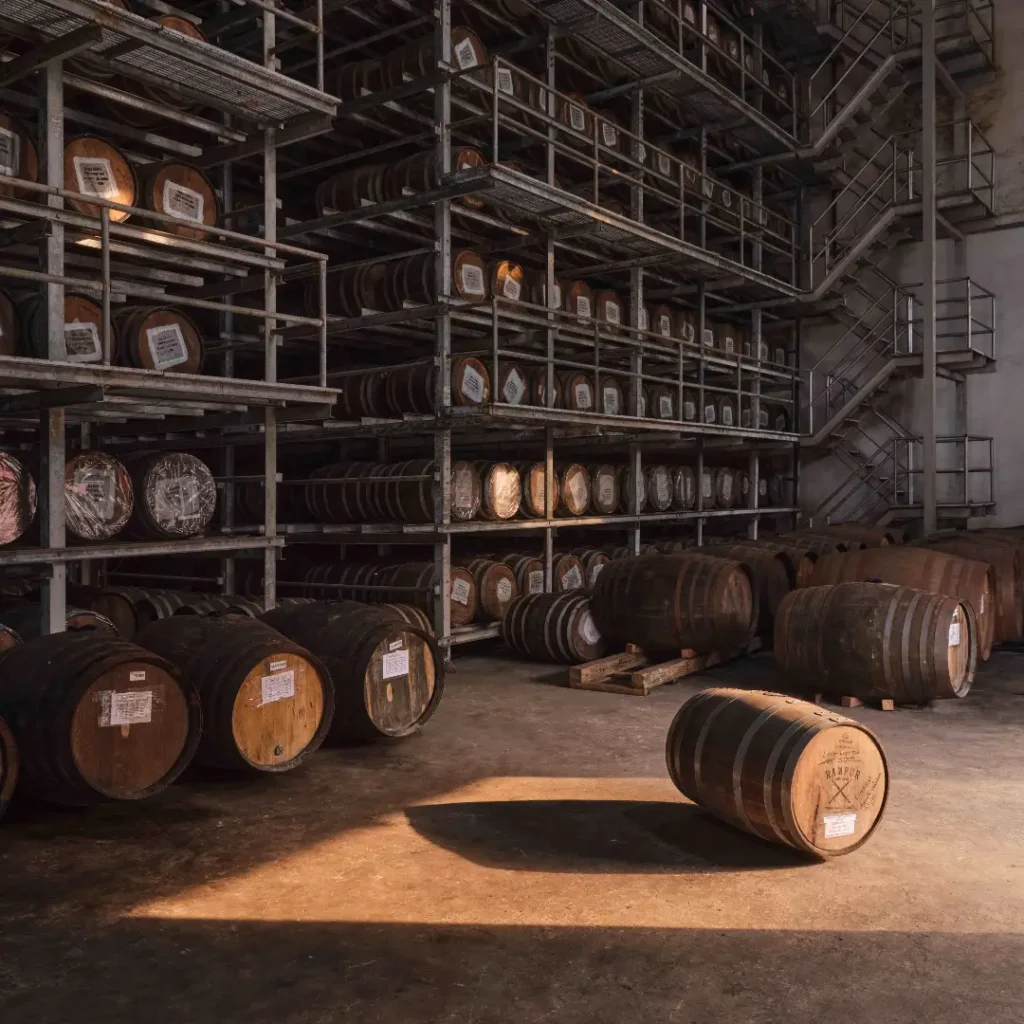
Rampur Distillery, owned by parent company Radico Khaitan, India’s fourth largest liquor company, is found in the foothills of the Himalayas in the state of Uttar Pradesh. And it’s attracting new whisky fans drawn to a more modern approach to production. Due to the distillery’s location, the climate is extreme, with variations of between 2°C in winter and 47°C in summer. This means the spirit ages differently and is the reason why Rampur doesn’t include age statements on its bottles, according to Sanjeev Banga, president of international business for Radico Khaitan. For example, during the first year of ageing, Rampur Distillery whiskies see double-digit evaporation rates, with around 12% angel’s share.
While the lack of age statement might upset some traditional whisky drinkers, Banga says, “age is just a number,” and instead encourages people to try the spirit and make up their own minds on whether they like the flavour profile — and want to buy another bottle.
Rampur Distillery Whisky Tasting Notes
Sangam World Malt Whisky
£55
Sangam is derived from the Hindi word for ‘confluence’ — two powerful rivers coming together to form something greater than the sum of its parts. Banga says Sangam represents the convergence of the rich traditions of the East and the expertise of the West in the art of whisky making. The blend, created by Radico Khaitan master blender Anup Barik, combines malts from traditional European whisky-making countries and the New World, including India.
On the nose, there’s lychee, mango, papaya, banana, rose, citrus and a light hint of very subtle smoke. Take a sip, and you do feel the alcohol, which is accompanied by a lovely salinity, butteriness, and more honeyed tropical fruit notes. This really opens up and mellows with a few drops of water. The finish is long with a light lingering spicy note and a hint of honey.


Rampur Double Cask Indian Single Malt Whisky
£68
After a slow distillation over nine-11 hours, which master distiller Anup Barik says preserves the whisky’s fresh aromas, Rampur double cask spends two-thirds of its life maturing in bourbon barrels and one-third in oloroso sherry casks. Giving India in a bottle to the world, the double cask is made with only Indian ingredients, including North Indian barley, which, according to Banga, has more protein content than European barley.
While the nose is fruity and sweet with tropical fruits, on the palate, there’s the vanilla note from the bourbon cask, followed by rose, lychee, orange peel, loads of baking spice and pink pepper. The finish is sherried, with more lingering spice and cocoa notes.
Rampur Asava Indian Single Malt Whisky
£67
This is quite possibly a world first for a whisky: a single malt matured in bourbon barrels is then finished in Indian Cabernet Sauvignon casks for nine months (Cab Sauv is the third biggest grape in India by quantity grown).
On the nose, you get the typical fruitiness Rampur is known for: rose, blossom, honey, and redcurrant, with added red fruit notes coming through from the Cab Sauv cask and a very light wisp of tobacco. The honey note continues on the palate, along with the fruitiness, which is joined by plenty of Christmas spices — clove, cinnamon and nutmeg — and a lovely dry finish.


Rampur Select Indian Single Malt Whisky
£90
Select was the first whisky from Rampur to make it to the UK in 2016 — and it’s back with a 2023 release. It’s distilled in copper pot stills, non-chill filtered and bottled at 43%. Rampur describes it as the “Kohinoor of single malts”, which is an Indian diamond weighing 106 carats, now part of the British crown jewels.
If you like your whiskies rich, fruity and smooth, get yourself a bottle of Select. The nose hits you with bags of dried fruit, honey, blossom and toffee. Take a sip, and you’ll be enveloped with a vanilla creaminess and baked apple. The finish is long and rich, and ends on an unexpected — but very welcome — lime note.
Jugalbandi #3 and Jugalbandi #4
£399 and £399
The Jugalbandi series of whiskies from Rampur are experimental and limited edition, with around 400 bottles of each released. ‘Jugalbandi’ is a performance in Indian classical music and means ‘entwined twins’ — like a duet between a sitar and tabla. In Rampur’s whisky, two casks are used to create balance and harmony. Rampur plans to release eight Jugalbandi expressions in total. The first two releases were matured in bourbon and muscatel, and bourbon and calvados casks.


Jugalbandi #3 is matured in bourbon barrels and port wine casks. It’s like tropical Christmas in a glass. The nose has lots of tropical fruit notes along with dried fruits, like a boozy mince pie. On the palate, it’s thick, giving Christmas pudding, apple, cinnamon, prune, marzipan and praline. The finish is like inhaling a bowl of Crunchy Nut cornflakes.
Jugalbandi #4 is matured in bourbon barrels and Indian pale ale casks. The combination of those two barrels leads to a very fruity nose with lychee and mango, and a malty, hoppy undertone with a light floral note. On the palate, the influence from the two casks play off each other, with the sweet vanilla you’d expect from the bourbon, and a rich, deep maltiness and spice from the Indian pale ale. The finish is long with green fruit and sweetness.

- Innis & Gunn and The Glenlivet’s Limited Edition Collaboration: Vanishing Point 07 Tasted - 24 December 2023
- Rampur: The Premium Indian Whisky Attracting New Fans - 29 November 2023