
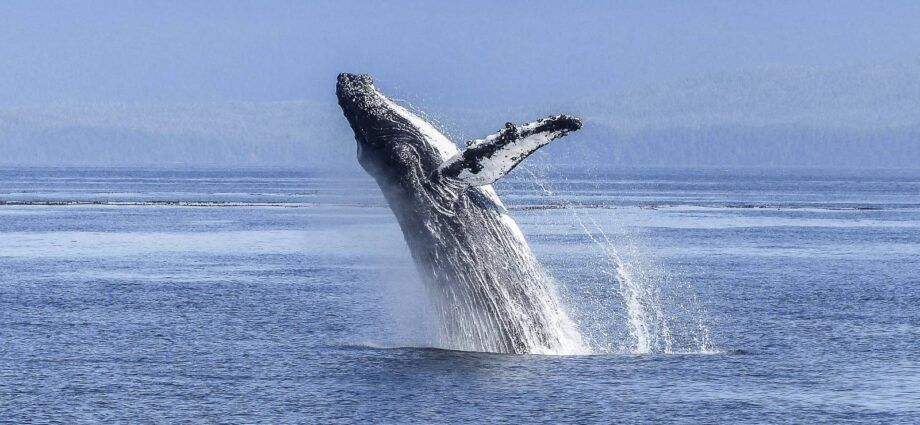
With the sun on our backs being pleasantly cooled by a light sea breeze, we found ourselves bobbing in a small rib, watching the largest animal ever known to have existed on this pale blue dot we call Earth: the blue whale.
Cosmological scales aside, the sheer size of this oceanic giant was simply mind-blowing, says Katie Watson. Even though we were almost within touching distance, its true mass was still hard to comprehend. Like an Arctic ice shelf, its broad protruding back broke the water and seemed to stretch the horizon, challenging you to believe the scale of what lay beneath the surface.
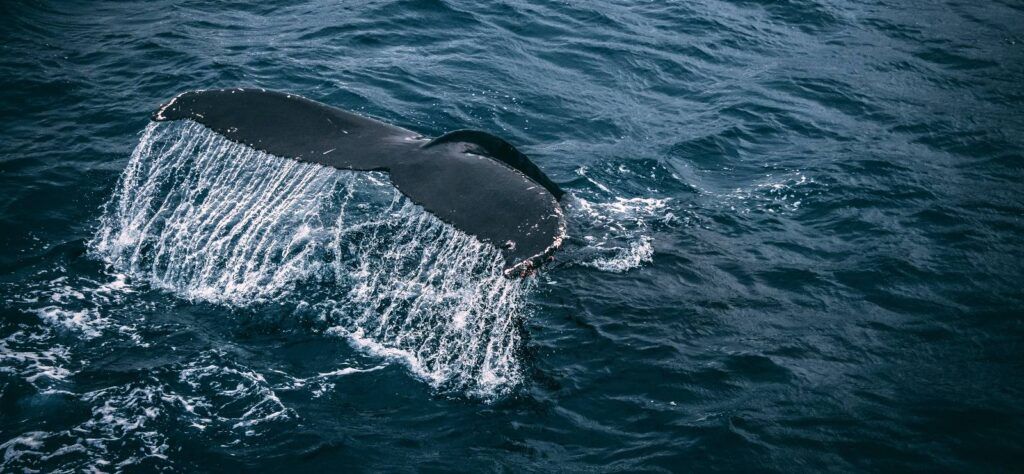
Thirty metres and 180 tonnes of sea monster was calmly taking a breath in front of us. It was a sobering experience, immediately bringing to mind how small we humans are on nature’s scale, let alone in the vastness of the universe. The blue whale’s majesty was truly awe-inspiring. Seemingly without a sign of change, our whale-attuned tour guide and local marine biologist sighed: “Here he goes.” Then, with a languid grace, with its head diving and great tail rising out of the water to stand monument-like against the skyline, the goliath was gone, sliding out of sight into the depths.
Home of the Whales
Pico is an island in the central group of the Portuguese archipelago, a three-hour flight from Lisbon and most noted for its volcano, Ponta do Pico, the highest mountain in Portugal and the highest elevation of the Mid-Atlantic Ridge. Whales have always been at the heart of the island and its history. The arrival of American whalers to the Azores introduced a much-needed income source to the island at the end of the 18th century, with whaling becoming the primary industry until the beginning of the 1970s.
Since then, the island has not only protected but embraced the incredible array of marine wildlife on its doorstep, turning the whaling trade into marine tourism. Thousands now visit the islands yearly to enjoy the Mediterranean climate and tick off that ‘bucket list’ adventure – whale watching. The islands that make up the Azores are currently one of the world’s largest whale sanctuaries. Among resident and migrant species, more than twenty types of whale and dolphin can be spotted. In 2012, Pico received the Quality Coast Gold Award for its efforts to become a sustainable tourism destination. A worthy cause indeed. With such a diverse range of whale and dolphin species passing through the Azores, there are opportunities to spot marine mammals year-round.
Species and Sightings
I was fortunate to be on the island in early May to fulfil a lifelong ambition of meeting the blue whale. Based on previous sightings, the whales pass through the region between March and May, with a few early sightings also possible in September. The most bountiful month for multiple species sightings is in March when killer whales join the blue whale, short-finned pilot whales, see whales, Risso’s whales, fin whales and sperm whales- to name a few! And that is not to mention any of the many dolphin species. It is no wonder why many consider this the best place on Earth to whale watch.
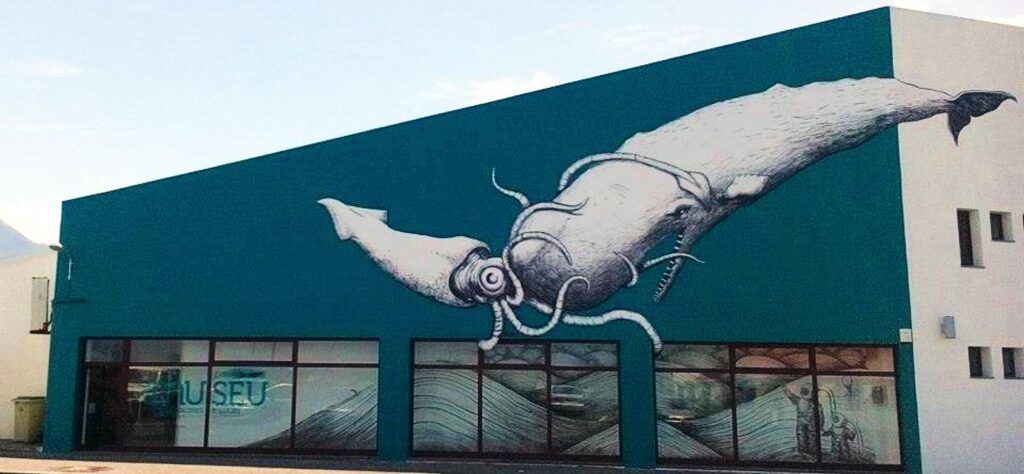
However, when it comes to nature, there are never any guarantees, but with spirits high, the other guests and I left our hotel and headed down to Pico’s quaint harbour in Madelena. On the walk, we were once again reminded of the sheer size of these creatures as stretched out on the road was a life-size painting of a sperm whale – not only as a symbol of what we were there to see but also of the chequered history and relationship this small island has had with its local marine life.
In Search of Giants
Meeting at the office, introductions were made with our guides, and it was time to hit the open water in our small twelve-man rib, which was a little daunting for some. However, excitement got the better of them, any trepidation melted away, and we pressed on, keen to share the waters with the giants of the oceans. Leaving the harbour, our driver and guide were both on their radios, quickly sending and receiving instructions, plotting a course to where the whales were last spotted, all the while scanning the bright blue waters through their binoculars. Suddenly the radio crackled to life, and a call came through – two blue whales had been spotted. Pushing the throttle into action, our driver set out towards the coordinates.
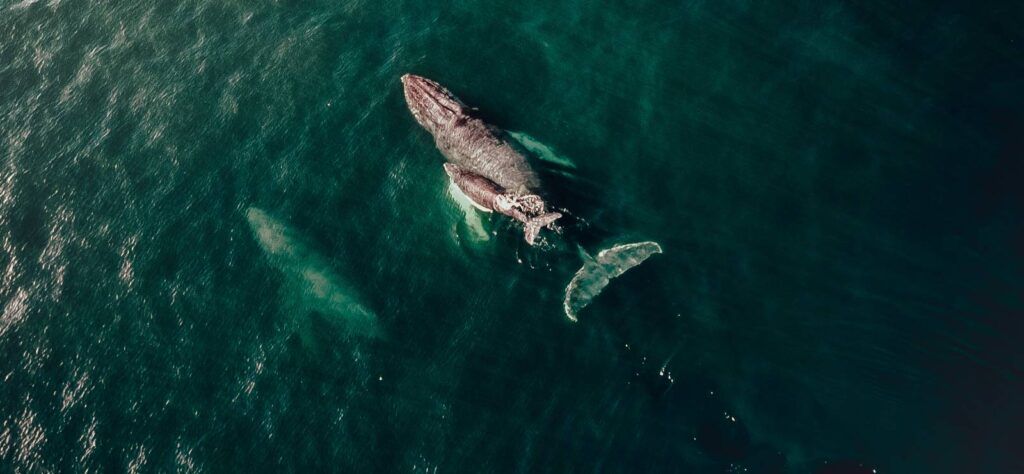
We could not believe our luck; within ten minutes of leaving the harbour side, we were slowing to a gentle approach alongside not one but a pair of these gentle, majestic giants. It was one of the most calming, awe-inspiring and breathtaking events you could imagine. The magnitude of the animal is what strikes you initially – 30m is about the length of a basketball court. Until you are actually next to an animal of that proportion – of those kinds of dimensions – it is impossible to understand truly. Trust me.
The next thing to strike you is the sound of the powerful blast as they forcefully expel air and water around 40ft from their blowholes – which gives you an impression of their 5,000-litre lung capacity, which sees them dive for up to 30 minutes at a time. We bobbed along near the whales, with the gentle sound of the waves lapping against the side of the boat the only backing track to this wonderful, natural encounter.
Finally, and with a last great breath, the two blue whales then slipped away into the Azores’ clear water, leaving us with a problem. We wanted more! Luckily, moments later, the radio again crackled into life as the whale spotters had another sighting, and off we went towards our next wildlife experience. Adventure waits for no man!
An Intimate Experience
Although we heard of some guests who had found whale watching a ‘real adventure’, and I can imagine that in rougher seas, this might be a little more of a nerve-jangling experience. I found the experience a mixture of fascination and a calm, intimate nature encounter. It is not contrived, set up or forced in any way, and there is no physical interaction, but this does not take away from the chance to share the same space as the largest animal on the planet. There was something personal and authentic about the small rib boat and its small-group whale-watching experience. With just a thin layer of rubber between you and the whales, your connection with them and their environment seems closer and, in some ways, less intrusive than it might be on a larger vessel where some of the magic may be lost.
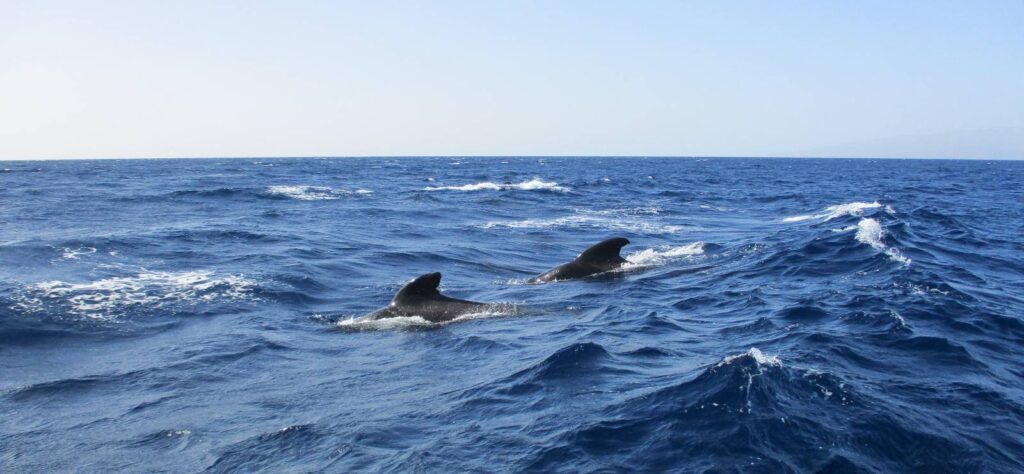
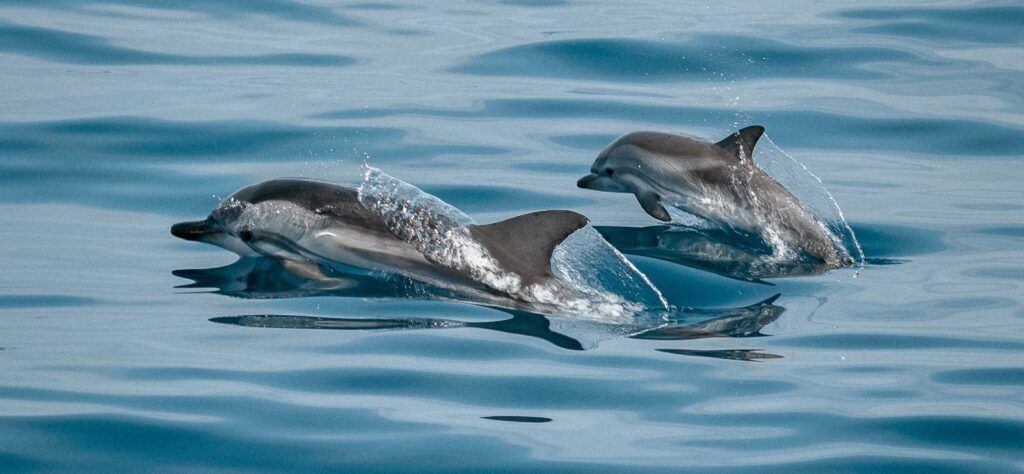
By the end of the day, we not only had the pleasure of experiencing three pairs of blue whales but also several more frantic and playful species of dolphin and whale, including pilot whales, Risso’s dolphins and fin whales, as well as a huge turtle. Far from becoming blasé, each sighting brought fresh excitement from all onboard.
Back on Dry Land
With our feet back on terra firm, we waved goodbye to the crew, but our experience with the local marine mammals was not to end there. Jumping in the rental car, we took to the lanes and, stopping off on the spectacular coastal road; we took the short walk to one of the island’s many watchpoints. Built initially as watchtowers during the height of the whaling period, the small white huts now serve as perfect vantage points to the coastline and to spot the whales and dolphins in the waters below. It is surprising how close to the shore they come, so binoculars are not needed. Just looking out over the sea, you can spot whales breaking the surface and pods of dolphin jumping and playing in the shallows and open waters. It is a sight that I will not soon forget. Although growing in popularity, there is a natural beauty, and in some ways simplicity, to the Azores that makes it an untapped destination for those looking for a ‘soft’ adventure.
With spectacular views, mind-blowing wildlife, a range of comfortable accommodations to fit any budget, and adventure activities, it is a great place, whether on a family holiday or a honeymoon with a difference. So, what are you waiting for? That bucket list is not going to tick itself off!

- Driven: Rolls-Royce Ghost Series II — Luxury evolved - 6 May 2025
- Driven by vision: The Aston Martin Lagonda Series 2 revisited - 22 April 2025
- Ogio Introduces Limited-Edition Agave Ahora Golf Bag Collection - 25 May 2024