
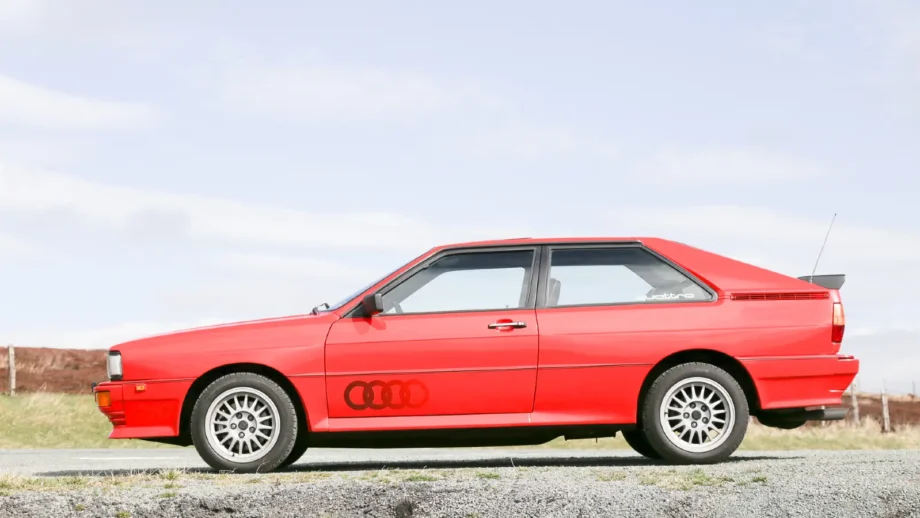
The original Audi Quattro, introduced as a road-going car in 1980, wasn’t great. Weighing 1,290kgs (which might be lightweight now, but wasn’t then), it under-steered like a pig because the majority of the five-cylinder engine’s weight lay ahead of the front axle. It was expensive too, and while the engine might have been powerful, it was peaky and suffered from appalling turbo lag.
It should not have been a success as a road car.

But then iconic cars rarely become iconic through dynamic prowess: the Ferrari Dino wouldn’t see which way a modern-day Ford Fiesta went, and a diesel-powered Volvo estate would outrun just about anything made in the 1980s under real-world conditions.
No, what makes a car iconic is harder to define and almost impossible to engineer in, although racing will generally do the trick. So when an Audi Quattro won the 1980 Janner Rally in Austria, success was assured; after all, everyone wants to be Hannu Mikkola, Stig Blomqvist, or Walter Röhrl, don’t they?

Remaining in production for eleven years, the Quattro might have enjoyed three different engines and two major dashboard styles in its life, but the basic shape – and concept – remained faithful until the very end.
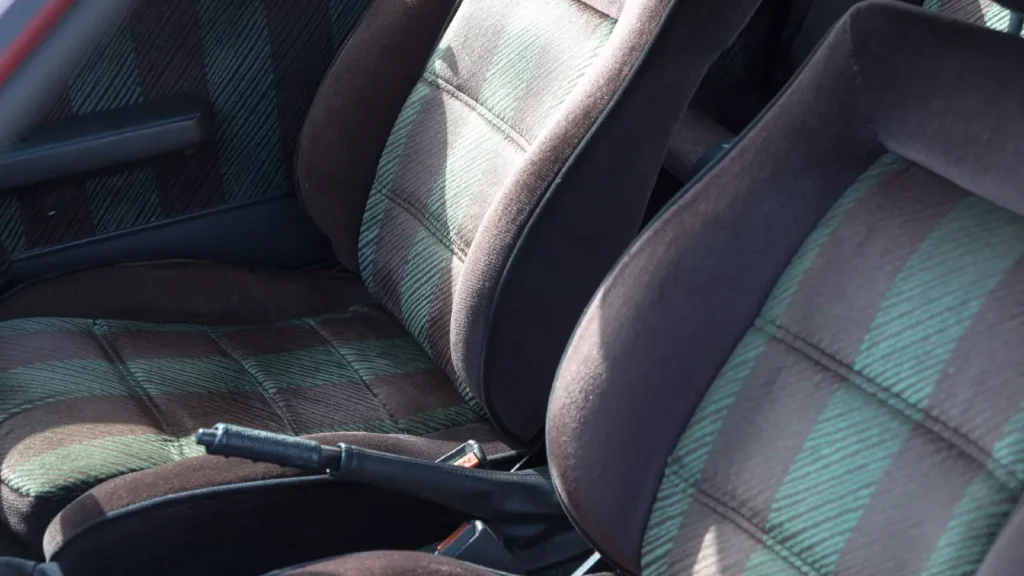
This car, built in 1982, has the earliest dashboard, highest suspension and simplest engine. So it is slow, cramped and wobbly compared to the later cars, which benefited from more power, lower, stiffer suspension, and a more ergonomic interior.
But it is still sensational.
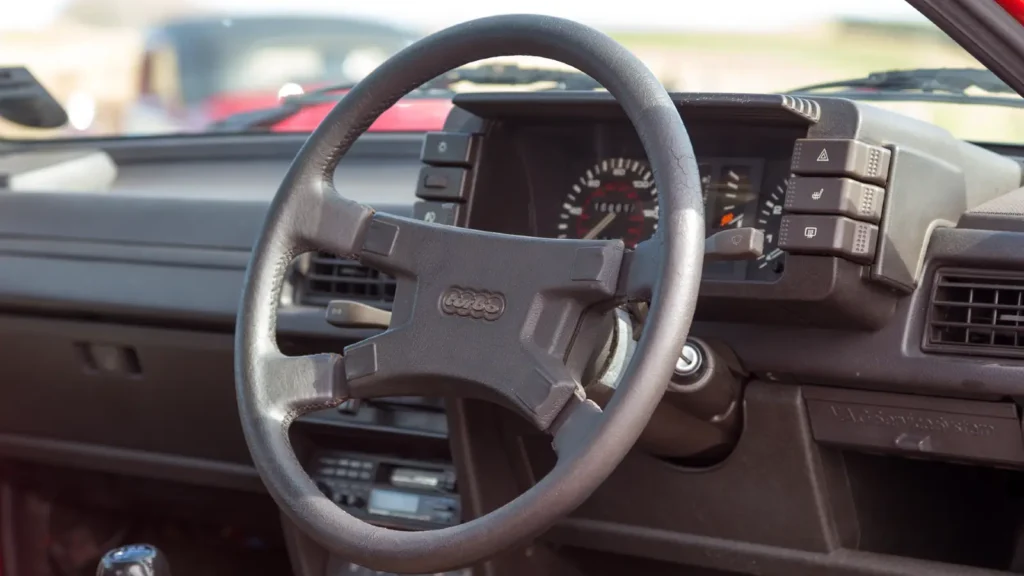
Because, you see, it’s not about power or handling or comfort. It never is. It’s about the smell, the noise, and the tactility of the controls. It’s the difference between flying your own small aircraft and travelling cattle class in a 747.
So when it understeered around the Evo Triangle in north Wales, I just went into the bends more slowly the next time and powered out a bit earlier. Quattro drive, then as now, makes heroes of the ham-footed, replacing clumsiness with deftness. And the turbo lag? That makes it all the more exciting when the power does eventually arrive.

Heavy steering makes the Quattro a handful at parking speeds, but it lightens with speed and communicates precisely what the front wheels are doing – and four-wheel-drive means that they will never suffer from torque steer, the bane of the hot-hatch world.
A ponderous gear change forces me to slow down, think, and plan. This is no bad thing, given that the brakes lack bite, power, and progression. They are, however, consistent, so you learn to brake earlier. Just because the mighty Audi forces you to drive more deliberately doesn’t mean you’ll be covering the ground more slowly; without trying too hard, I was travelling at about 75% of the speed I would be going in my decade-newer Evo I, and if it had been my car I’m sure I would have been even faster…
I borrowed the Audi from Great Escape Cars . It no longer has this particular car, but there are plenty of other classic and retro-modern icons for you to choose from, including a 996 Porsche 911, Jaguar XKR and Ford Capri 280.

- Winter Reading: Books for the Wilderness - 25 January 2023
- Kit Review: Mountain Hardwear Super/DS Stretchdown Hooded Down Jacket - 6 January 2020
- Tested: Outwell Dreamboat Mattress - 29 October 2019