
Jaguar builds some excellent sports cars and saloons — and the XF Sportbrake, which is Jaguar-speak for an estate, is even lovelier to behold than the saloon upon which it is based.
But offering an estate is no longer enough because everyone thinks they need an SUV, which means pretty much every car maker is now happy to sell you one. Porsche, the most iconic of sports car manufacturers, could now more accurately be described as an SUV specialist; in 2017, Porsche sold more Macans in Europe than the 911 and Boxster/Cayman combined — and that’s excluding the one thousand Cayennes it sold every month…
It was inevitable then that Jaguar would have to enter the fray, despite the apparent risk of cannibalising sales that Land Rover, its sister company, might otherwise make. But desperate times call for desperate measures: in 2012, Jaguar sold fewer than 24,000 cars worldwide. It now sells more F-Paces than that in a single year.
To say that the SUV saved Jaguar might not be much of an exaggeration.
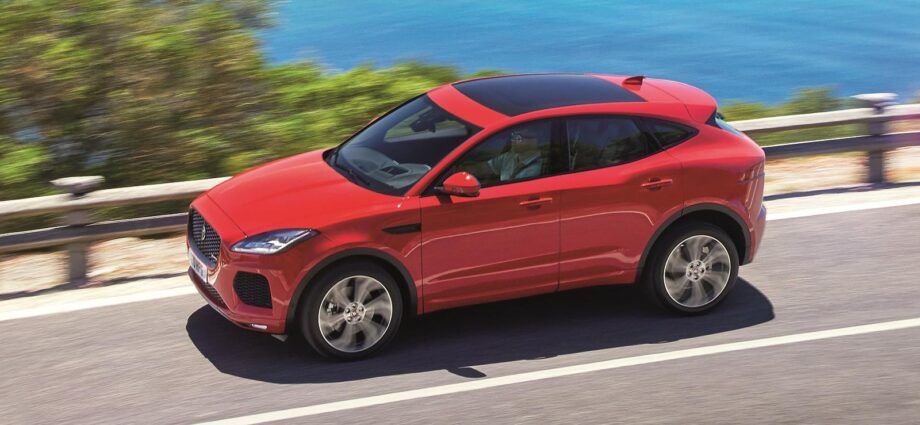
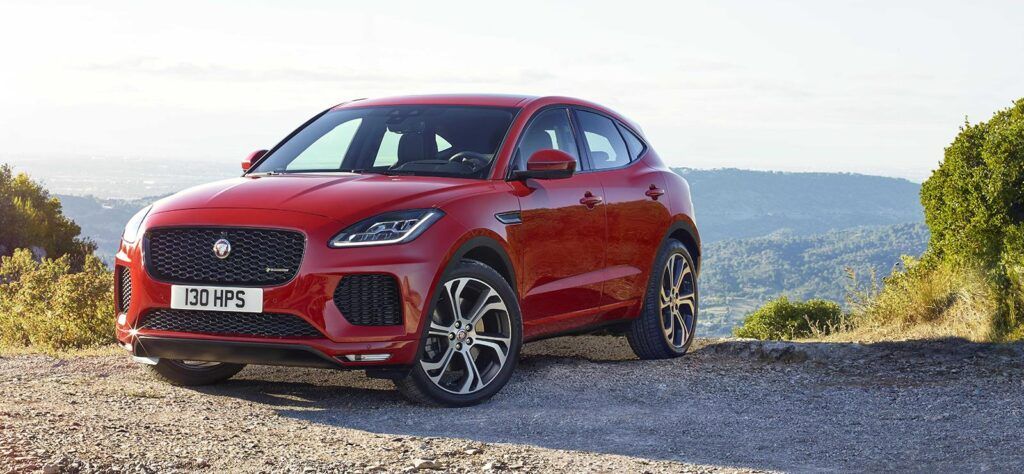
And the temptation to introduce a smaller F-Pace, to steal sales from rival manufacturers such as BMW, Audi and Volvo with the X1, Q3 and XC40, respectively, proved irresistible. Hence the Jaguar E-Pace.
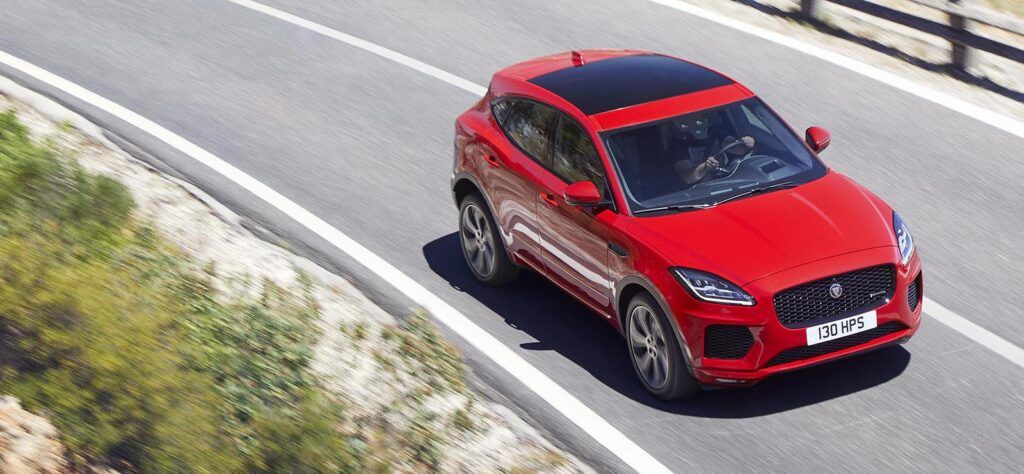
Based on the Land Rover Discovery Sport/Range Rover Evoque platform, the underpinnings have been pimped and preened to give the E-Pace more of a Jaguar feel. This sort of thing is widespread in the motor industry, allowing economy of scale to be applied to a wide range of vehicles – and if it’s done well, relatively minor tweaks can make a surprisingly big difference to the feel of the finished model.
The trouble is the resulting E-Pace is around 100kgs heavier than the (much larger) F-Pace, which means it struggles to deliver in critical areas such as ride and handling. That elevated SUV stance, for example, means increased body roll, and while you can tame the extra lean with stiff anti-roll bars, the pay-off can be a much poorer ride than in the equivalent saloon, hatchback or estate.
Some manufacturers manage to juggle these competing demands better than Jaguar; the E-Pace’s ride is much poorer than many of its rivals.
Having said that, the all-wheel-drive version I drove was very sure-footed and stable, even under the provocation of a 300hp petrol engine and a wet, greasy road. No matter what engine you choose, the E-Pace’s cross-country speed is pretty impressive, but you’ll arrive at your destination impressed by its competence rather than inspired by its brilliance.
Five Ingenium engines are available in total. All are four cylinders, with the diesel being offered in 150hp, 180hp and 240hp power outputs.
However, given the UK government’s current obsession with demonising the diesel engine and punishing those who dared to follow its official line to buy one, my choice would be either the 249hp or 300hp petrol engine — and if you can afford to buy and run the latter, then you are unlikely to be disappointed by the car’s performance. Its lack of refinement at the upper reaches of the rev range might come as an unwelcome surprise, though.
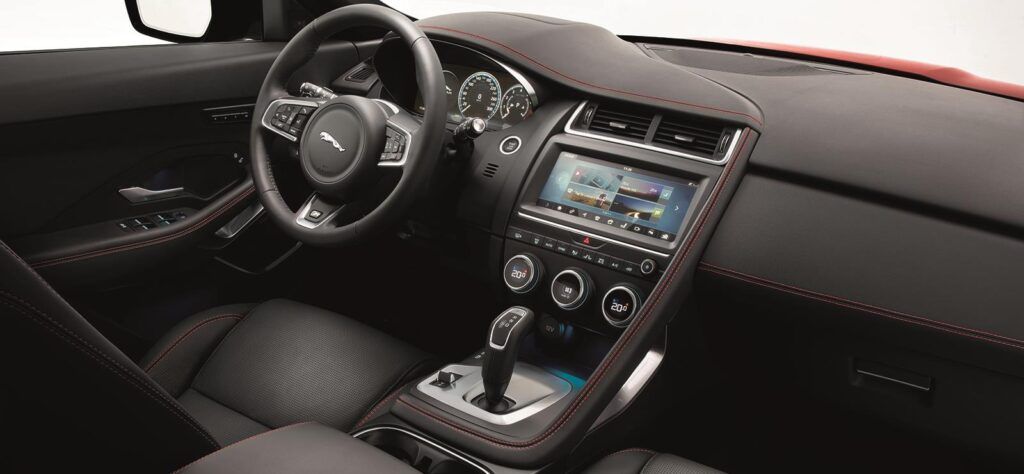
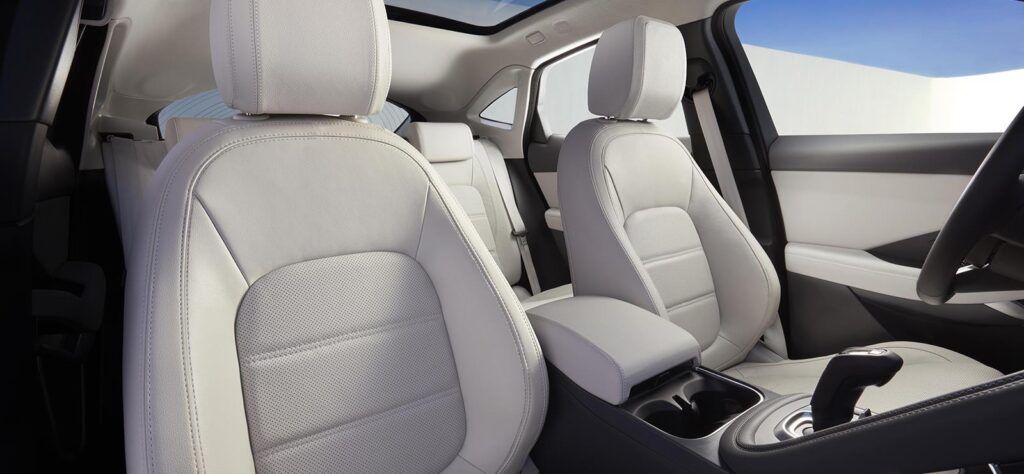
The interior, an essential Jaguar touchstone, is tolerably luxurious and feels decently interesting and premium, even if some of the materials used are a bit sub-par. Equipment levels are generous, though, and there are some thoughtful touches like the rubber Activity Key, which you wear like a wristwatch. This means you can swim, surf or otherwise indulge in your favourite foul-weather leisure pursuit without worrying about damaging your keyfob’s electronics.
It’s a very 21st-century car in other ways, too. You can connect up to eight digital devices to the onboard 4G Wi-Fi hotspot, something the younger members of your family will approve of. They’ll also appreciate the four 12-volt charging points and five USB connection points, even if space in the back is a bit tight.

But otherwise, there is, I’m sorry to say, little to recommend the Jaguar E-Pace. While the 150hp diesel with a manual gearbox and front-wheel-drive can be had for a little under £30,000, the P300 R-Dynamic HSE, complete with a 249hp petrol engine, all-wheel-drive chassis, and a nine-speed automatic gearbox in a nice colour and with a full suite of optional extras will set you back more than £70,000. That’s enormous money to pay for a car that doesn’t stir emotions.
If you’re not wedded to the idea of driving a Jaguar, the excellent Volvo XC40 is sharper, cleaner and far nicer to drive. It’s got more room in the back, a nicer, more modern interior, and rides and handles far more sweetly. It also has an utterly classless image and was named the 2018 European Car of the Year .
.
It’s also far cheaper than the Jaguar E-Pace, which helps further sweeten an already very attractive proposition. It’s the logical, sensible choice; that the XC40 feels like a member of the family is a welcome bonus.

- Winter Reading: Books for the Wilderness - 25 January 2023
- Kit Review: Mountain Hardwear Super/DS Stretchdown Hooded Down Jacket - 6 January 2020
- Tested: Outwell Dreamboat Mattress - 29 October 2019