
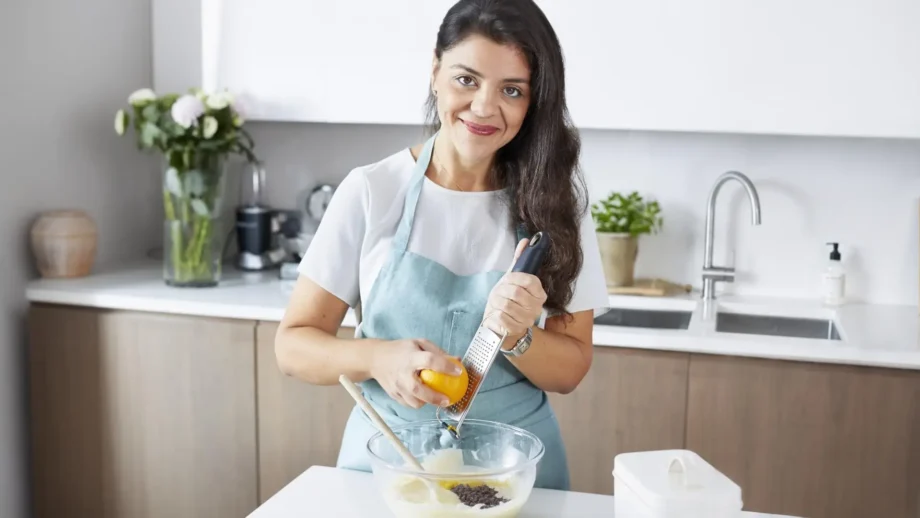
“My mother can’t cook,” says Sabrina Ghayour. It’s a surprising opening line from a chef closely associated with Persian-inspired cooking, but her culinary roots are less conventional than you might expect.
She didn’t grow up in a home where fresh Persian dishes were constantly on the table. “Not much Persian cooking happened” in her childhood household, but one dish has stayed with her: her grandmother’s loobia polow, a fragrant combination of tomato and saffron rice, green beans and tiny pieces of lamb.
“It was absolutely delicious,” she told CALIBRE, ahead of her appearance at the Blenheim Food Festival . “And despite hating to cook, she made it really well.”
Ghayour’s route into food wasn’t shaped by generations of recipe knowledge passed down in the kitchen. It was something more instinctive, more personal, and perhaps more relatable to the home cooks who have helped make her one of the most recognisable voices in modern Middle Eastern food.
“I’m a self-taught cook,” she says, “but my mother saw the spark of interest in cooking when I was five, and she gently nudged me towards the kitchen because she saw I loved it.”
That early encouragement mattered. So too did the cooks she watched from afar. Ghayour draws inspiration from family, including her grandmother’s sister, but also from the TV chefs who made food feel alive and exciting. Ken Hom and Madhur Jaffrey were early influences, followed later by Nigella Lawson and Jamie Oliver.
That mix of heritage, curiosity and self-teaching goes some way to explaining the style that has made her so popular. Ghayour’s food is rich in character and flavour, but never feels trapped by rigid rules or boxed in by cliché.
Asked whether her unconventional path into cooking has made her more willing to challenge tradition, her answer is immediate.
“Absolutely,” she says. “Which suits my nature so much. I’m not a follower of trends or traditions, I tend to do what feels good and right for me and follow my intuition, even if that doesn’t always work out — because it’s better to make mistakes and learn from them.”
That sense of intuition is central to her appeal. Ghayour doesn’t present cooking as an act of perfection. Instead, she keeps it accessible, generous and achievable. That’s particularly important when it comes to Persian food, which can feel daunting to people unfamiliar with it.
One of the biggest barriers to cooking Persian food at home is perception. Too often, Ghayour suggests, people overcomplicate it before they have even started.
“I’d say take a deep breath, don’t sweat the small stuff,” she says when asked what advice she would give less experienced home cooks wanting to explore Persian food.
The practical touch runs alongside a quiet mission to correct misconceptions. One of the most common mistakes people make, she says, is assuming Persian cooking is built around heavy spice use.
“People overthink it,” she says, “but also think that it’s a cuisine made up of heavy spice use rather than fragrant herbs, tomato and citrus.”
That helps explain why Ghayour’s books and recipes have found an audience. She understands that, for home cooks, authenticity cannot come at the expense of usability, and that a dish that is revered but never attempted is, in some ways, a dish already half lost.
“Sometimes, if you don’t simplify things, you run the risk of losing that recipe because people don’t want to make it, as it’s too hard,” she says. “I only ever simplify things when they retain the integrity and original flavours of the dish because it is still possible to make changes without losing the essence of the recipe.”
That balance between tradition and instinct feels like the thread running through everything she says. It also comes through in the way she cooks at home. Asked which recipe best reflects her everyday approach, she points to tepsi kebap, a simple Turkish tray-baked kebab dish that is all ease and reward.

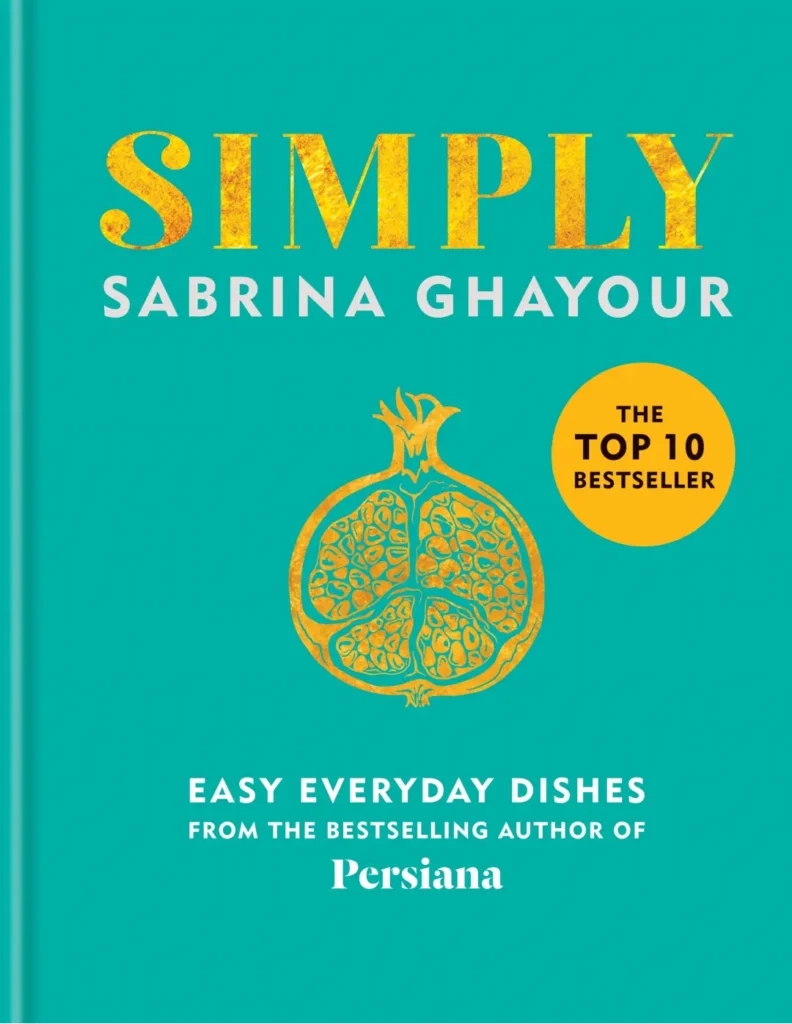
“You throw everything into a bowl, smash it up, mix it together, and smoosh it into an oven tray,” she says, “and bake for 16 to 18 minutes to produce the juiciest and simplest kebab you’ve ever made.”
It’s easy to see the appeal. There is no pretence, no performative complexity, just the promise of maximum flavour with minimum fuss. The same can be said of the staples she keeps close to hand in her own kitchen: Maldon sea salt, good black pepper and garlic granules.
Ghayour comes across as someone refreshingly uninterested in culinary theatre for its own sake. Her approach is grounded in flavour, experience and the confidence to trust her own judgement. Perhaps that confidence has been hard won. Asked about the biggest challenge in her career so far, she doesn’t mention the kitchen at all.
“Redundancy has always been the biggest challenge in my career,” she says, noting that it happened several times before she became a chef. “But I look at where I am now and realise when people say ‘everything happens for a reason’, they weren’t wrong.”
There’s resilience in her perspective, but also gratitude, and a sense that the path into food didn’t need to be tidy or traditional to be meaningful. That may be what makes Sabrina Ghayour such a compelling figure. Her cooking is rooted in heritage, but not limited by it.
And perhaps that is why her food resonates so strongly. She makes Persian cooking, and the wider world of Middle Eastern flavours, feel neither intimidating nor distant. Instead, she brings it within reach, to be enjoyed, adapted, and cooked with confidence.
Love Sabrina’s no-fuss approach to cooking? We’ve got her favourite Tepsi kebap recipe, a simple tray-baked dish she says is one of the juiciest and easiest kebabs you can make.
