
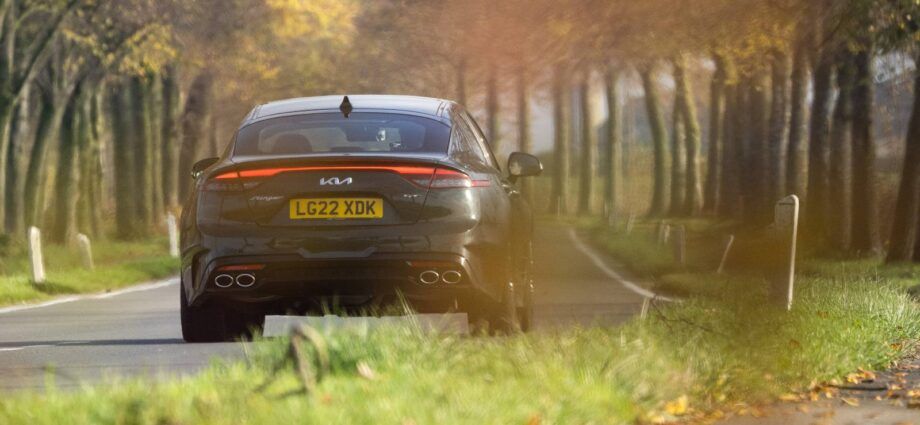
If proving it could do more than make dull but worthy family hatchbacks and SUVs was the goal, then the Kia Stinger did well. Alas, the days of the grand tourer are numbered, and this long and low four-door coupe is the next to have its neck placed on the chopping block.
A halo product in Kia’s range, the Stinger attracted attention if not sales — there are fewer than 2,500 in the UK — but progress means it’s being killed off before its time. Electrification is the future, so we’re repeatedly told, with even supercars switching to protons rather than petrol.
Before the Korean behemoth disappeared, we took it for one last blast.
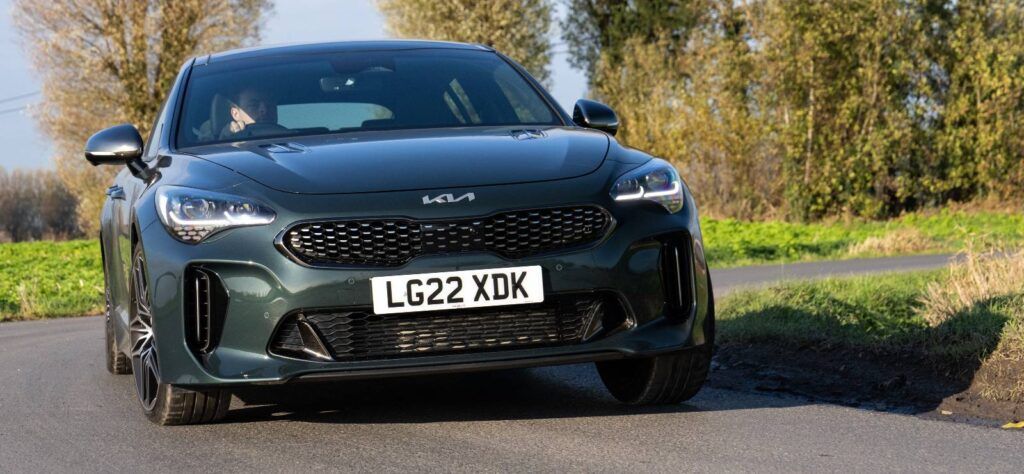
The Kia Stinger is a big, laid-back luxury four-door coupe. Most buyers would opt for the 3.3-litre petrol engine, its twin turbos working to create 366hp, all going to the rear wheels. It’ll hit 62mph in just 4.7 seconds and go on to 155mph before electronic limiters stop you going further.
Despite that, the numbers aren’t important. Kia could have made the Stinger faster, but that would be to focus on the wrong thing. Kia’s European design director, Gregory Guillaume, sums it up perfectly: “Stinger is not about outright power, hard-edged dynamics and brutal styling at the expense of luxury, comfort and grace. Stinger has nothing to do with being the first to arrive at the destination — this car is all about the journey. It’s about passion.”
That sums up the Stinger. A product of passion, mostly unaffected by the influence of corporate accountants. Yes, the GT4 Stinger Concept originally shown at the 2014 Detroit motor show might have been more dramatic, but ex-Audi designer, Peter Schreyer, turned it into something that, miraculously, was given the green light.

Little was needed to make it to market, as the marketing team’s box-ticking exercise, ensuring as wide a range of consumers as possible found the car appealing, wasn’t necessary. This would always be a niche model and be all the better for it.
Our journey starts with battling the M25, made easy enough thanks to relatively forgiving suspension — although the infamous concrete section still sends shudders thumping through to the cabin.

Once through the Channel Tunnel, the smooth French and Belgian motorways showed off the Stinger to its best. The constant threat of being caught by a speed camera was real, as the car is so relaxed it gathers speed rather discreetly. Suddenly, without knowing it, the scenery gets a little blurry, and you’re passing other cars like they’re standing still.
This is a car that would make mincemeat of a cross-continental blast.
The cabin doesn’t show any cutting-edge design but, to these eyes, works beautifully. It’s got the near-perfect balance of modern technology and classic design that makes it look and feel great while also being easy to operate. For those that are forcing us all down a digital route (and I’m including Kia in this), then this is a masterclass in how to balance old and new.

Soon enough, I’m steering the Stinger onto the tight cobbled streets of Bruges, our destination for the night. It’s less at home here, feeling unnecessarily large as you navigate between pedestrians and cyclists who behave as if they have complete priority over cars. In fairness, they probably do.
Squeezing into the underground car park, my last drive in the Kia Stinger was over. It’s a car I’ve spent a lot of time in over the last few years, including in race-car GT420 form, and it’s going to be missed.
The few hours it takes to get from CALIBRE’s office to a hotel in Bruges is hardly the makings of an epic road trip. Still, it’s enough to remind us all of what we’re going to be missing as the world moves, rightly so, towards a more sustainable and environmentally considerate future.
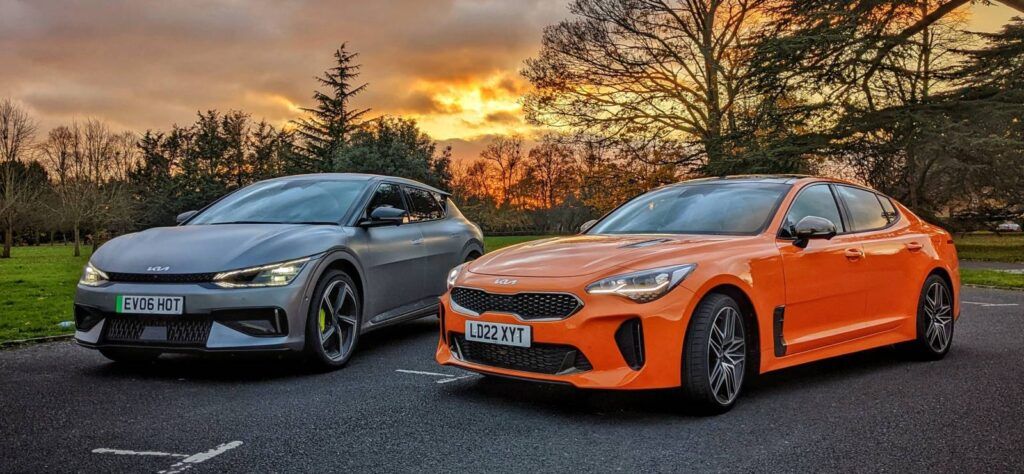
We relaxed in the Central bar in Bruges’ Markt with a few drinks, raising a glass to the Stinger. We’re fortunate to be here as the petrol-powered automotive world reaches its peak, but the future is every bit as exciting — as we would find out on the way home.
