
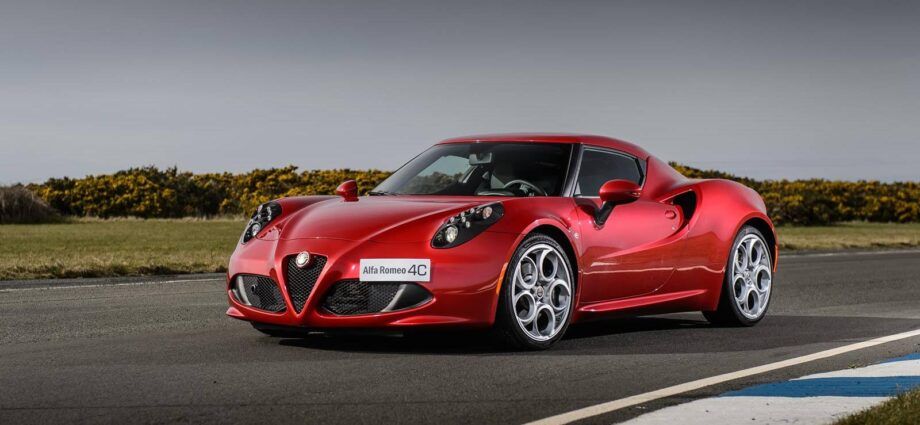
“Perhaps a little earlier on the brakes there,” calmly suggested my chaperone as I threw the new Alfa Romeo 4C off the tarmac at a pretty significant speed, admits Phil Huff.
I was on the Isle of Man, putting the 4C through its paces, although not on the infamous Snaefell Mountain Course . Instead, I was given the keys to the newly face-lifted Giulietta and told to make my way to the Jurby airfield in the northwest of the island.
After warming myself up on the unrestricted roads that circle the island, I leave the Alfa Romeo family hatchback and head towards the 4C, resplendent in its traditional red paintwork.
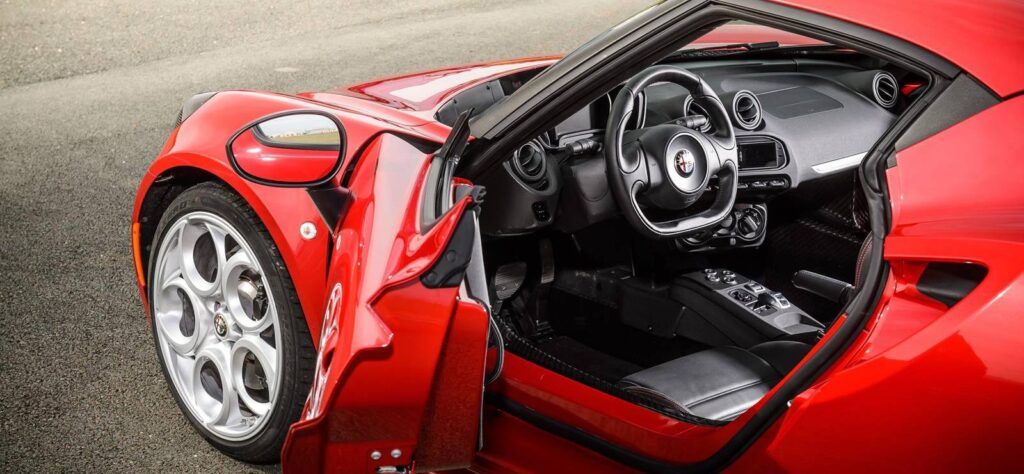
It’s a much smaller car than pictures might lead you to believe. The roof barely rises above my beltline, while the car isn’t much longer than a Ford Fiesta. It’s quite a bit wider, though, lending it an incredibly aggressive, purposeful stance.
Opening the doors reveals a sill to cross that’s as wide as that found on any supercar, which starts to make its supercar-like construction clear.
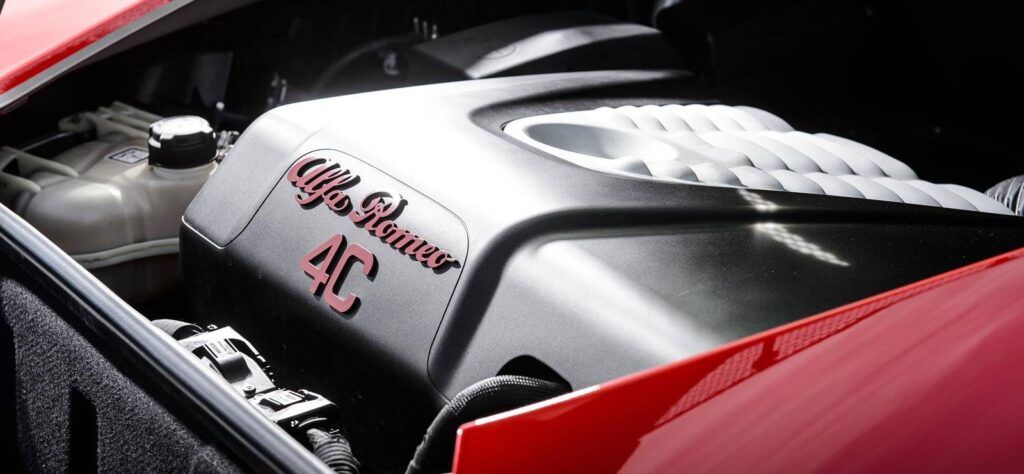
The sill gives strength to the carbon fibre structure that sits in the middle of the car, housing you and a load of gubbins, which then has an aluminium structure bolted at each end. Finally, a hybrid steel and aluminium frame supports the 1.75-litre engine just behind the seats. The whole thing weighs less than 850kg, making even a Lotus Exige look a little plump.
Once you’ve contorted yourself into place in the cabin, you’re presented with a rather bleak dashboard with little in the way of design flair. Two round air vents, a stereo system and some dials for the air conditioning are all that adorn the untrimmed dash (and both can be deleted from the specification), while a series of buttons replace the gearstick to select a drive mode from the twin-clutch automatic gearbox.
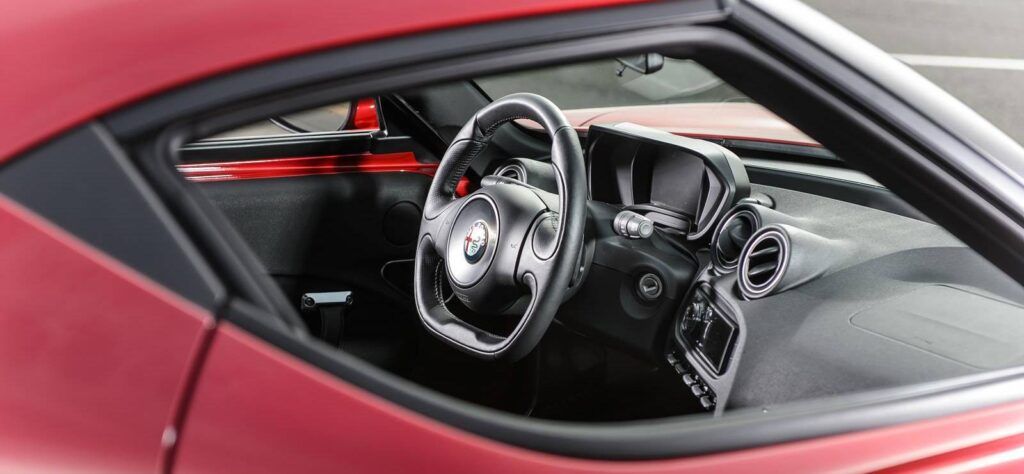
Directly ahead, however, is an elaborate digital display that shows a large rev counter surrounded by other essential information. It changes shape and colour when you change the familiar DNA settings to the Race position.
Launch control is now active, and there’s an empty airfield in front of me.
Hold the brake, press the throttle all the way down, and then release the brake when you’re ready. The car darts forwards, the tiny engine trying hard to push your eyes back into your head as you hit 60mph in just 4.9 seconds.
The redline approaches rapidly. Grab the paddle shifter on the right side of the wheel, and the DCT semi-automatic gearbox engages the next gear, and the acceleration continues. From 60 to 100, the lightweight construction allows it to gather pace as well as any of its bigger engine rivals, and even as the screen showed 130mph, it was clear there was still more to come.
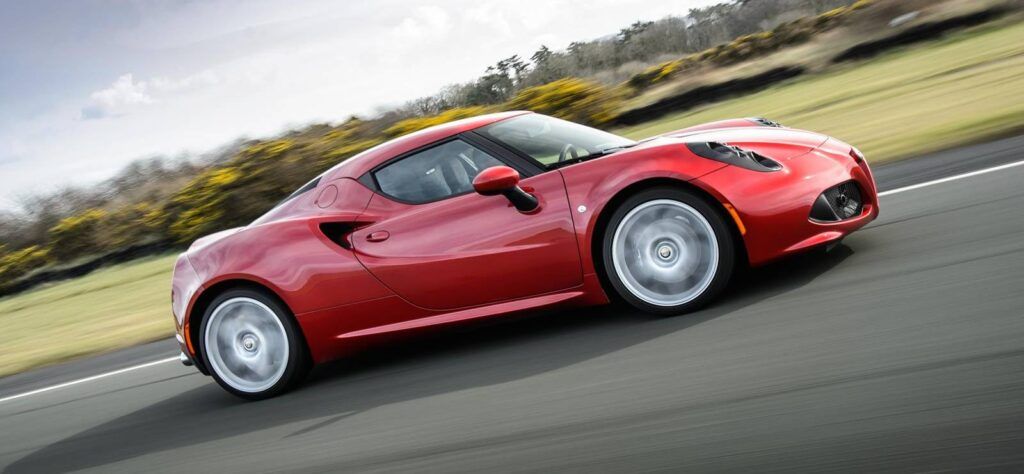
I couldn’t access more, though, as the brake pedal needed some immediate use. The nose dives, despite the stiffer suspension that comes with the £3,000 racing pack fitted to my test model. There’s no weaving, just solid and effective retardation, lap after lap.
Turning into the corner, the wide track and rigid chassis keep things very much in check, with a hint of understeer that can be dialled out immediately by the smallest of movements on the throttle. Changing lines mid-corner doesn’t send the back end drifting wide; it’s almost impossible to send the 4C sideways, even when trying hard.

Ride quality remained impressive, too, the Alfa gliding reasonably smoothly over the occasional broken surface at Jurby, but then I probably wasn’t concentrating on the ride quite as much as I could have while throwing the 4C from one turn to the next.
In reality, all I was doing was smiling, at least until I overcooked things into the chicane. Coming in way too hot, the tyres chirruped over the rough surface as I scrubbed off as much speed as possible before electing to ignore the second part of the turn and take to the grass. Ground clearance is a little low, but the Alfa Romeo 4C technically works off-road!
Pulling back onto the circuit, it seemed like an excellent excuse to have another go with the launch control. Some would argue that a proper manual gearbox would add a level of interaction with the car that’s missing now, but the DCT gearbox is direct and fast-acting and undoubtedly a better option for everyday driving.
Unfortunately, it’s that everyday driving area that I couldn’t test out, the 4C being restricted to airfield use. All too soon, I was thrust back into the Giulietta, left wondering how good the 4C really is.
On a closed circuit, it’s exemplary. That might be enough for 200 buyers a year in the UK that Alfa Romeo is expecting.
