
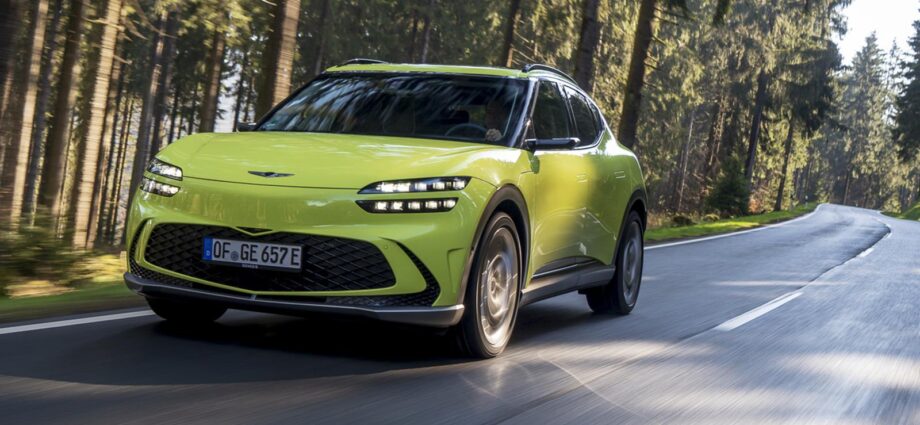
There are people far cleverer than me working in the Genesis marketing department, says Phil Huff, but I still don’t understand why it didn’t choose this, the all-electric GV60, as the car to launch the brand in Europe.
So, instead of embracing the future, Genesis misread the room and arrived with some heavy, thirsty luxury cars, like the delightful but hardly fuel-sipping G70 saloon and GV80 SUV. Now it’s working to put that right with the electric GV60 we test here, and a long list of forthcoming EV models.
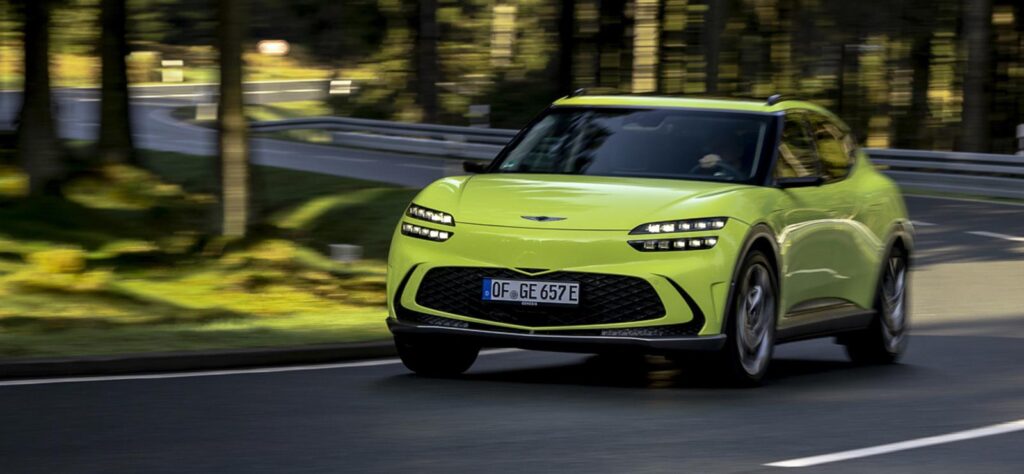
Further muddying the waters, though, the GV60 has a distinct style that separates it from the rest of the Genesis range. Yes, there are still hints in the quad headlights and with the ‘shield’ low down on the nose of the car, but there’s little to tie it to the rest of the range.
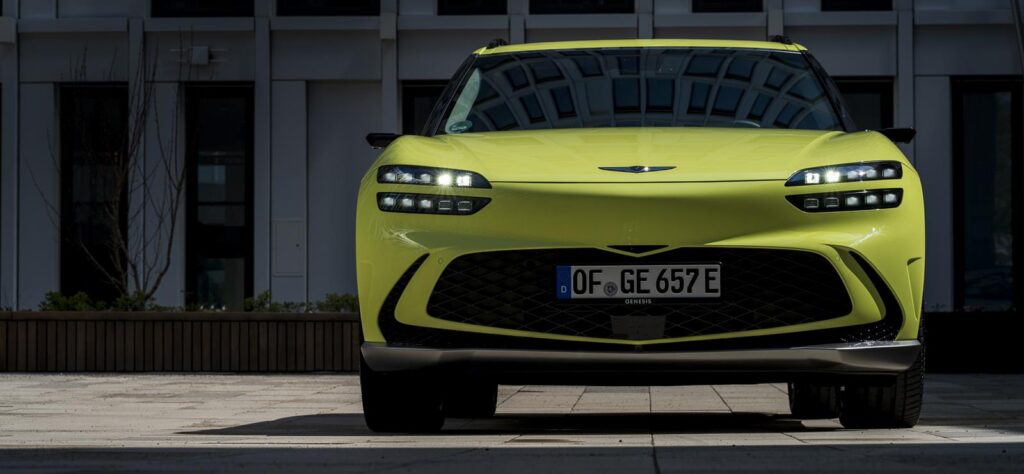
There are some great design touches, especially the ‘volt’ emblem hidden in the C-pillar. It’s smooth — even the door handles are hidden — so it looks like it’s been created by rather rapid erosion than built by machines in a factory. To be clear; it absolutely has been built by machines in a factory.
The Genesis GV60 Interior
As eye-catching as the exterior is, it’s the inside that you’ll see far more of, and that doesn’t disappoint. Covered in premium materials, there’s a choice between thick, quilted leather or eco-friendly fabrics. The seats deserve special mention, too. They’re big, squishy and comfortable, but it’s the air pockets hidden inside that make the difference. These can be used for a massage, and it’s the best one I’ve experienced in a car, the pockets firmly rolling up and down to loosen my shoulders. Some more in the side bolsters inflate to grip your body just a little more firmly when your cornering moves from sedate to sporty.

The cabin materials might be relatively old-school, but that changes when you look at the dashboard. Near fully digital, a large set of screens sits in front and runs across to the centre of the car. These are mostly conventional, but there’s one feature that stands out; press a few buttons and the digital instrument panel is replaced by an augmented reality view of the road ahead. It takes a feed from a camera at the front of the car and overlays lane suggestions, road names and directions onto the screen. It’s difficult to explain, but it works so well on the road.
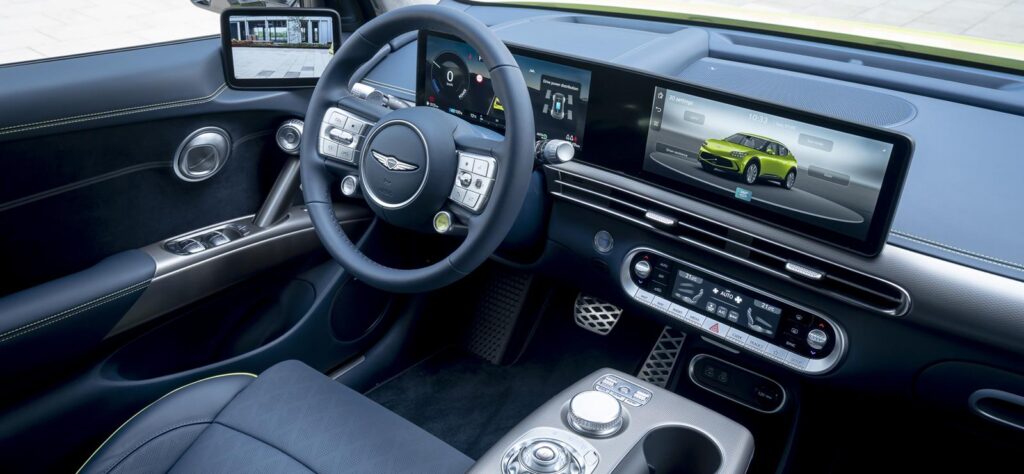
There’s also the blind spot video. Indicate to change lanes, and a video of what’s going on in your blind spot appears in front of you, which is something that’s both technically cool and also genuinely useful. No longer is tech there just for tech’s sake.
Other handy features include a wireless charging pad for a smartphone, multiple USB-A and USB-C sockets around the cabin, and both Apple CarPlay and Android Auto connectivity.
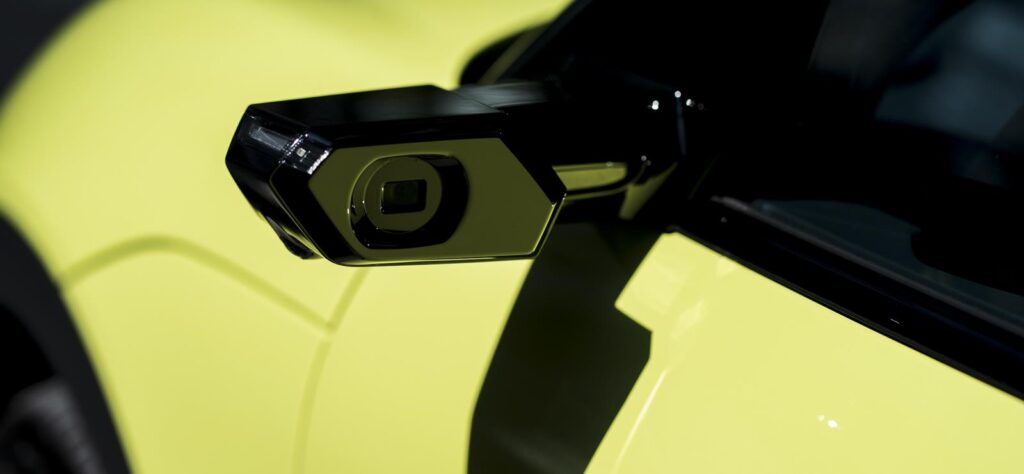
High-specification models also get video wing mirrors, where a small camera on a tiny stick replaces the bulky mirrors of a regular car, sending the images to monitors on each side of the dashboard. They look great but lack the ability for the driver to move around to alter their direction of vision. I’m sure the aerodynamic benefits are measurable by somebody, but an old-fashioned mirror is still a better bet.
Space for passengers is good all round, with even the rear seats providing enough room for adults, despite that sloping roof line. The boot is a decent size, too — 432 litres for those that like to measure their cargo area in liquid form. By way of comparison, an Audi Q4 e-tron has a 520-litre boot, while a Kia EV6 can swallow a 490-litre load. There’s another small storage area hidden under the bonnet, adding 53 litres of cargo space on some models but dropping to 20 litres on all-wheel-drive versions. That’s enough to store the necessary cable for plugging in and charging the car.

The Genesis GV60 Electric Performance
Charging the GV60 is a cinch, thanks to the inclusion of some seriously rapid charging technology. Find a suitable charger, and it’ll take 350kW of power, which means going from 10% to 80% charge (or adding up to 225 miles of range) takes just 18 minutes. Such fast chargers are a rarity in the UK, so don’t expect such quick service at every stop. Charge at home with a suitable home charging unit, and it’ll take around 11 hours to brim the battery full of electrons from empty.

Opt for the Vehicle-to-Device feature, and you can use the GV60 to power external appliances. Going camping but want to run lights, a sound system, perhaps a fridge and even a small oven? It’s no problem; just plug them into the charging port using a handy adapter.
The battery pack is a 77.4kWh unit, useful for up to 321 miles in the 229hp entry-level Premium model. The Sport adds more power and all-wheel drive but reduces the range to 292 miles. Sport Plus produces a healthy 490hp, which is pretty rapid, but drops the range to 298 miles. The latter comes with a Boost button on the steering wheel, freeing up all the power for 10 seconds, allowing you to either win a drag race, show off to a neighbour or make a risky overtaking manoeuvre. Fun, but perhaps not entirely useful.

It’s quick enough as it is, without any boost needed. The 0-62mph sprint is dealt with in four seconds in the Sport Plus, and it’ll go on to a maximum speed of 146mph. We saw 140mph on the autobahn around Frankfurt, so don’t doubt it’ll achieve that.
The Genesis GV60 Handling
Sophisticated suspension ensures the Genesis GV60 feels agile and comfortable, even when hitting those speeds. It’s plush around town and soft enough to be supple at speed. There’s optional tech in the form of Preview Electronic Control Suspension that uses a camera to scan the road ahead, adjusting the suspension for each bump before you arrive, creating such a calm ambience that you could easily forget what speed you’re doing. Find some bendy bits, and, despite the bulk of the car, thanks to the heavy battery pack, it’s a pleasingly nimble car. It could even be considered fun, which is rare for an EV.
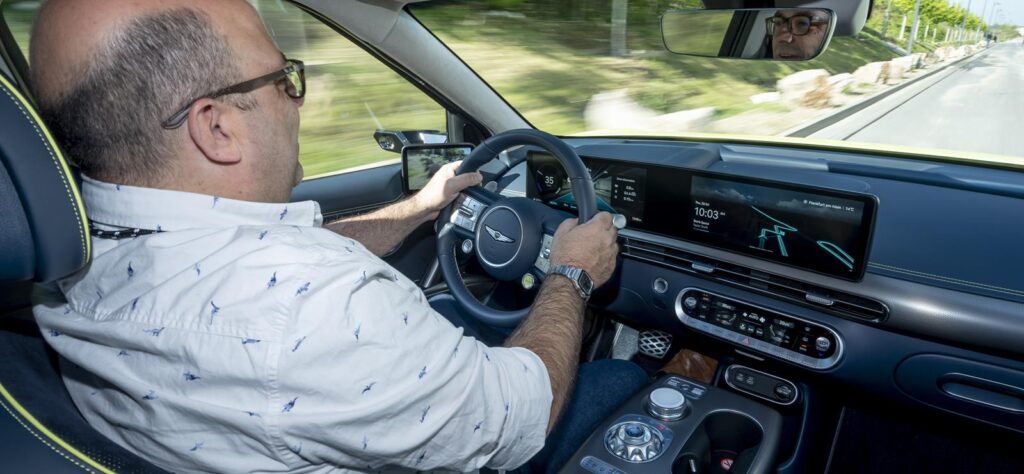
Oddly though, the rear-wheel-drive Premium model felt more stable at high speeds despite being limited to ‘only’ 115mph. Perhaps the extra weight of the twin motors upsets the balance slightly on the Sport and Sport Plus. For the motorway sections, Highway Drive Assist will do most of the work anyway; this is a step towards autonomous driving and keeps the GV60 out of trouble in fast-moving traffic, even changing lanes with little more input needed than a flick of the indicator.
The Genesis GV60 Verdict
There’s little to pick apart in the Genesis GV60, as it’s got most things right. Any niggles are, frankly, insignificant, and it’s just the styling that will divide opinion. And the price. At a starting price of £47,005, it’s not cheap, and by the time you reach the £65,405 of the Sport Plus, it’s downright expensive. Granted, it’s not really any more than its rivals, but when you start to compare it to traditionally powered options, there’s an intake of breath.
Genesis makes that more palatable by including more in the price than any of its rivals. Five years of servicing, a five-year warranty, breakdown cover, and a personal customer manager; they’ll ensure your car is picked up and delivered back when it’s time for a service, meaning you don’t have to spend time out of your schedule for routine maintenance. That’s a big deal, especially if you’re a long way from any suitable service centre.
All of this means the Genesis GV60 suddenly looks better value. Add in the distinctive styling, high-tech cabin, luxurious furnishings, involving handling, impressive performance and helpfully long battery range, and it’s tough to do anything other than recommend the car. Highly.

- Custom Made by Moss review: A suit with personality sewn in - 22 October 2026
- Lexus takes luxury travel airborne with new helicopter service - 20 October 2026
- Polestar 5 first drive review: Precision at pace - 6 October 2026