

There’s a particular type of car technology that only really makes sense after something has gone wrong. Dash cams sit firmly in that category. They’re not something most people buy for pleasure, but something many wish they’d had sooner.
The 70mai 4K T800 approaches that idea from a premium angle. This isn’t a discreet single-lens camera designed to be forgotten about, like most traditional off-the-shelf dash cams, but a carefully thought-out system built around coverage, image quality and a sense of quiet reassurance.
It’s expensive, undoubtedly so, but spend a little time living with it, and it becomes clear that the 70mai dash cam might be able to justify its premium price tag.

Despite packing three cameras into the system, the T800’s main unit is surprisingly discreet once installed. Mounted behind the rear-view mirror, its wide, landscape-oriented body tucks neatly into place rather than dangling into the driver’s eyeline.
The design feels considered rather than flashy. There’s no unnecessary chrome and no attention-seeking shapes, just a functional, well-finished unit that looks like it belongs in a modern car interior.
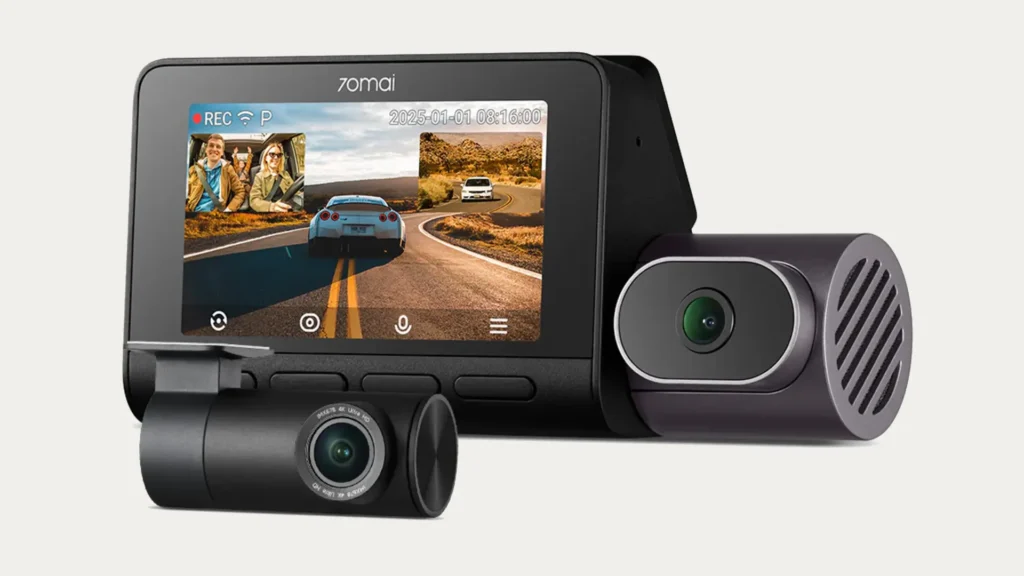
The interior-facing camera is integrated into the same housing and can be angled precisely, while the rear camera is a small, separate module mounted to the back window.
Installation isn’t something you rush, particularly with the rear camera involved. That requires metres of cabling to be hidden away behind trim panels, but once fitted, the system feels properly embedded rather than temporarily attached.
Three cameras, one purpose
The headline feature is coverage. With three cameras — a forward-facing windscreen camera, a rear-looking camera, and an interior cabin camera — it significantly reduces the chances of missing anything important.
Both the front and rear cameras record in 4K, while the interior camera captures 1080P Full HD footage. The result is a near-complete visual record of what’s happening around the vehicle, which is useful in accidents, disputes, or those ambiguous moments where blame isn’t immediately clear.
What’s notable is how seamlessly those views work together. Rather than feeling like three separate cameras bolted on, the system presents them as a single, cohesive whole.
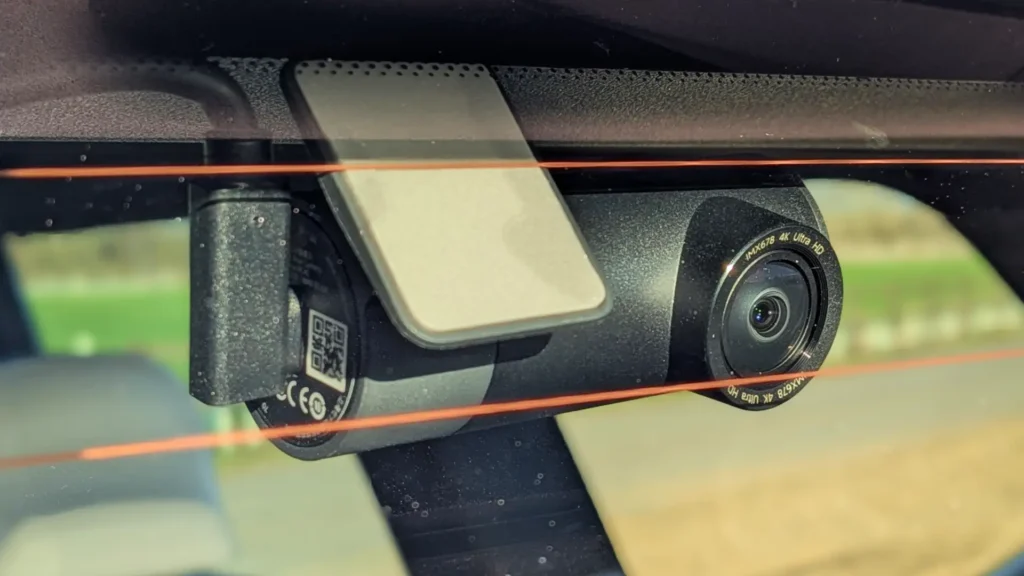
Image quality that justifies the price
This is where the T800 really starts to make sense. In daylight, footage is sharp and composed, with excellent clarity across the width of the frame. Road signs, number plates and surrounding traffic are captured cleanly without distortion or excessive processing.
At night, the camera performs far better than most dash cams, managing glare from headlights and street lighting with confidence.
Low-light performance is particularly impressive. Footage retains contrast and detail without collapsing into grain or murky shadows — the conditions where cheaper cameras tend to struggle most.
Colours are slightly more vivid than real life, as if everything has been turned up to 11, but not alarmingly so. If anything, that extra punch helps make key details easier to read when reviewing footage.
Inside the cabin, the interior camera delivers clear video even in low light, and usable audio. For drivers who value personal security as much as vehicle protection, that makes for more reassurance.
A calm, distraction-free user experience
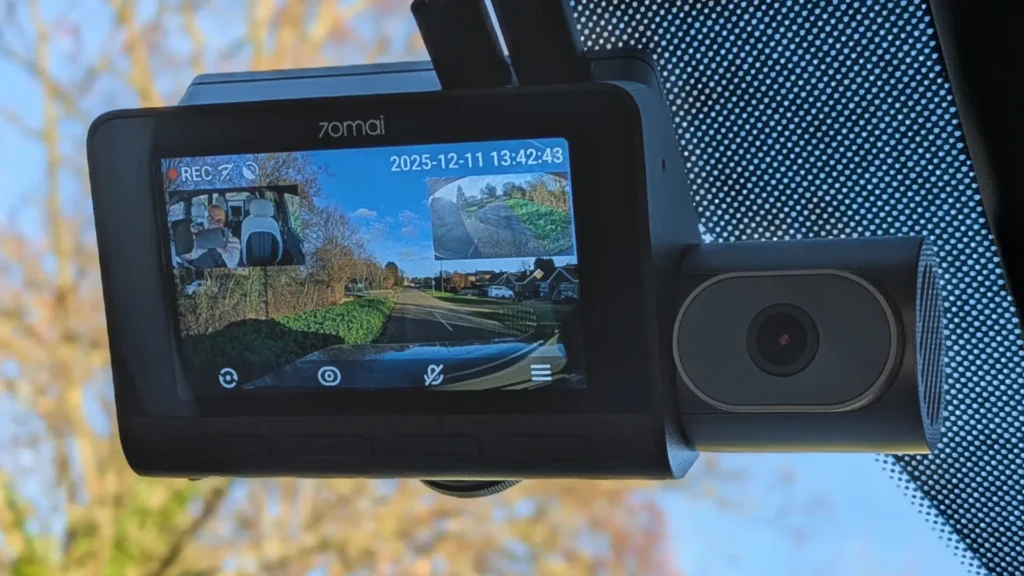
There’s a 3.0-inch screen on the rear of the main unit, which makes initial setup refreshingly straightforward. You can see all camera angles at once, adjust positioning, and confirm everything is working properly before setting off.
Once installed, interaction largely shifts to the smartphone app. Thankfully, it’s one of the better examples in this space, and is stable, logically laid out, and free from unnecessary clutter. Footage is neatly organised, emergency clips are protected from being overwritten, and transferring video is relatively quick thanks to fast wireless connectivity.
It’s the kind of system that fades into the background once configured, quietly doing its job without demanding constant attention.
Out of the box, the T800 behaves like a high-end driving recorder. To unlock its more advanced surveillance features, however, hardwiring is required.
With the optional hardwire kit installed, the system can monitor the car while parked, recording incidents before and after an impact or movement is detected. Add the optional 4G module, and it’s possible to receive notifications and remotely access footage, which is a genuinely impressive feature set, though one clearly aimed at more engaged users.
Hardwiring adds cost and complexity, of course, and it’s not something everyone will want to pursue. Without it, you still get excellent on-the-road footage, just without the always-on parked-car monitoring.
A pricey proposition
There’s no avoiding the price. At around £450 for the full kit, plus extra for hardwiring, the 70mai 4K T800 is firmly positioned as a premium product, although it’s currently available for £382 from Amazon .
.
But it’s also a product that delivers on that positioning. The build quality, image performance and overall experience justify the cost in a way many cheaper dash cams simply don’t.
The price tag promises confidence, knowing that if something happens, you’ll have clear, usable footage from almost every angle, and the T800 delivers that.
70mai Dash Cam 4K T800 Premium Set: The CALIBRE verdict
The 70mai 4K T800 isn’t a dash cam for everyone, and it doesn’t pretend to be. It’s for drivers who value quality, coverage and peace of mind over simplicity or price.
If you want a discreet camera you’ll never think about again, there are cheaper options that make more sense. But if you’re prepared to invest in a system that feels thoughtfully designed, performs consistently in all conditions, and offers genuine reassurance, the T800 stands out.
It’s expensive, yes, but it’s also one of the most complete and convincing dash cam systems available today.
