
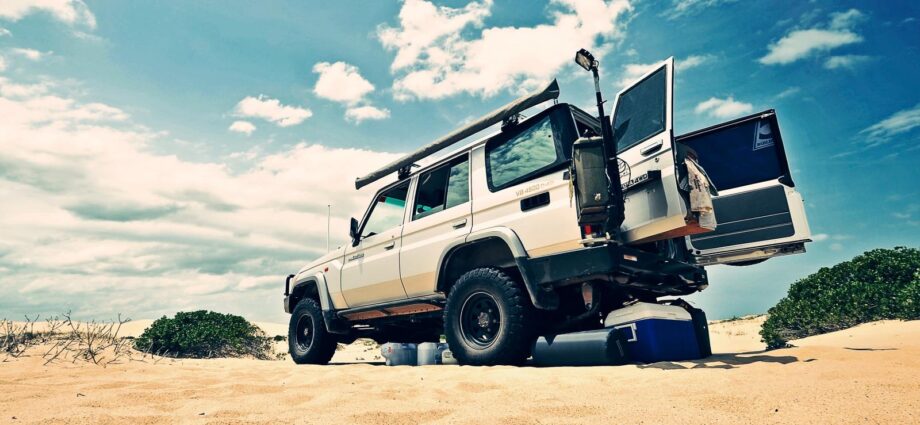
A great way to experience Australia’s diverse natural landscapes, spend quality time with the family and meet new people, all while not breaking the bank, is to go camping. And when it comes to camping the options are endless – short day trips with the car, month-long trips with a caravan or a few days with the family 4WD.
However, out of all the ways you can go camping, a 4WD has the upper hand in that it can take you where most people can’t go. Need some peace while surrounded by spectacular scenery? Then pack the 4×4 with the right gear for the duration of the stay.
Camping with a 4WD
A little upfront planning won’t hurt, and you’ll want to purchase some 4 wheel drive accessories to get to and from your destination safely. If you’re venturing far in the bush, consider some protective gear for your vehicle, like a nudge or bull bar, and basic recovery gear to avoid the embarrassment and hassle of being left helpless if you get stuck.
The same stores that offer these also sell a ton of camping gear. They’re well stocked with the usual stuff like tents, swags, foldable furniture, gas bottles and cooking equipment, as well as less obvious items that make the whole experience that more comfortable, like an awning.
Why Get an Awning?
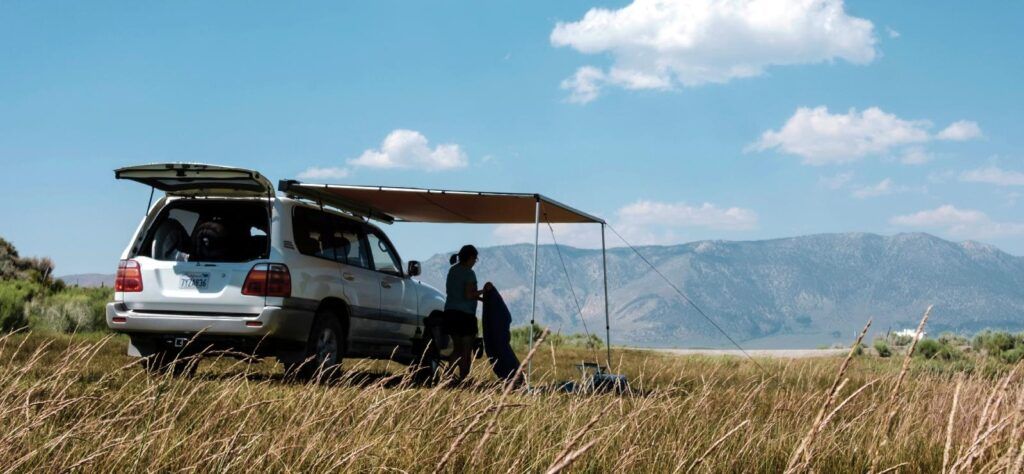
No matter if you’re going with the kids or a few mates, you’ll need a well-defined space that’s shielded from the elements. Getting an awning for 4wd is more of a necessity and serves this purpose well. You’ll be protected from the burning Aussie sun, unexpected gusts of wind and heavy downpours.
A roof over your head, albeit one made of fabric, is meant for a more homely feel, away from home. And you can tailor the added space for just about anything. There are awnings that expand sleeping space, those that serve as extra storage and simple awnings under which to indulge the scenery.
And you don’t have to leave it there. Accessorise your space with a few additions that bring in more comfort and practicality. First, consider what you’ll be treading on once the awning’s up. Caravan and annex matting is a cheap solution for more comfort under foot, and various sizes are sold to suit that of the awning or create a bit more space.
Inexpensive LED light sets with motion detectors ensure visibility and safety at night and can make for a pleasant ambience. Lastly, consider how you’ll be using that space and get the right furniture. Foldable tables large enough for all the family make memorable moments, and once folded, things like chairs, bean bags and pillows provide for a relaxed setting any time of the day.
Choosing the Right Awning
That said, there are heaps of choices. An awning that’s the right size, easy to set up, made of sturdy materials and provides just enough shaded space for the whole family is high on anyone’s shopping list.
Quick and Easy Setup
The last thing you want after hours at the wheel is an awning that takes about the same time to set up. The less time you need, and with the least help, means you’ll be using the awning each and every time you set out. Simpler designs come packaged with poles and mounting brackets and take roughly 5-10 minutes to get right, so you’ll be enjoying more of the day.
Sizes
This will depend on the length of the awning rails along the roof racks. Station wagon 4WDs like the LandCruiser and Patrol have a longer roofline than any ute, so can take bigger awnings. Sizes vary from a smallish 140cm along the vehicle roof by 200cm extended out (in side awnings), to larger awnings measuring 250cm by 300cm. Consider the space you need, and how many people it’s intended for. Packaged kits include poles in the right height and telescopic locks as well as mounting gear to secure separate pieces together.
Materials
The fabric and mounting accessories need to be of decent quality, and the best you can afford if you’re regularly out camping. 4×4 awnings are mostly made of durable, ripstop cotton or canvas. There’s also some heft to the material. A good yardstick to go by is anything with more than 250grams per square metre.
In addition, to get decent shade and cooler temperatures underneath, the awning for 4wd needs to be UV resistant. Those with coatings fare better in hotter weather and direct sunlight.
Another thing to look for is an awning that’s waterproof. After all, there’s no use if it lets in rain. Here laminated coatings help.
Lastly, consider the quality of the poles and fittings, since this is what keeps the awning up. Look for stainless steel or aluminium poles that won’t budge in stronger wind, and metal locks and hinges for a tight fit. You’ll come by cheaper mounting kits made of plastic, but the cost savings honestly aren’t worth it in the long run.
Attachments and Accessories
To keep out flies and mosquitoes without giving up the fresh air, get a mosquito net. For a bit more privacy and additional shade, a side screen is a cheap investment you’ll be using often. Check if these are compatible with the awning you intend to get. There are also complete awning tents that create a secluded living or sleeping space.
When not in use, you can keep the awning clean and secure in an awning carry bag sold in the appropriate dimensions.
Designs
The simplest and most common type of 4wd awning is a side awning. These attach to the (passenger’s) side of the vehicle. They are both practical and the quickest to set up. Batwing awnings are way bigger and provide shade to the side as well as to the rear of the vehicle. More space here allows you to divide sleeping, eating and living quarters without any fuss. Batwing awnings are considerably heavier, so quality brackets and hinges are a must.
Lastly, consider a rooftop tent awning, as this doubles the available space, and keeps you dry in the wet and safe from pesky or dangerous critters.
Side awnings are the cheapest option and are good for shorter stays. Longer trips are better served with either a batwing or rooftop tent awning, but be willing to spend a bit more cash for the added space and convenience.