
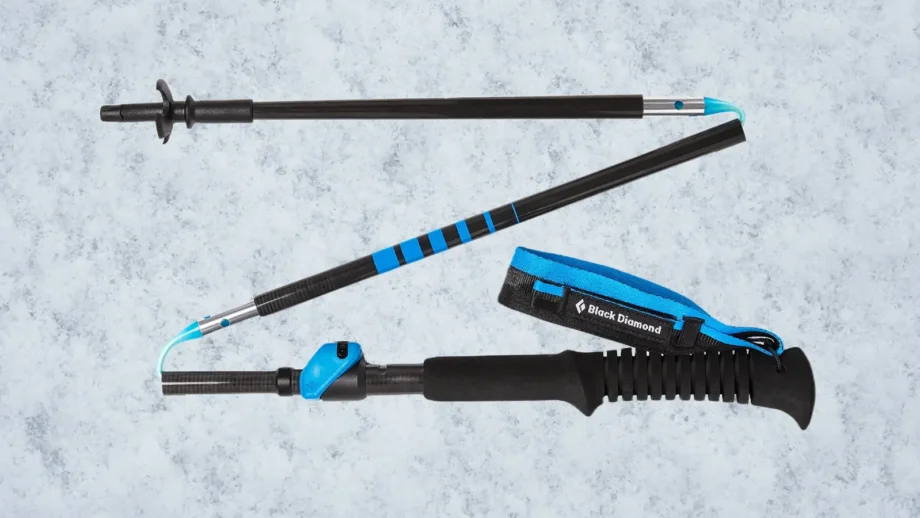
I used to think that trekking poles were something other people used, people older than me, less fit than me, less hard-core than me. Sure, I could appreciate how they might help, but they were compensatory benefits — and I didn’t need any help, thank you very much.
However, the suggested kit list for my first ultra-marathon included trekking poles. This planted a seed of doubt that I might be wrong; if endurance athletes were using them, perhaps I might benefit too.
So, I borrowed a pair. Sturdy, non-folding, and as heavy as hell, I was all set to ditch them at an aid station when I felt a twinge in my right knee: my iliotibial band had started playing up, right on cue at 20 miles. If running was now impossible — and scratching from the race was unthinkable — then I’d have to speed-walk the final 13 miles.
And I did. I didn’t only finish the ultra with the help of my trekking poles; I actually won. Not by dint of speed but through consistency; while the others stopped for food, hydration, and fresh socks at the aid stations, I just kept ploughing on at a steady five mph.
I was convinced, and it was time to get my own poles, especially as I’ve entered the Montane Yukon Arctic Ultra , the world’s toughest and coldest ultra-marathon. Running (and walking) 100 miles in temperatures that will plummet to -40°C meant that I was happy to take any advantage I could get my hands on — and one of those advantages is a set of trekking poles.
Extensive research led me to a pair of Black Diamond Distance Carbon FLZ, the crème de la crème of trekking poles. With carbon fibre shafts (and if titanium is the material that makes everything better, carbon fibre runs it a close second), Kevlar tensioning shock cords, and carbide tips, they’re an engineering geek’s dream.
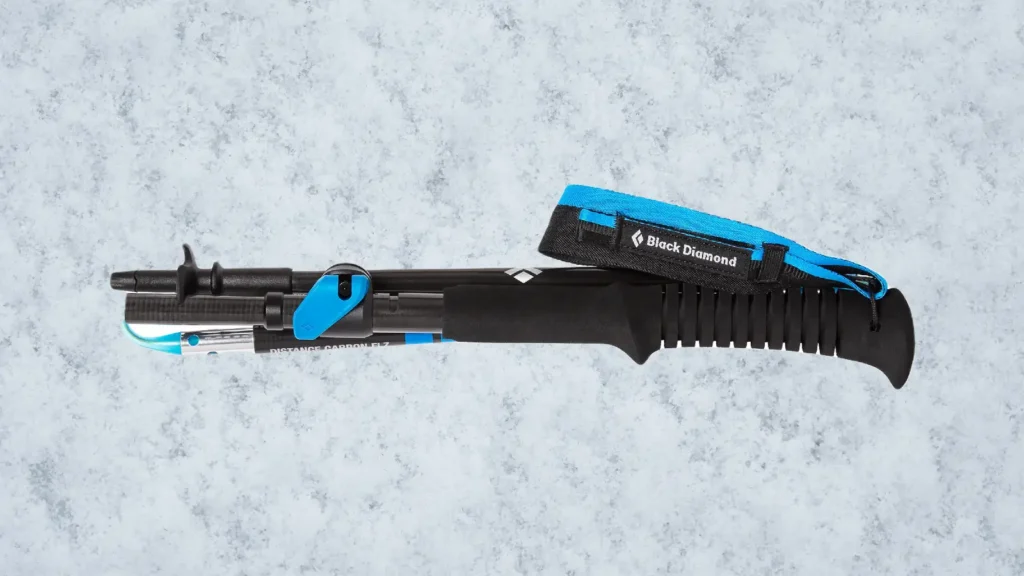
They weigh just 385g for the pair and fold neatly into a 40cm long package, making them easy to carry when you don’t need to use them. They unfurl effortlessly when you do, and the elasticity in the Kevlar shock cords allows them to be pulled open past their usual length, at which point a metal ball bearing pops into place with a very satisfying click to let you know that the poles are locked and ready to use.
Setting them to the right length is even easier, and the over-centre cam-lock design of the blue FlickLock levers gives a positive feel to the locking mechanism, which is reassuring when you are leaning heavily on them during a downhill section.
The shafts do feel relatively thin, and I initially thought they were a bit flimsy. However, a couple of mid-distance walks/runs showed that they’re far stronger than they look; the absence of weight carbon fibre endows reinforces this impression, which goes to show what a tightrope equipment manufacturers have to tread when folk like me demand the smallest, lightest gear possible – and then moan that it doesn’t feel very substantial…
The foam handgrips are comfortable, and their design means they don’t get slippery when they’re wet with sweat. Handed for left and right, the wriststraps are easily adjustable using velcro tabs, so you don’t need to let go of them completely when you want to use your hands to read a map or to dig some food out of your waistbelt. You can also cinch them tight enough so you don’t have to grip the handles firmly, something I appreciated recently on a six-hour slog along the Dorset cliffline.
Having used the poles for a few months, including some strenuous trekking in the Canadian Rockies, my first impressions are holding up. They’re ridiculously strong for their weight and have gone from a nice-to-have to a must-have whenever I’m running or walking any distance. Their small packed size means I can even sneak them into the rear pocket of my running vest, so they’re there — alongside a small first-aid kit and a small OMM showerproof jacket — in case I need them.
Experience has shown that your shoulders and upper arms will ache a bit if you’ve been using them all day, but the result of that is that your legs don’t hurt as much. It’s also a matter of conditioning; you’ll get used to using them very quickly, and your arms will strengthen — you wouldn’t want to set out on a two-week walking holiday without giving your body time to adjust first.
At 6’ 3” tall, I needed the longest length, but two smaller sizes are also available. The 95-110cm size weighs 332g and is suitable for people up to 5’ 7”, and the 105-120cm size is suitable for people between 5’ 8” and 6’ 0” and weighs 360g. Expect to pay around £150 for a pair, which isn’t cheap, but they are beautifully made and wonderfully light.
Are they worth the cost? Only you can judge that, but if you value lightness and packability, I’d say the answer is yes.

- Winter Reading: Books for the Wilderness - 25 January 2023
- Kit Review: Mountain Hardwear Super/DS Stretchdown Hooded Down Jacket - 6 January 2020
- Tested: Outwell Dreamboat Mattress - 29 October 2019