

On a crisp winter’s morning, piscatorial enthusiasts congregated on the River Test in Orvis UK’s idyllic Kimbridge beat to partake in a spot of grayling fishing.
The Lady of the Stream
Belonging to a cold-water fish family of six sub-species, the grayling — Thymallus thymallus — can be found across areas within the Northern Hemisphere, although it’s absent from Ireland. Proud owners of an adipose fin, graylings are typically smaller than trout though they also belong to the Salmonidae family.
Graylings tend to spawn in spring in shallower redds and are often referred to as ‘bottom-feeders’, residing closer to the stream bed and favouring deeper, cooler water. Their dorsal fins are typically fringed in red and dotted with iridescent red, aqua or purple spots and markings, making the bigger ones, in particular, seem impressively dramatic.
Their instinct to test almost anything that seems edible on the water’s surface, coupled with their tendency to ‘corkscrew’ when hooked and fiercely resist a take, make them a fascinating species to pursue. Historically, grayling were persecuted by trout anglers owing to the erroneous belief that grayling competed with trout for food and habitat — but modern research has revealed that each species feeds on different prey items and prefer different microhabitats so that they can rub along together in rivers and streams in harmony.

A Rich Diet, Healthy Environment and Thriving Company
Grayling must be on to something. Exclusively belonging to rivers, they seem to reside only in those that are most jaw-dropping. Grayling need clean, well-oxygenated water, so gin-clear limestone and chalk streams suit them perfectly. However, northern rivers in Scotland and Wales fed by fresh water flowing down from the mountains also provide grayling habitat. Clarity and alkalinity seem to come hand in hand with beautiful views and scenic surroundings — and rivers such as the Tweed, the Tay, Dove, Wye and Itchen offer plentiful supplies of this fish.
The River Test is renowned for its high alkalinity and clarity, and coupled with its rich aquatic insect and shrimp life, it gives rise to a flourishing ecosystem. Our trip to the Kimbridge beat of the Test on a wintry December day and algae-free water made us hopeful that the grayling might be contentedly nestled in our stretch en masse.
The grayling were there, and with their habit of shoaling, we expected flourishes of excitement rather than sporadic and lengthily-spaced moments of tension. Shoals mean that landing and returning a fish doesn’t tend to spoil the opportunity to take several more: find one, and you’ve found many.
Frosty grass crunched underfoot as a group of us headed off to punctuate the far bank, and we began to fish.
Tips, Techniques and Tackle
I was keen to get advice from the experts. Nick Parker was helpful enough to offer some words of wisdom on the basics.
“Most people will use a fairly light rod for grayling. You wouldn’t necessarily want anything heavier than a 4/5 weight, as graylings don’t tend to be huge fish. A decent fish is usually classed around two to two-and-a-half pounds — a three-pounder would be quite the specimen. They can be caught near the bottom, as they spend most of their lives rubbing through gravel along the riverbed.”
“As they’ll be caught sub-surface, it’s better to use quite heavily weighted nymphs and little wet flies if it isn’t too deep. Graylings tend to reside in fast-flowing water, so you’ll need something that will get down to them. Generally, people fish for grayling with a heavy, dull silver-headed beaded nymph.”
Heavy flies and nymphs representing freshwater shrimps or caddis larvae seem to do the trick. Orvis London Store Fishing Manager Vito Rubino has found that the grayling love purple, pink and red colours, whilst Orvis-endorsed guide Paul Procter suggests Red Tag, Treacle Parkin, Bradshaw’s Fancy and Grayling Blue Steel also work well. Tackle-wise, Paul says that a rod used for river trouting will work for grayling with whatever action suits the fisher best.
I had no idea what action would suit me best and was grateful when advised to cast upstream and allow my nymph to drag back towards me with the current. The heavier the nymph, the quicker its descent through the river and the faster its journey back along the river. Czech nymphing, which is a method of fishing with weighted nymphs at close range, is a popular method of fishing for grayling in streams that have depth.
Whilst graylings tend to prefer colder water, the additional warmth achieved during a Winter’s midday can sometimes trigger flies to hatch, resulting in a rise and the subsequent revelation of graylings from the darker depths of the stream. As these hatches can last a mere matter of minutes, you have to be prepared to move fast during the flurry of activity. Tight lines and speedy reactions, I was advised, are essential.
There seemed to be a variety of methods, flies, and nymphs being tested on the river that day, and most resulted in success.
I was lucky enough to be handed one of Orvis’ new Helios 3 rods and was intrigued by the complexity of achieving an appropriately placed cast that landed softly on the water’s surface. Whilst the rod was impressively light, I was at first stumped in my attempts to control the placement of my line.
Unfortunately, watching others use the Helios 3 confirmed this had everything to do with my lack of skill and nothing to do with my kit. After a few trials, I began to familiarise myself with the motion and found that due to the rod’s nimbleness and weight, my arm remained largely untired. When fellow fishers guided my cast, it began to land with spectacular precision upon the desired spot. Immensely satisfying — but not as satisfying as that first eager grayling that willingly snapped at my fly and found itself in the net a few moments later before being returned.

ORVIS’s Helios 3 Fly Rod
All modern fly rods are powerful, but accuracy is the new frontier in design. Orvis’ Helios 3 claims to be more accurate than its predecessor, the Helios 2. And not just accurate in close, where most of us are primarily concerned with accuracy, but way out there at the end of one’s casting range when the winds are blowing, and the water becomes a choppy sea. Since the launch of Orvis’ Helios 2, they’ve tested over 60 new raw materials/resin systems and have settled with the best they could find — a material with just the right combination of stiffness and strength, allowing it to build a thinner and more precise blank that translates casting energy better than anything previously seen.
Chris Clemes’ Split Cane Fly Rod
Each of these bespoke and custom-finished split cane fly rods is hand split and elegantly styled in the English tradition. These rods (also known as bamboo fly rods) have a wonderfully smooth action and casting characteristics that make them a joy for grayling fishing within the traditional realms of streams and rivers. With improved casting efficiency, delicate presentation and aesthetic handling, water disruption is minimalised, leading to satisfying results.
So why are these beautiful rods so special and wonderful to fish with?
“We work with a bunch of cottage industries,” says Chris Clemes. “Some of our crafters are third generation, and the skills have been passed down from their grandfathers. This skill is part of the magic of the rod’s craftsmanship, making the product the culmination of a unique process.
“I have five workshops, and various stages of the rod are made at each workshop; we have a leather workshop, we have a metal workshop, and we have one rod maker who finishes all of the rods for us. I meet and speak with every customer. We have about 200 different custom options available — length, weight, action and so forth. We do quite a lengthy interview before we actually start making the rod to determine things like what our customer is fishing for, whether or not they are travelling, are they fishing in American climates, if they prefer a fast-action rod, casting bigger flies. The finished rods will be suited entirely to the owner’s specific preferences, a one-of-a-kind masterpiece.”
Eyewear
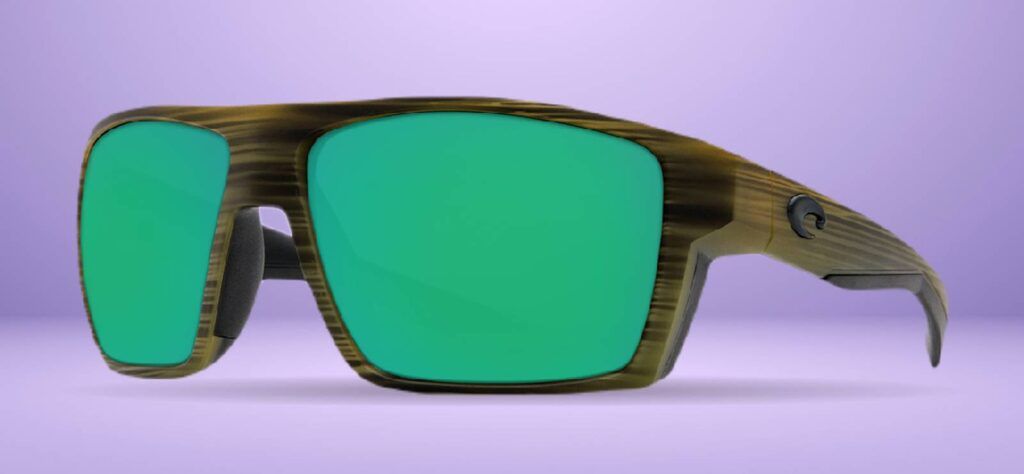
Costa Del Mar’s sunglasses from Fin and Game will be the perfect accessory to keep the glare out of your eyes as sharp winter sunlight makes the water glint. Their men’s Bloke Polarised sunglasses are reliable due to their cam action pin hinges and Costa Del Mar’s bilateral fusion technology which fuses two colours for a chip-proof finish. Styled for keen anglers, the glasses are both stylish and practical.
Jacket and Trousers
This Orvis Men’s Pro wading jacket is ideal for a day on the river — it’s breathable, waterproof, weatherproof and entirely ready to perform. £349 from Orvis — and the lightweight and breathable Encounter rain pants (£99) go with it perfectly.
Hat
Keep cool and celebrate your passion for angling by wearing this £19 Orvis black mesh trucker hat, the Bent Rod Covert Fly Patch Trucker.



- Driven: Rolls-Royce Ghost Series II — Luxury evolved - 6 May 2025
- Driven by vision: The Aston Martin Lagonda Series 2 revisited - 22 April 2025
- Ogio Introduces Limited-Edition Agave Ahora Golf Bag Collection - 25 May 2024