

Gordon Murray was in the throes of designing the McLaren F1 when he took time out to visit Honda’s Tochigi Research Centre in Japan. There on Formula One business with Ayrton Senna and Ron Dennis, he spotted a prototype NSX tucked away in a corner. Given permission to drive it, he came away smitten; he’d previously been benchmarking his new hypercar against the Porsche 959, the Ferrari F40 and the Lamborghini Countach. Not anymore: he told his team the Honda NSX was the new yardstick.

And no wonder. Pininfarina took the F-16’s glass canopy as inspiration for the interior, giving the NSX a low dashboard and unrivalled 360-degree visibility thanks to a huge glass area. Ayrton Senna helped develop the chassis, and both the monocoque body and the suspension are formed of aluminium, a world first. The Honda VTEC engine might only have developed around 270bhp, but at high revs, it sounded like the devil himself howling at the moon.
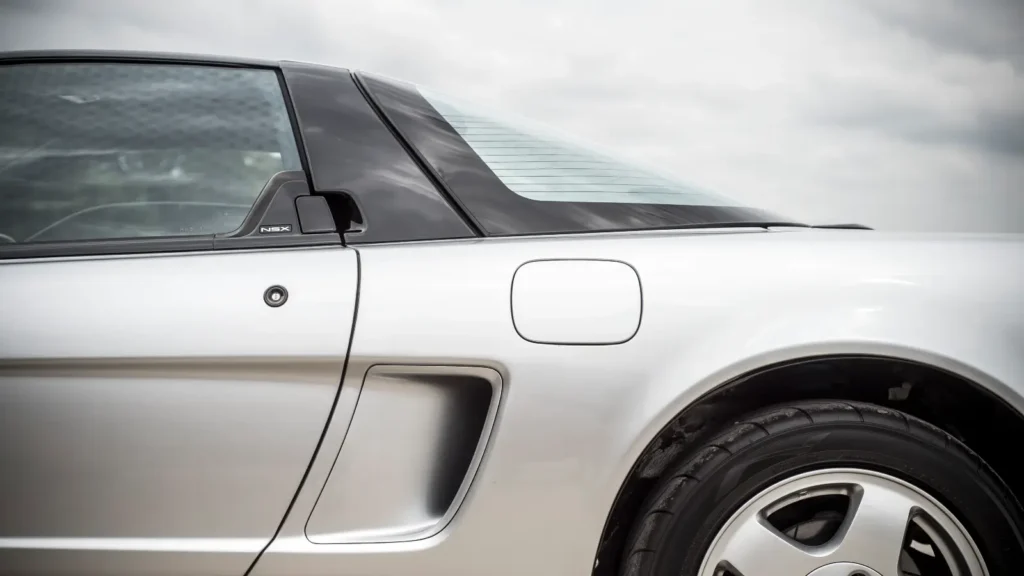
The NSX was, according to LJK Setright: “the world’s fastest, safest, and most beautifully made luxury car.”
Setright, never one to gush, made an exception for the NSX (New Sportscar eXperimental), going on to write: “The Honda NSX is sublimely superior to everything. It was exquisitely worked: a whole week of running calculations on a Cray supercomputer went into perfecting the structural stiffness of its stressed sheet aluminium hull; gossamer lattices of forged light alloys formed the most refined of all passive suspensions; the connecting rods within the intricate engine were made out of titanium. There is no need, however, to explore all the car’s details; its virtues are already legendary, where those of famous rivals have often proved mythical.”
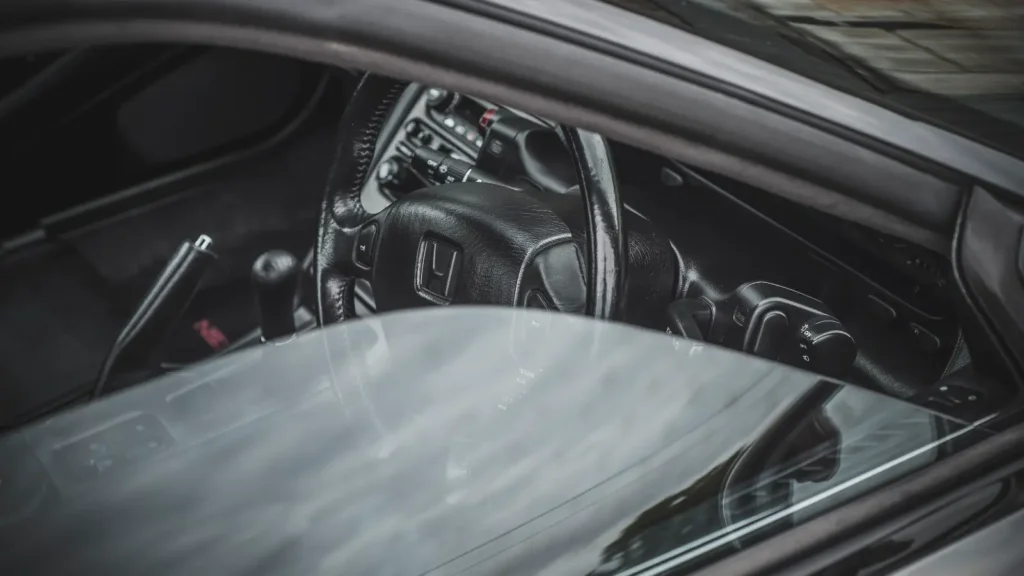
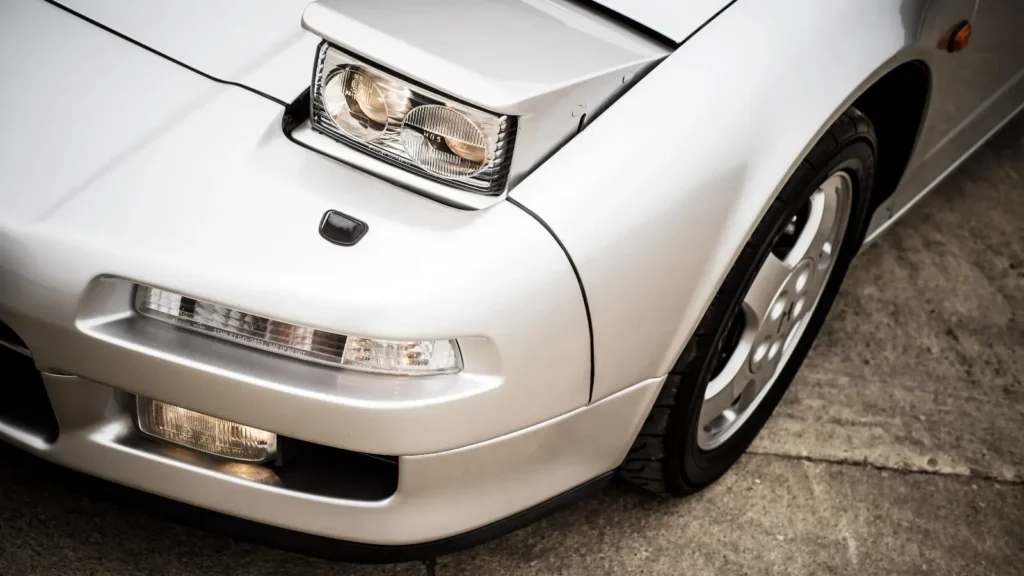
In production for fifteen years, it was the subject of constant upgrades, both large and small. The engine grew from 3.0 litres to 3.2, and it eventually lost its lovely but largely ineffective pop-up headlights. Its top speed stayed around 160mph (after passing 60mph in five-and-a-half seconds) throughout its life, but the NSX was never about all-out speed. No, it was far cleverer than that; it was about the way it handled, how easy it was to drive, and the importance of using technology to make the driver’s life easier rather than to provide marketing bumf for techno-geeks to drool over.
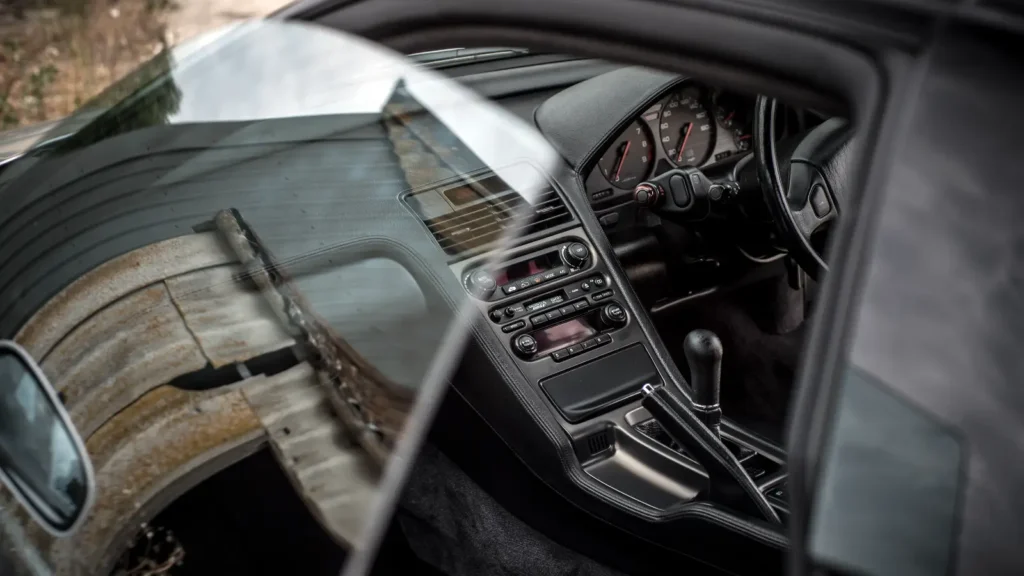
The air-conditioning, for example, is almost undetectable in use and is so effective that Gordon Murray recalls that he set the temperature and pressed the ‘auto’ button once when he first took delivery of his – and then never touched it again. The car’s drive-by-wire throttle — another first — was so linear and natural in its operation that he stole the idea wholesale for the McLaren F1.
In fact, Murray is as effusive as Setright in his praise: “The NSX’s development costs must have been enormous. Everything on it is unique. The chassis, powertrain, even the air conditioning are peerless. That aluminium body was very expensive. The numerous hurdles overcome by the NSX to reach production in areas such as spot welding, corrosion, and repairability make it a monumental work in automotive history. The philosophy of creating a car for human beings is apparent throughout. If it were me, I probably would not have obsessed over the aluminium and would have settled for a steel structure with aluminium panels to try to achieve a similar weight reduction. But what I really want to emphasise is the suspension. It is a ground-breaking use of aluminium.”
Despite the NSX being one of the most important cars of the 20th century, values are still on the floor. Fifty thousand pounds will get you a very nice standard manual coupe, and £100,000 will get you an NSX-R, the track-focussed version that’s really too extreme for everyday road use.

If you want an NSX as an investment, then you need to look for an early, standard car with a good history. If it’s been fettled by a chap called ‘Kaz’, then all the better; he’s a legend in NSX circles and obsessive to a degree I’ve never experienced before. You should avoid automatic and targa-roofed cars, as well as anything that’s been modified; the chassis can be optimised for the track or fast road use — and it can undoubtedly handle way more power than Honda ever gave it — but the purists don’t like them, and so you’ll find it harder to sell than an unmodified one.

- Winter Reading: Books for the Wilderness - 25 January 2023
- Kit Review: Mountain Hardwear Super/DS Stretchdown Hooded Down Jacket - 6 January 2020
- Tested: Outwell Dreamboat Mattress - 29 October 2019