
Dive into the engineering marvels of World War II as we explore the decisive machines and weapons that shaped the course of history. From the formidable Avro Lancaster bomber and the often-underrated Hawker Hurricane fighter to the feared German U-boats, each piece of machinery played its unique role in the theatre of war. With vehicles such as the P51 Mustang and M4 Sherman tank marking significant strides in land warfare, the ingenious Stuka dive-bomber and T-34 tank changed the face of aerial and ground combat, respectively. The simplicity of the Sten gun, the sheer firepower of the Bofors gun, and the remarkable utility of the Jeep also underline the advancements made during this era. This detailed examination of WWII equipment brings to life the ingenuity, design evolution, and strategic utilisation of these wartime icons.
Avro Lancaster
The Avro Lancaster was the RAF’s main heavy bomber during the war, first seeing active service with RAF Bomber Command in 1942. Powered by four Rolls-Royce Merlin engines, it was designed with a long, unobstructed bomb bay to take the largest bombs used by the RAF, including the 12,000lb ‘blockbuster’ loads, which were often supplemented with smaller bombs or incendiaries.
Famously the Lancaster was the bomber used in the Dambusters raid, and was modified to carry the Upkeep, the bouncing bomb designed by Barnes Wallis for Operation Chastise, the attack on the Germany Ruhr Valley dams.
Of the 7,377 Lancasters built during the war, most of them were manufactured by Avro at their factory at Chadderton near Oldham, Greater Manchester.

Hawker Hurricane
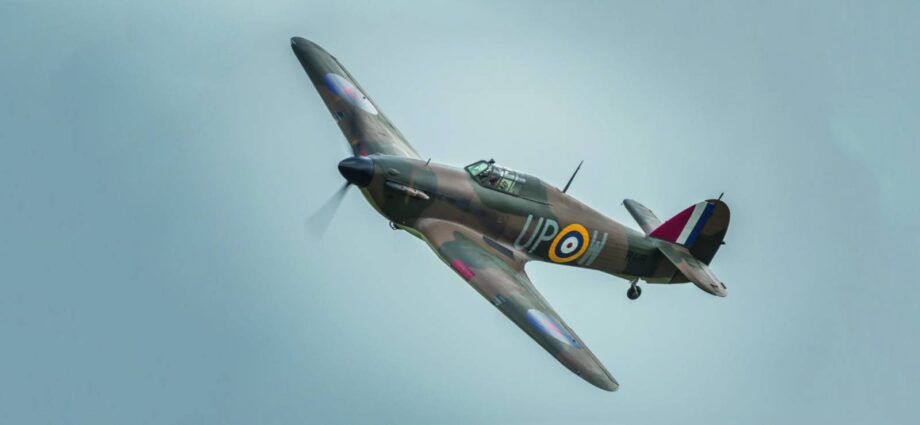
The Hawker Hurricane single-seat fighter aircraft was the RAF’s most successful fighter aircraft of WWII. Although often overshadowed by the Supermarine Spitfire, the Hurricane became renowned during the Battle of Britain, accounting for around 60% of the RAF’s air-combat victories in the battle.
Powered by a Rolls-Royce Merlin V-12 engine with 1,185hp of power and equipped with four 20mm cannons, the Hurricane was a formidable enemy with a top speed of 340mph and a range of 600 miles.
A Hurricane was the first RAF plane to destroy a Luftwaffe plane in October 1939 when Pilot Officer ‘Boy’ Mould shot down a Dornier Do-17 over France. Having claimed his unit’s first aerial victory, he added eight more victories over France, six of them during the blitzkrieg.
U-Boat
U-boat comes from the German word Unterseeboot, which translates as ‘undersea boat’. Prime Minister Winston Churchill wrote of them: “The only thing that really frightened me during the war was the U-boat peril.”
In the early stages of the war, U-boats were highly effective in destroying Allied shipping in the mid-Atlantic, where British air cover could not yet reach. However, because speed and range were severely limited underwater on battery power, most U-boats actually spent most of their time on the surface running their diesel engines, diving only when attacked. The more ship-like hull design of the U-Boat, in comparison to a modern submarine, reflects the fact they were primarily surface vessels that could submerge when necessary.

P51 Mustang
The P51 Mustang was the first single-engine fighter in Britain with enough range to escort bombers to the heart of Germany and back. Powered by 1490hp Rolls Royce Merlin engines, the little Mustang had a range of 500 -1000 miles and a top speed of 438mph. There were 16,776 Mustangs produced in a variety of models throughout the war period, and they saw action across Europe and into the Pacific and the Far East.
The P51 was said to have an astonishing success rate, with a kill-to-loss ratio of 19:1. The P51 Mustang is credited with the destruction of 4,950 German planes, some of which included the fearsome jet-powered Me 262.
Sherman Tank
The M4 Sherman, named by the British for the American Civil War General William Tecumseh Sherman, was the most numerous battle tank used by the United States and Western Allies in the Second World War. The Sherman Tank was reliable, cheap to produce and easily manufactured in great numbers, with 49,234 units being produced by numerous manufacturers between 1941–1945.
Weighing in at 30 tonnes and with a crew of five, the Sherman was equipped with a .50 calibre machine gun and a 75mm main gun, which fired the 4.9lb M48 High Explosive round at 2,050 feet per second.
This armament, combined with the Sherman’s 30mph top speed and manoeuvrability, meant that it was to become a pivotal machine in the Second World War.
Stuka dive bomber
The Junkers Ju 87, or Stuka (the name comes from the German for ‘dive bomber’ sturzkampfflugzeug), was a formidable German dive-bomber and ground-attack aircraft.
It first flew in 1935, made its combat debut in 1937 during the Spanish Civil War, and was easily recognisable by its inverted gull wings and fixed undercarriage.
The Stuka’s clever design included automatic pull-up brakes under both wings, which would activate to bring the aircraft out of its attack dive even if the pilot blacked out from the high g-force of these types of combat manoeuvres.
The Stuka is perhaps most famous for its screaming sirens, which were mounted on the aircraft and rose to a loud wail as it attacked its targets. This fear-inducing sound was to become a potent propaganda symbol of German air power during the World War Two years.
The Jeep
The Willys MB, commonly known as the Jeep (a slang name that may have derived from its sister vehicle, the Ford GPW), were four-wheel drive utility vehicles that were manufactured during the Second World War and were the direct influence for the design of the original Land Rover vehicle, created in 1947 by Maurice Wilks, the chief designer at the Rover Company. Produced from 1941 to 1945, the Jeep evolved post-war into civilian models and inspired an entire category of recreational 4x4s.
With a three-speed transmission, an operational range of 300 miles and a top speed of 65mph, the Willys MB soon made itself indispensable to troops on both the back and frontlines.

Sten Gun
Perhaps one of the most recognisable weapons of the Second World War is the STEN (or Sten gun), a family of British-made 9mm submachine guns used extensively by British forces.
The name STEN comes from an acronym of the names of the gun’s designers, Major Reginald V. Shepherd and Harold Turpin, and EN for Enfield, from where the weapon emerged while Britain was engaged in the Battle of Britain and facing invasion by Germany. In need of replacing weapons lost during Dunkirk, the STEN came at a time of great need, as before 1941, the British were buying as many Thompson submachine guns as they could from the United States, but supply could not meet demand.
To quickly equip the British armed forces to counter the fascist threat, the Royal Small Arms Factory in Enfield, London, began rapidly prototyping the first STENs, with the first blowback-operated 500 round/min versions being released from the factory in late 1941.

Bofors Gun
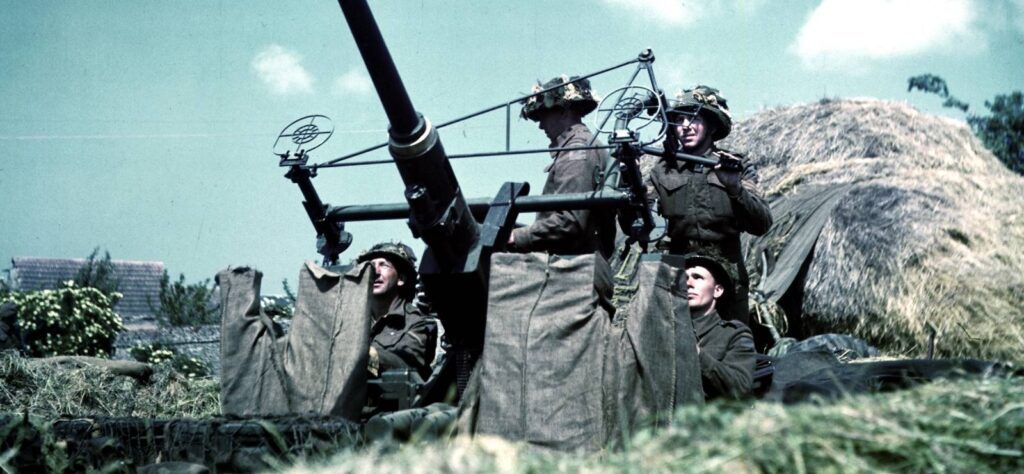
The AB Bofors 40 mm gun is an anti-aircraft/multi-purpose autocannon designed in the 1930s in Sweden. It was one of the most extensively used anti-aircraft weapons during the Second World War. Testament to their effectiveness is that a small number of these weapons remain in active service to this day, with some seeing action as late as the Gulf War (1990-1991).
The gun fired a 2lb high-explosive 40mm shell at 2,960ftps and had an effective range of 12,500ft, although the maximum attainable ceiling was 23,600ft. The rate of fire for a well-trained gun crew was normally around 120 rounds per minute, which was known to improve when the guns were used against ground targets as the barrels were closer to the horizontal. Gravity assisted the feeding of the rounds from the top-mounted magazine.
T-34 tank
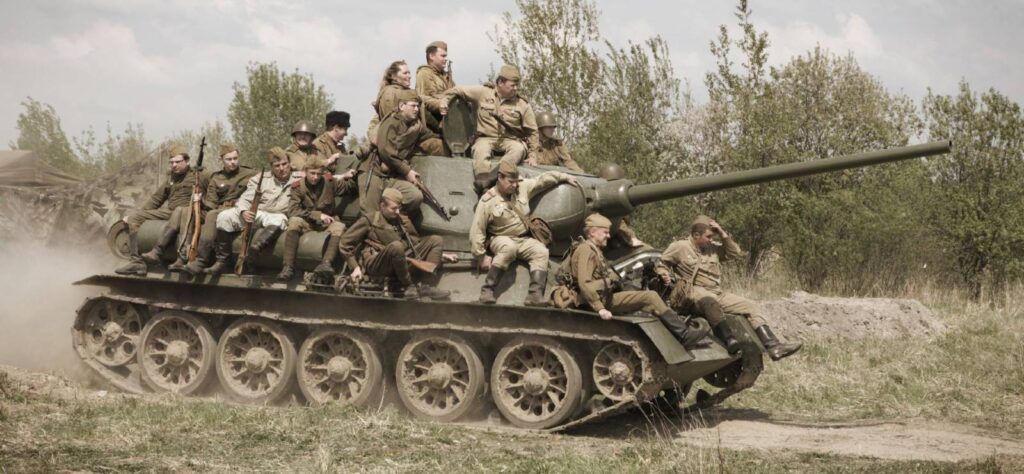
The T-34 was a Soviet medium tank that has been roundly credited as being among the most efficacious and influential tank designs of the Second World War.
Although later surpassed, the T-34’s design meant it possessed an unheard-of combination of mobility, defence and firepower. It was the first tank to wield a 76.2mm high-velocity gun which gave it a substantial increase in firepower over any of its opponents at the time.
At 26.5 tonnes and with a V12 diesel engine delivering 500hp and a top speed of 33mph, its specially sloped, heavy armour made it difficult to penetrate by most modern anti-tank weapons.
During the Battle of Stalingrad, the main factory producing the T-34 became surrounded by heavy fighting. In this desperate situation, manufacturing innovations were forced by material shortages, and the unpainted tanks were driven out of the factory directly to the battlefields surrounding it.
- Driven: Rolls-Royce Ghost Series II — Luxury evolved - 6 May 2025
- Driven by vision: The Aston Martin Lagonda Series 2 revisited - 22 April 2025
- Ogio Introduces Limited-Edition Agave Ahora Golf Bag Collection - 25 May 2024