
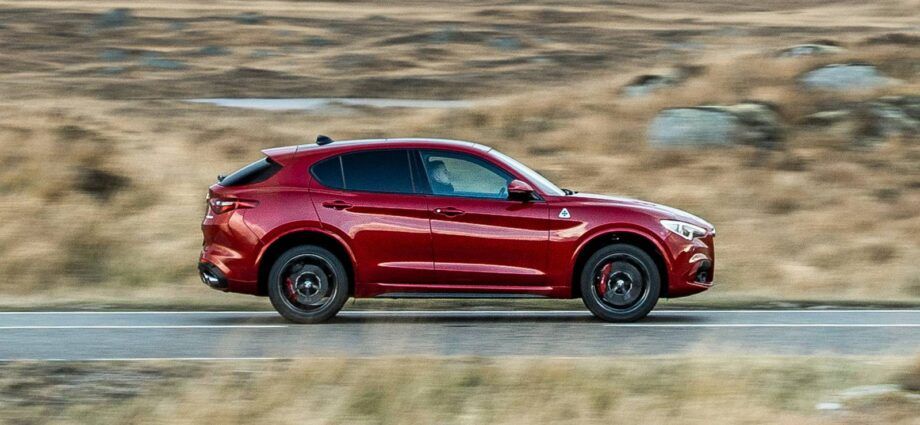
This is the review of the Alfa Romeo Stelvio that nearly didn’t happen, says Carlton Boyce. After arranging to borrow the SUV from the Italian manufacturer, my confirmation email went unread, which meant that the car didn’t arrive. With a packed road test schedule, it looked like I wouldn’t be able to rebook it for many months to come, either…
However, when the chaps at Unity Automotive — Alfa Romeo, Fiat, Jeep, Ram, Abarth, Isuzu, Subaru, and MG main dealers and the same folk I bought my Jeep Wrangler Rubicon from — heard what had happened, they stepped in and loaned me one, placing me back on schedule.
The rise of the SUV has been as steep as it has been unexpected, and almost every manufacturer now offers one. I’ve debated the merits of the SUV before (the summary is that I’m not a fan), but the fact remains that we Brits have fallen deeply in love with their lofty driving position, load-carrying capacity and off-road stance.

As an SUV with a diesel engine under the bonnet, you would be forgiven for thinking that my test car wasn’t your archetypal Alfa Romeo, either. Yet you’d be wrong because Alfa estimates that more than 80% of buyers will choose the oil burner over the petrol.
It’s a topsy-turvy world out there, for sure.
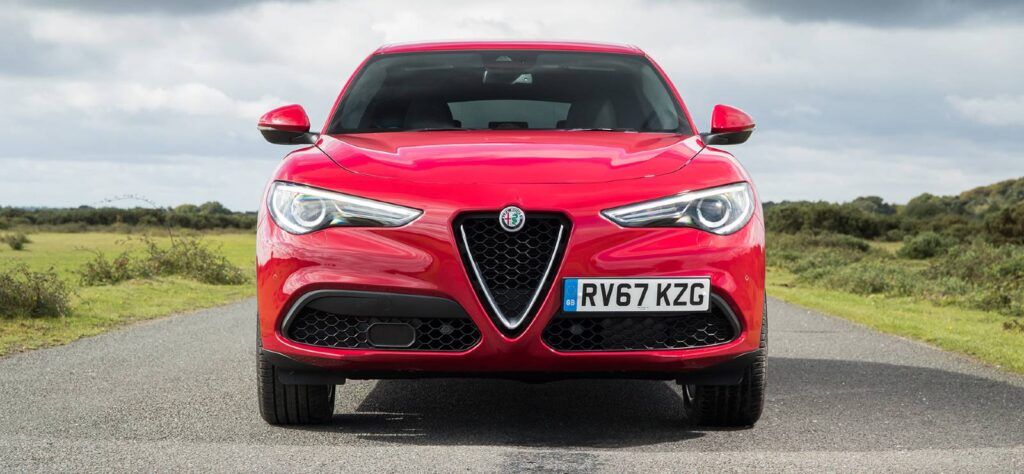
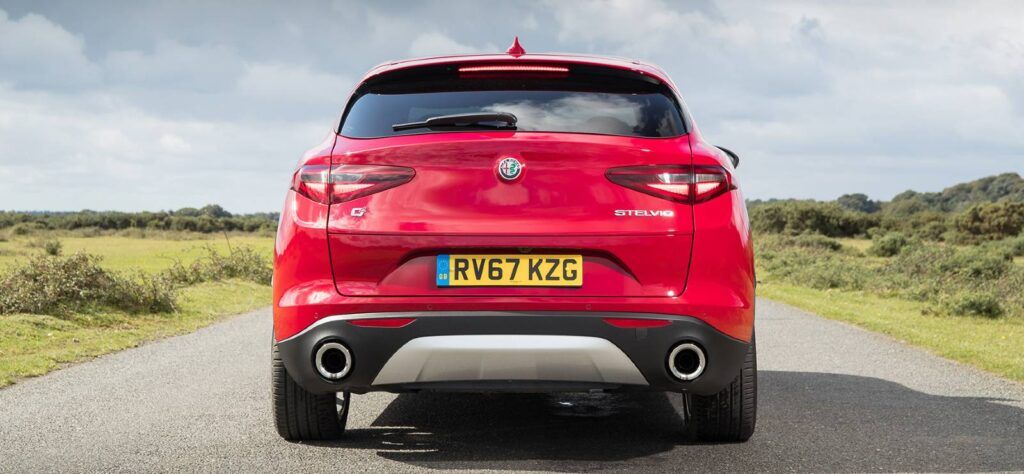
And yet, largely because it is based on the Guilia — possibly the most exciting car in its class and the most beautiful — the Stelvio is every bit an Alfa Romeo. While it might be more handsome than pretty, that’s par for the class it sits in, and all the usual exterior Alfa design cues — an offset front number plate, a shield-shaped front grille, and an aggressive visage — are there.
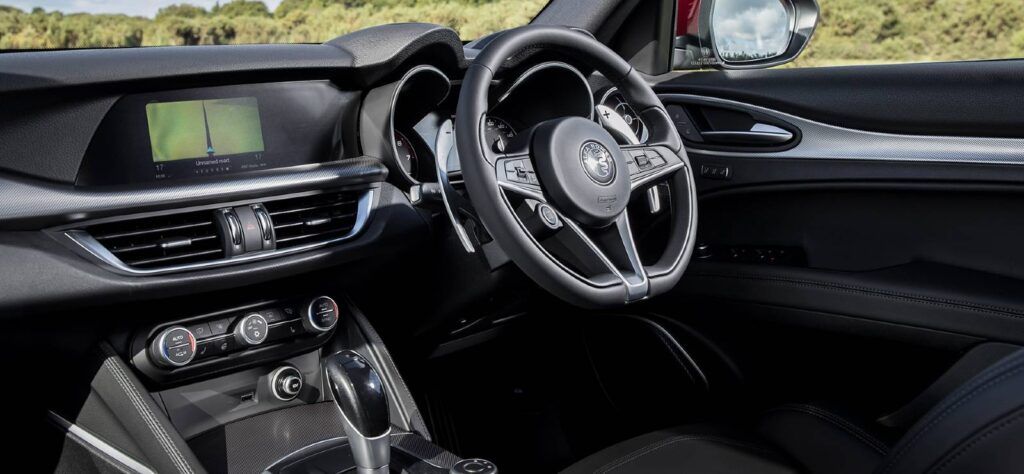
A cowled instrument pack, a small, flat-bottomed steering wheel and sports seats lend the interior a typically Alfa-esque feel, too. And, while the design teams at BMW and Audi aren’t going to lose any sleep, it does feel reasonably premium in there. Almost like a sporting saloon, thanks to the low-slung seats and cabin architecture. Almost Guilia-like, in fact.
That Guilia DNA also ensures that it drives well for an SUV. While a turbo-diesel engine, even the excellent MultiJet II 2.2-litre turbocharged version, might not have been my first choice for a company with Alfa Romeo’s sporting heritage, there’s no denying its power and torque: offering 210hp and 470Nm, it streaks to 62mph in 6.6 seconds and has enough mid-range power to punch its way past slower traffic whenever a gap appears.
As a Q4, its all-wheel-drive adds a sure-footed element to the handling and eliminates torque steer, further helping cross-country times; there’s no need to feather the power in — just check the gap, indicate and power your way past. I found myself passing half a dozen cars at a time when I’d initially budgeted for just a couple. This sort of performance makes living with a car much more straightforward than would be the case with less power on tap.
And, remember, the throttle goes both ways; driven fast but sensibly, I averaged more than 40mpg across almost 500 miles of mixed-use in the Stelvio, which is bang on what Alfa Romeo says it should manage. Schlepping along the motorway at the usual speeds showed that the Stelvio is impressively quiet and refined. Wind noise is almost entirely absent, as is tyre noise.
The MultiJet II four-cylinder engine is impressively civilised for a diesel, even when exercised at the upper reaches of the rev range. The eight-speed automatic gearbox works so well that the only thing I can say about it is that I rarely needed to intervene manually. In fact, I barely noticed it at all, and praise doesn’t come much higher for an automatic ‘box.
Engine and gearbox aside, a large part of the Stelvio’s dynamic prowess is due to an unusually stiff bodyshell that is largely made of aluminium, as are many of the suspension components. This also makes it very light, usefully undercutting most of the competition at around 1,650kg. The combination lends the Stelvio an energetic, agile feel that is rare in a car of this size and in this class.
Alfa’s ‘DNA’ chassis management system, which offers a choice of Dynamic, Normal, and All-Weather settings, is selected via a rotary controller. While Normal felt a bit stodgy — and, unusually for a British summer, I didn’t get the sort of weather with which to test the All-Weather setting — I felt that the sportiest setting worked the best for me, especially in terms of gear selection and handling. That’s becoming pretty standard across all marques as engineers work to lower emissions. This means that Normal seems to be the default emissions testing setting, leaving Sport free to map the car as the engineers always intended.
This brings us to the handling, the feature at the heart of an Alfa Romeo. Surely, the act of driving an SUV and the concept of driver enjoyment are mutually exclusive, even for an Italian car manufacturer? Er, no. While there is some body roll, I found it was carefully calibrated, giving just enough to ensure that the driver knows what’s happening when pressing on, but never too much. It’s an impressive trick and probably better balanced than anything in its class.
Nor is this at the expense of comfort because it rides reasonably well, even on the sort of pock-marked streets and motorways that litter our country.
It’s not perfect, obviously. I couldn’t find out how to turn off the lane-departure warning, which led to a series of deep, discordant notes whenever I changed lanes or crossed the white line without indicating. That was very irritating.
As was my inability to set a destination using only the postcode. While there may have been a way of changing this, I couldn’t uncover it. I drive at least one new car a week, so I am pretty proficient at working out how to operate a car’s basic functions and haven’t had to read an owner’s manual for years, largely because there shouldn’t be a need.
My test car cost almost £38,000, so the Alfa Romeo Stelvio isn’t a cheap car. Yet it probably represents good value given the generous equipment levels, peerless dynamic ability, and versatility it offers. And, pricey or not, it is usefully cheaper than the Porsche Macan and Audi Q5, which start at more than £40,000. And, you know what? It’s an SUV I could actually live with…

- Winter Reading: Books for the Wilderness - 25 January 2023
- Kit Review: Mountain Hardwear Super/DS Stretchdown Hooded Down Jacket - 6 January 2020
- Tested: Outwell Dreamboat Mattress - 29 October 2019