
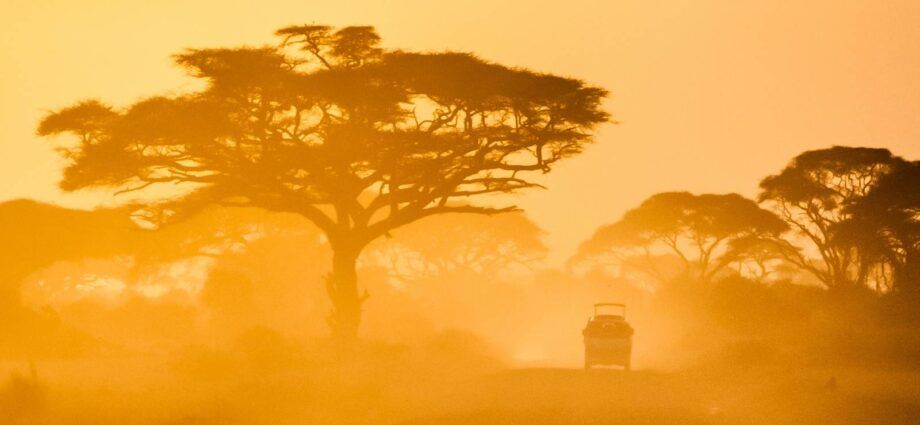
Kenya offers everyone the chance to experience one of the planet’s most incredible spectacles – the safari, says Mark Williams.
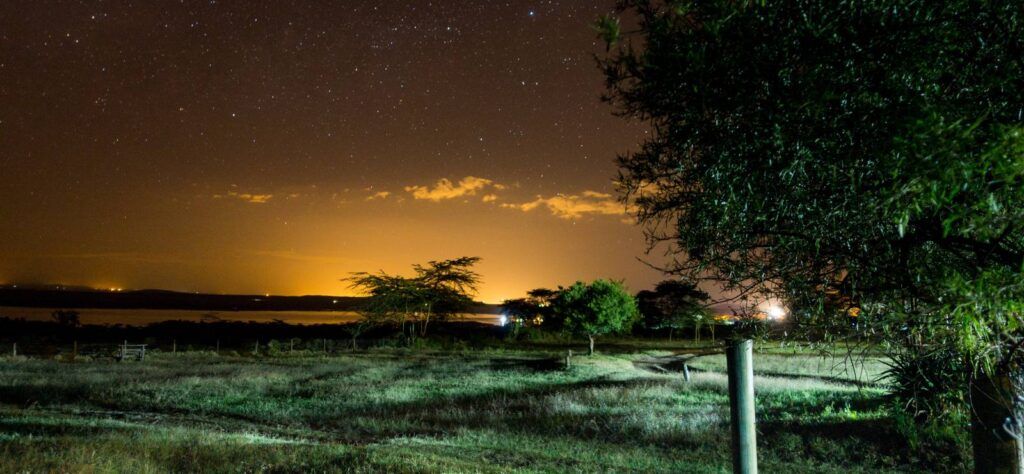
In the dead of night, the Milky Way is a bright smear across the black sky, and the Maasai Mara is coming alive. It is hard to sleep on your first night in this wild land. I lie awake on my bed, hands behind my head, listening to the song of the Mara. The hiss of cicadas and crickets and the rhythmic chirps of tiny frogs are a canvas of sound against which a hippo grunts in the river and, distantly, a male lion stakes his claim to a kill, or perhaps his pride, with a roar.
Only the thin fabric of my luxurious tent separates me from a richness of wildlife for which I am completely unprepared. That a leopard stalks the camp and the resident hippo will soon be munching the grass just metres from my head does not bother me. But then the bush babies begin calling…
It was on my fourth birthday that I demanded to go on safari. I had asked mum for ‘a ticket to Africa’. I was one of those kids who, Packham-esque, collected animal skulls, so asking for a ticket to Africa was the least bizarre of many wildlife-related presents I asked mum to buy. I once requested ‘a dag for dagging tigers’ (daggers clearly dag, just as pokers poke). That said, I doubt I had the skills, aged three or four, to take down a big cat armed only with a knife!
My Africa obsession saw me reading every book by Gerald Durrell – I was particularly thrilled by stories of his animal collecting trips – and trawling bookshops for books by environmental pioneers such as Armand and Michaela Denis. I had View-Master wheels showing African animals in 3D, and among the books I read was Gorillas Were My Neighbours, written by a most unneighbourly man who mostly shot them.
Adventue Beckons
But I did not go to Africa. It would be precisely 54 years, to the day, from the moment mum persuaded me to accept a bird book in place of my dream that, eventually, my wish was fulfilled.
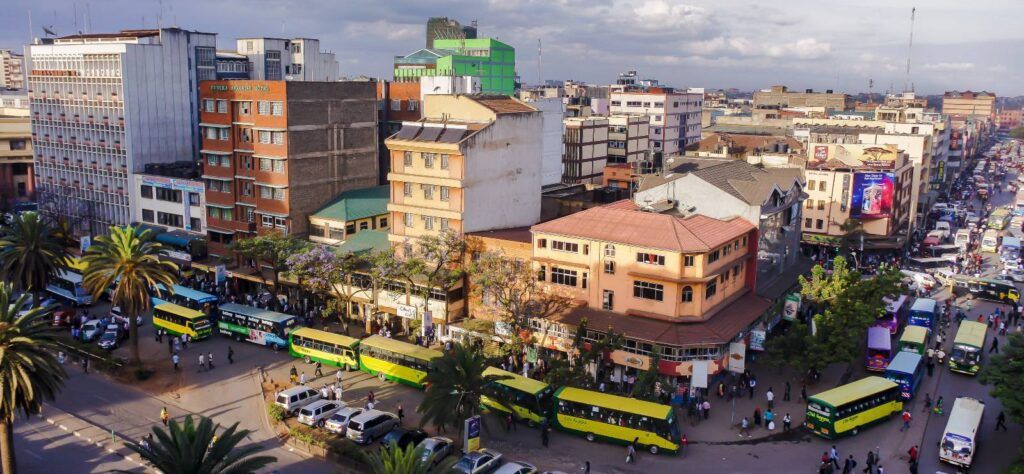
As a former British colony, Kenya is among the more Brit-friendly African nations, with driving on the left and offering everything from road signs to food in plain English. Thus, something is comforting about leaving Nairobi’s Jomo Kenyatta International Airport after a gruelling eight-hour flight, and heading to Wilson Airport, the jumping-off point for most safaris.
Even the outskirts of Nairobi are buzzing with activity, with evidence of commerce everywhere and the kind of rickety development common in developing countries. As we travel along the Mombasa Road, heading for our transfer, we pass makeshift offices clad in corrugated iron and flagged with hand-painted signs. Young men hang around at junctions, presumably waiting for offers of work.
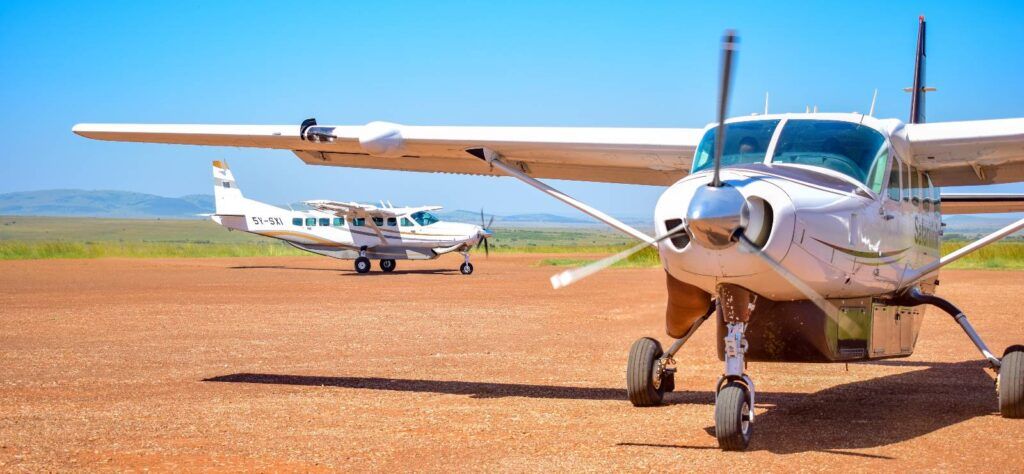
Wilson Airport is small and busy, tourists being ushered here and there as each bush flight is readied for take-off. We flew in a 13-seat Cessna Caravan with Safarilink , one of Kenya’s most experienced airlines. There is an illusion of chaos, cheerfully enforced by the pilot’s joke that he is flying to Amboseli this morning (while glancing in his mirror to see if everyone headed for Maasai Mara is paying attention).
Then we are airborne, clearing the runway to head west directly over Nairobi National Park – of the high-rise development taking place.
Kenya is looking verdant, the short rains of November having arrived and greened the Rift Valley. The emerald landscape is dotted with homesteads and red-dirt ribbons of road, which become more sparse as we near the border with Tanzania. Then we begin the descent, and as we near the ground, we can see the magnificent wildebeest, which graze right up to the edge of the landing strip.
A week earlier, I wondered if we would get lucky and see a few animals. Now, aboard one of Gamewatchers Safari’s open-backed Land Cruisers heading for Porini Mara Camp, it is difficult not to run them over! Teeming with game, the park makes Longleat look like a wasteland in comparison. It is a truly stunning sight to behold.
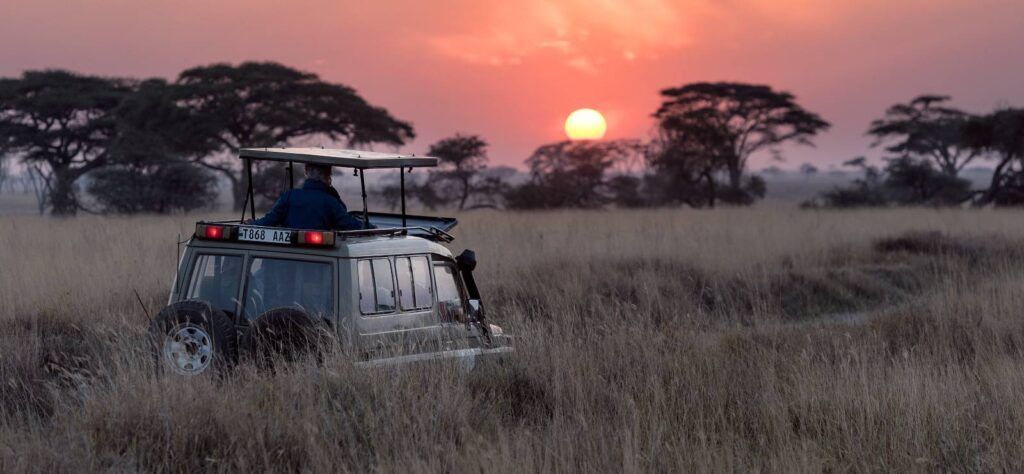
Our guides are Maasai men, and the driver is the Porini Mara Camp manager, Jimmy. Bouncing over the rust-red rocks and quartz in the track, he suddenly slows to a crawl and points ahead as a small herd unhurriedly makes way for us: “Zebra crossing,” he quips, and we enjoy the first laugh of a great many to come.
Maasai, such as Jimmy, staff all of Porini’s camps. Ol Kinyei, where we were going, is where they belong, but they now lease the land back to the Ol Kinyei Conservancy, to tourists and, ultimately, to the animals which also belong there.
The Hunt Begins
When we left Nairobi, our group felt jaded from the after-effects of the night flight. However, we were literally on the edge of our seats as the 4×4 lurched across the landscape, revealing an endless tapestry of animals: impala, Thomson’s gazelle, hartebeest, Grant’s gazelle, eland, giraffe, warthog… they were all before us. We could even smell them.
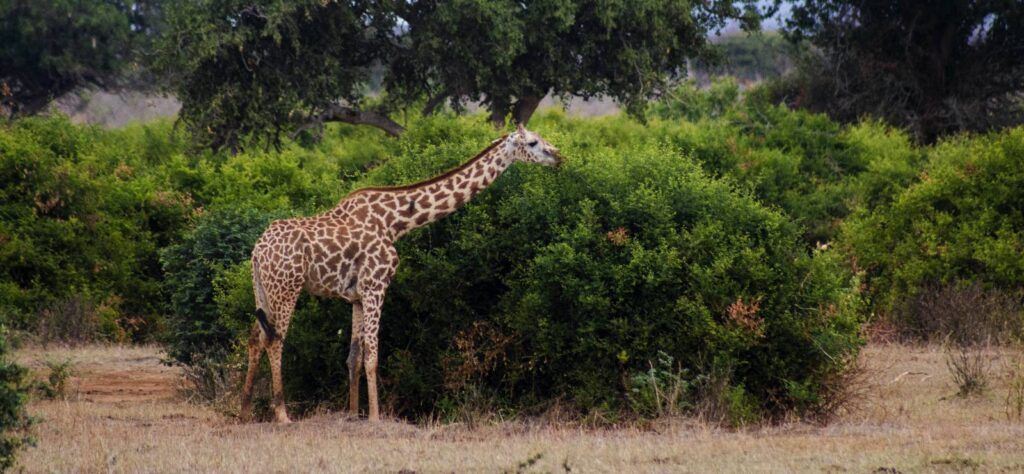
This may be a simple transfer to Porini Mara Camp, but it is also a game drive, and the Maasai guides reveal tremendous knowledge as they point out each species. The rains had released clouds of insects which depend on this lush windfall, and the scrub and acacia trees were thronging with the birds that eat them. Spectacular landlubber kingfishers perched on high branches awaited their meal, and sunset-yellow weaver birds were busy building their intricate nests.
Porini Mara Camp nestles next to a small river, surrounded by this intoxicating magic. Our accommodation was a tent with two double beds and a level of luxury well into the glamping leagues. The food they conjured up in this remote place was first-class, and I now know it is impossible to beat a ‘sundowner’, supped while gathered around a log fire. However, a real treat had been arranged for the following morning.
If you do not ‘do’ mornings, you will have to change your ways because the dawn game drive is essential if you are to have any chance of seeing what everyone visits this part of Africa for; the big cats. That is an exaggeration. If you want to see lions asleep, you can go any time, but then you might as well see them in a zoo.
Along with most cats, lions are crepuscular – they hunt mainly at dawn and dusk. When the sun rises, it reveals the remains of the night’s kills, the lions replete and lingering over the scraps. Once the sun is in the sky, the pride will move off and flop down together in a shady patch. The remains of the kill are gone within the hour, scavenged by hyenas, vultures and jackals.
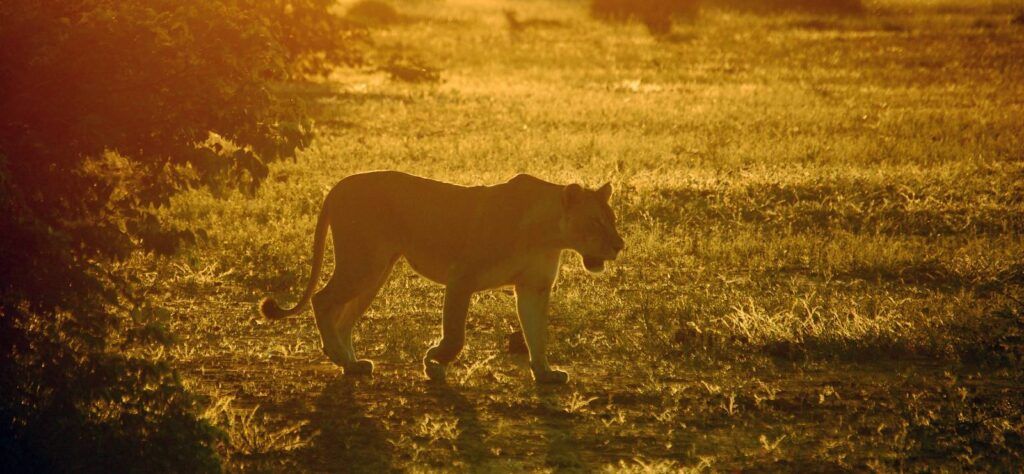
Our first dawn game drive was spectacular. We climbed into 4×4’s long before the sun kissed the horizon and began scouring the landscape for lions. The Maasai will spot them if they are in view – even half a mile away. They also spend much of their time watching the antelope, looking for behavioural changes that suggest a lion is nearby.
It may seem odd, but if a prey species spots a lion, it will stop and stare, for it knows that if it can see the lion and the lion knows it has been seen, there is little danger. Antelope, whose lives depend on their powers of observation, have evolved brilliant eyesight.
It was a surprisingly short time before we were alongside a dead wildebeest beneath an acacia bush, but nary a lion in sight. Instead, a spotted hyena was audibly crunching through bone and sinew, a jackal warily eyeing up his chance to snatch a bite. Vultures loafed around like bald men in brown overcoats, but the hyena’s feast did not last long.
Across the grassland ran a huge male lion, focused on the hyena. The hyena spotted him quickly but carried on feeding, every mouthful worth the risk. He nearly miscalculated as the lion suddenly sprinted and was a whisker away from killing the hyena. Moments later, a lioness arrived at the scene, rather selfishly rebuffed by the male but nestled down next to him nonetheless. God loves a trier, I suppose.
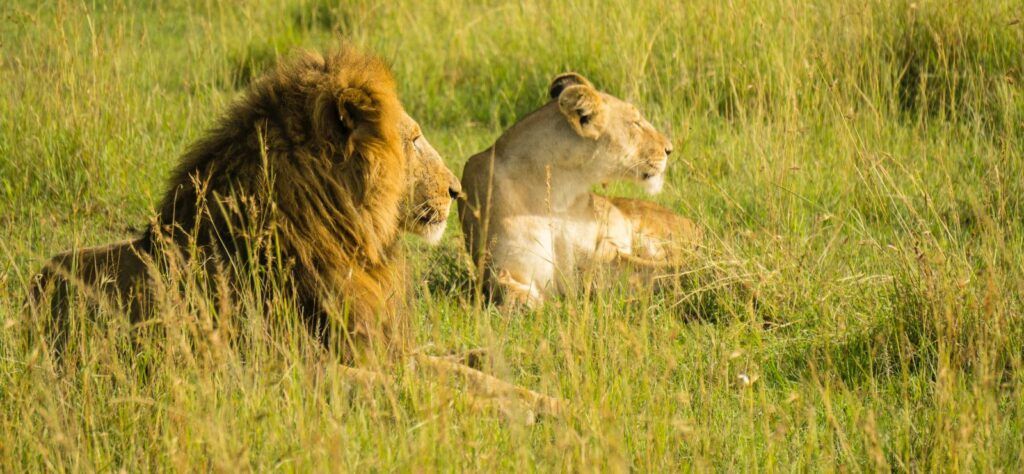
“The male is Leshan. The female, Nenkome, is collared,” Jimmy explained. “The tracking collar was put on about two years ago and is due to fall off automatically any time now.” Seconds later, the lioness jumped up and looked down at something on the ground. It was the most incredible coincidence. The collar had just fallen off!
We were told the rather savage backstory later. Nenkome is a pride-less female who got lucky earlier in the year and had two cubs. Leshan, a lone male, found the cubs and killed them both – we found one of the tiny corpses. But Nenkome would be a mum again soon; no sooner were her cubs dead than she would come into oestrus, and Leshan would father her next litter. It is the way of lions.
Bush Tucker
There are few experiences to beat breakfast in the bush. Aboard the Land Cruisers, we toiled up a nearby hill to its summit. A herd of female impalas lazily eyed us as our Maasai crew assembled garden furniture, draping a tablecloth over a table on which a complete hot breakfast was laid out. It felt reassuringly traditional, and I imagined a group of khaki-clad travellers up here, the men in pith helmets and the ladies wafting in chiffon.
Below us, the vast swath of the mara stretched out to the distant mountains like a jade carpet and the whinnying of zebra carried on the warm breeze as we ate. From this vantage point, we could just make out the incongruous angular forms of settlements on the edge of the conservancy.
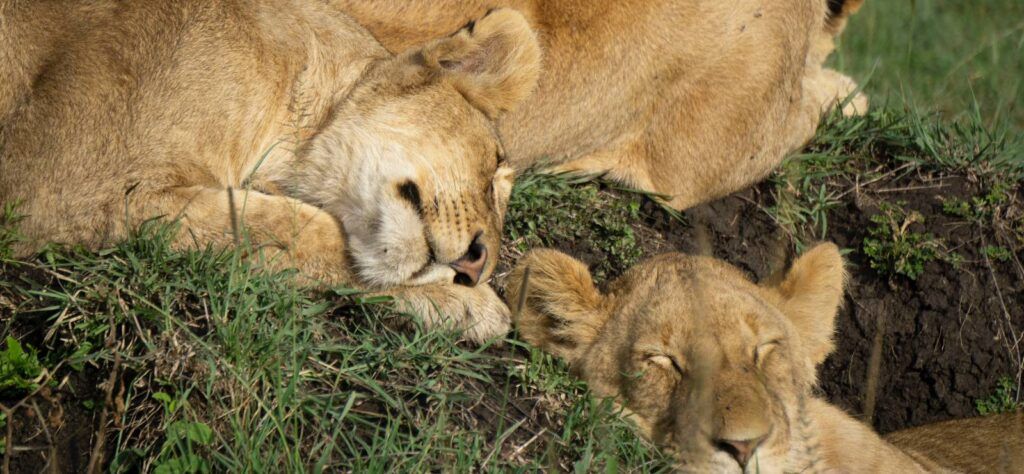
Soon, we would be en route to Porini Lion Camp and seeing them up close. We found more lions in the mid-morning heat, sleeping under a thicket of orange-leaf croton bushes, which are strangely repellent to insects and give the lions relief from the flies. We drove within metres of huge lionesses, barely stirring as we passed.
The journey to the Lion Camp took us along the northern boundary of Naiboisho Conservancy, past small, fenced farms. Occasionally, we passed flocks of cattle tended by young men and goats tended by boys who waved as we passed. The grazing looked reasonably good, but the hard fact is that the herders will sometimes take their cattle into the conservancies and the reserve to find better. Inevitably, this brings them into conflict with predators, the very thing the conservancies set out to avoid in the first place.
Porini Lion Camp sits almost dead centre of the Olare Motorogi Conservancy, next to a fairly substantial river that throngs with hippos. We arrived at lunchtime and sat down in the shade of a tree for a quick meal. As we ate, we were joined by two parrots, who began munching the tree’s green fruits and discarding chunks which landed among the crockery with a thump. Jake Grieves-Cook, co-owner of Gamewatchers Safaris and champion of conservancies, idly picked a chewed chunk out of a plate and threw it away, only to reel in pain moments later.
“God, that stuff’s strong,” he exclaimed, massaging his watering eye. The fruit of the pepper-bark tree is as fiercely spicy as wasabi; we nibbled a young leaf to check, and according to Jake, a slice is a great addition to a Bloody Mary in place of Tabasco. East Africa is a treasure trove of spices and cures, Jake says, used for centuries by the Maasai for everything from purgatives to deodorant.
We set out on an afternoon game drive which sparkled with wildlife just like the others. Before darkness began to seep through the skies, we chanced upon the pride’s dominant male. He looked grumpy.
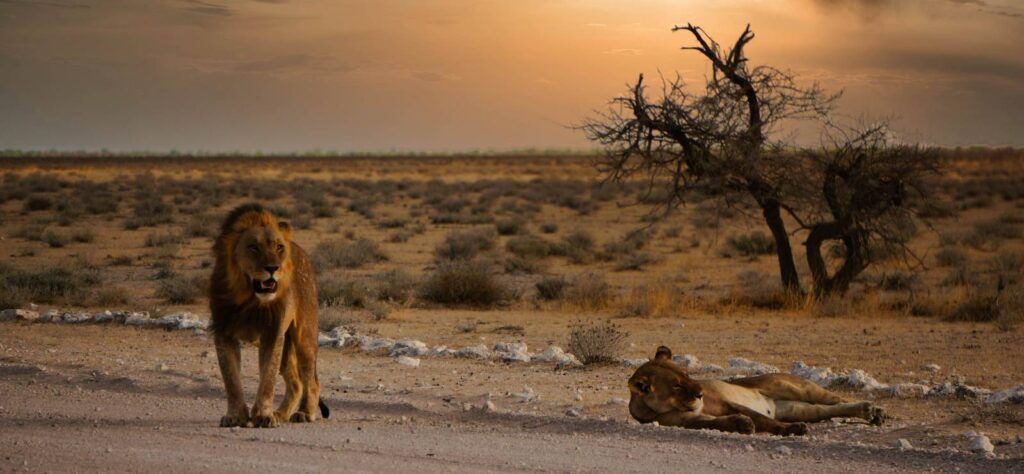
He sauntered imperiously between the 4x4s which had gathered around him, his massive bulk and cold, staring eyes a reminder that, out here, there is real danger for the foolish or unwary. That said, we still decamped from the vehicles an hour later as dark clouds sent grey streaks of rain to the horizon and enjoyed a gin sundowner as we watched neon lightning flash above the distant mountaintops.
After the following morning’s game drive — which caught up with a cheetah and her two cubs — we breakfasted on a riverbank looking down on a herd of hippos, then left for a flight to Amboseli. The doyen of Kenya’s elephant reserves, this is where we would enjoy the sumptuous creature comforts of the Amboseli Serena Safari Lodge.
At Amboseli, we had our first visit from conservation royalty – Will Travers of the Born Free Foundation. Will is the son of Bill Travers and Virginia McKenna – a couple introduced to lions by starring in a film, and then so captivated by them they devoted their lives to conserving them. The Foundation has long realised that to give lions a winning hand in the perpetual conflict with herders, you have to work with the humans first. We went to see one of Born Free Foundation’s lion-proof ‘bomas’ – the circular homesteads into which the herdsmen’s cattle and goats are brought each night for their protection.
Built To Last
These bomas were ingenious in their simplicity, the fence posts made from Kenya’s waste plastic, the gate from flattened oil drums, the hinges made from worn-out ‘100,000-mile shoes’: these are home-made flip flops which are, themselves, recycled from car tyres. On the way back to our lodge across the parched savannah, our guide got a radio call which led us along the surfaced game trails (there is no off-roading allowed) to Amboseli swamp, where two elephant herds were meeting noisily.
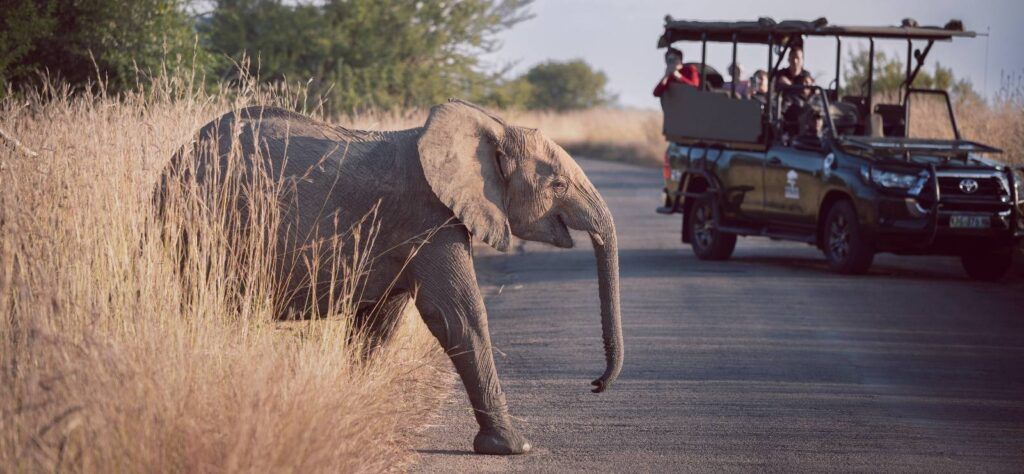
One dowager tusker was leading her tiny infant through deep swamp mud, and he clung to her tail with his trunk, squealing in alarm. As mum hauled herself out of the gloop and onto the roadside, the newborn’s two teenage sisters heard his cries, came over, and helped him up, shoving him up the backside with their trunks. The old matriarch glanced back as if to say they were being a bit soft on him.
Amboseli is rigorously operated: it is closed after dark to prevent elephant poaching – a practice rife across Africa. These incredible animals will be afforded protection only if tourists come and see them — a perfect excuse for any wildlife lover.
The final leg of our Kenyan odyssey was another flight and a drive to our villas at Diani Beach. Our route took us along shack-lined roads thrumming with trade, past big supermarkets, and among cars which were better than mine (though not for long, on these roads). There is undoubtedly poverty and a few begging refugees, but I saw no suffering.
Msambweni villagers had a special trading post at the villas and waited patiently every day for us to buy something. The choice was mainly printed cotton and giftware. I haggled the price of a couple of headscarves, but when I returned with the correct money in dollars, the second trader seemed peeved that I had not selected some of his stock. Standing there in my trainers and trunks, I quickly explained that I had brought no more money. Then he looked down at my near-new training shoes, and I bartered them instead.
Despite the many incredible sights and experiences I encountered on this amazing continent, I will never forget that first night at Porini Mara Camp, partly because it was the first, but also because of the large bush babies that lived in the trees right outside my tent. I had assumed bush babies were named for their heart-meltingly lovely eyes. They are not. They are so-called because, like babies, they scream almost incessantly after dark.
They sound like rhythmic newborns, starting with a few low-key, panting cries, then building to a crescendo of milk-curdling screams that carry through the African night.
At the time, I was mildly irritated by those calls. Now, as I gaze into the tedious grey of a British ‘summer’, I yearn to hear them again.

- Driven: Rolls-Royce Ghost Series II — Luxury evolved - 6 May 2025
- Driven by vision: The Aston Martin Lagonda Series 2 revisited - 22 April 2025
- Ogio Introduces Limited-Edition Agave Ahora Golf Bag Collection - 25 May 2024