

Bitcoin. It’s one of those things that would pop up in my BBC news feed every once in a while, stories on crazy geeks mining digital gold or how bonkers the price swings were soaring to $1,000, then dropping like a stone, says Mark Turrell. Meanwhile, at conferences, I would be accosted by what I believed at the time to be crypto-freaks touting the fantastic benefits of a decentralized financial system and the potential to remake the world.
This article was published in January 2018.
Early in 2017, I noticed a change in the discussion. A corporate client inquired about creating its own internal currency to manage transfer pricing across its operations. An entrepreneur friend, Vinny Langham, put the news out promising that, after receiving some small millions from venture capitalists for his new tech venture, Civic, he would continue by raising $30 million from a strange thing called an ICO, an ‘Initial Coin Offering’ similar, though very different, to an IPO. Crazy, maybe. And yet he successfully raised the money with no equity dilution, and the price of his coin climbed rapidly from the issue price of $0.10 to $0.77, an 8x rise in a month.
Like most people, I considered cryptocurrencies to be somewhat of a joke for the longest time. For instance, 22 May is known as ‘Bitcoin Pizza Day’, the date of the first recorded commercial transaction using Bitcoin for a real-world asset. “I’ll pay 10,000 bitcoins for a couple of pizzas.. like maybe 2 large ones so I have some left over for the next day. I like having left over pizza to nibble on later,” was the request in a chatroom. It turns out this was the most expensive pizza in history as, by the end of 2017, the price of those two pizzas had risen from £25 in 2010 to £70 million today (call it £6 million a slice!)
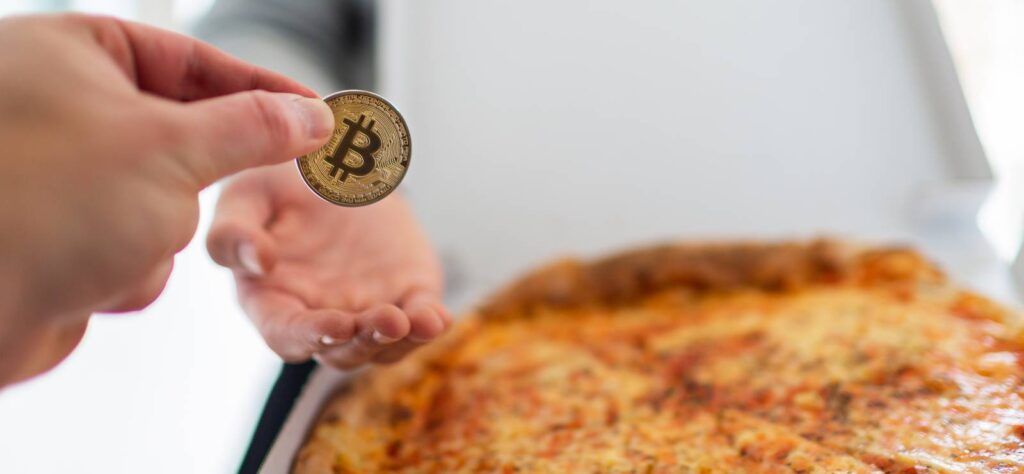
Now though, we need to pose the real question: are cryptocurrencies ready as an investment opportunity? Is this the brave new world of investing? Should we treat it more like a punt at Royal Ascot, or should we watch from a safe distance while others lose their digital shirts?
The returns on crypto in 2017 have been nothing short of stellar. Bitcoin is up sevenfold , Ethereum 35-fold, and ICO tokens overall over 13x by October. Compare this to a strong performance from the FTSE at 14% YTD, and you begin to get crypto-envy pretty fast.
In my opinion, the best way to overcome scepticism and sate one’s curiosity is through experience. Many of my friends have gone through the same process at some point this year. First, once you’ve overcome the compulsion to call Bitcoin a scam, you set up a digital wallet. This is the onramp into the crypto world, a place where you prove that you are a real person with a physical address and then move some real-world money into your account. As an aside, you will need to stop yourself from saying ‘real money’ and start adopting the lingo of ‘fiat’ money, the term used to describe government-issued cash supported by the promise that it is worth something.
When you move fiat money into crypto, you are buying some digital currencies. Bitcoin is the mainstay of most portfolios. It has dynamics similar to gold in that it has a limited supply but is also used to make transactions. Fans love to speculate whether Bitcoin will reach $100,000 within a couple of years, while the haters harp on about its always-imminent collapse and decry the fact that Bitcoins themselves have no inherent value. This is a fascinating debate; owning some cryptocurrencies will immediately make you the most interesting person at any dinner party!
There is a distinction between cryptocurrencies and ICO coins or tokens. Cryptocurrencies, such as Bitcoin, are used more like the money in our leather wallets and traditional bank accounts. These perform most of the functions of money: unit of exchange, store of value, etc. The main traded currencies are Bitcoin, Ethereum, Ripple, Litecoin, Monero and NEO. Each has its peculiarities focusing on aspects such as security, transaction speed, or anonymity. Ethereum is particularly interesting as it has a feature called ‘smart contracts’, or coded rules, that allow anyone to create their own currencies on top of Ethereum.
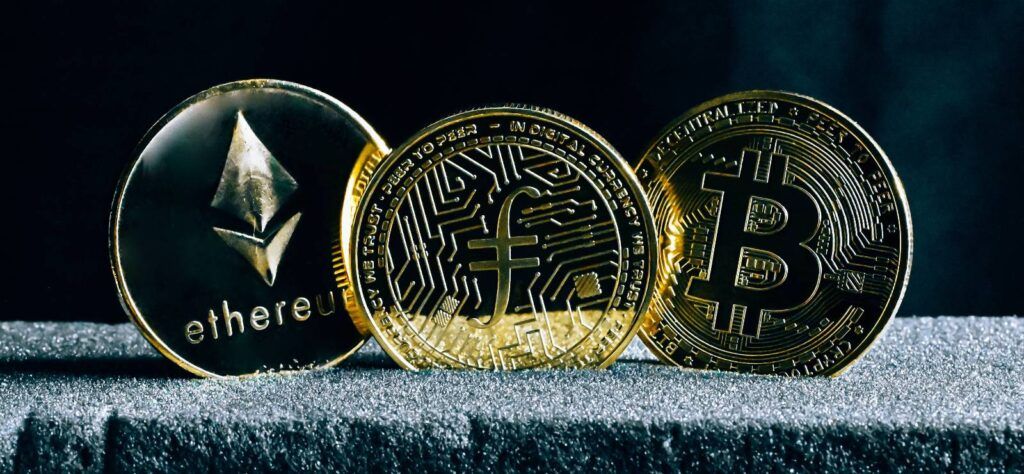
This property has spawned an industry of ICOs, companies that create their own ‘coins’ or ‘tokens’ to issue financial instruments that look and function a little like shares. Civic, for instance, decided to pre-sell licences to use their new services by issuing a token that could be bought first at ICO and then later traded on exchanges. This type of token is called a utility token because it offers the right to use a service without giving any entitlement to dividends or shares.
Another approach is to issue an equity token which is more like shares we buy on the stock market, or as an angel in an early-stage company. A key difference is that, unlike the stock market, every issued token can have different properties and vastly different rules. Most tokens, if you read the small print, are not really granting equity at all but instead offer a kind of hybrid of voting rights or revenue share.
There is a lot of insider talk on crypto that can be extremely confusing and not overly helpful to private investors. Techies talk about blockchain lengths, transaction times, and forks. It is easy to be overwhelmed by complexity, but the basic principles of investing still apply. I did due diligence on one token I was thinking of investing in, but was dissuaded when I read in their White Paper, a prospectus in the real world, that $3 million of the planned raise would be used to buy equipment for an almond farm owned by the founders. An actual nut farm!
It is often said that the crypto space is the Wild Wild West, and, to be honest, that is not entirely wrong. Pump-and-dump schemes abound as companies pay bounties to promote their ICOs through social media and chat groups. Wallets can get hacked, instantly losing millions with a few lines of malicious code. But most of these problems are mistakes from the companies rather than inherent weaknesses in cryptocurrencies. My favourite disaster is a company that lost $500,000 worth of Ethereum because the company founder protected the site with the same username/password combo he had used for the Ashley Madison adultery website that had been hacked.
With some experience, investors graduate to investing in traded tokens and then, with some due diligence usually sourced from Telegram chat rooms, into buying tokens ahead of the public sale. Fortunately, most of the tools you need to trade are available as apps, and there is a wide selection of reputable platforms to trade crypto assets.
More importantly, new services are reaching the market that allow you to seamlessly convert crypto to fiat through bank accounts, debit and credit cards, so it won’t be long before you are in the supermarket queue buying groceries from your crypto returns. Just hope you don’t spend a million quid on another couple of pizzas.

- Driven: Rolls-Royce Ghost Series II — Luxury evolved - 6 May 2025
- Driven by vision: The Aston Martin Lagonda Series 2 revisited - 22 April 2025
- Ogio Introduces Limited-Edition Agave Ahora Golf Bag Collection - 25 May 2024