

Private jets are experiencing a resurgence in popularity. Three-hour check-in times, security issues and a desire to use available time more effectively are causing a closer look at alternatives. Private jets are becoming a business necessity and a relaxing way to go on holiday.
Colin Baker, co-founder of 365 Aviation , says: “Many delays are outside of the traveller’s control and if it results in missing meetings or important family occasions, not to mention time spent rescheduling itineraries, you suddenly realise that it makes sense to pay a small premium to minimise these risks. Ever-tightening airport security has exacerbated the situation to the point that it’s no longer cost-effective to spend the best part of a day trying to get from A to B.”
“There are two main drivers involved,” says James Shotton, co-founder of Skytime Jets, Europe’s leading private jet charter company. “It is a lifestyle decision to make life easier. Business travel via private jet gets you there faster than on a scheduled flight.”
“You can also use smaller airports. This removes the hassle of parking, waiting around and long check-in periods. With a private jet, you can have a 20-minute check-in time. For example, if you live in Oxfordshire, you can travel from Oxford Airport rather than having to drive to Luton. Within half an hour of leaving home, you can be airborne.”
Using private jets gives flexibility. There are 136 private airports across the UK used by private jet hire companies, which generally fly to smaller and regional airports across Europe. Cars can be arranged to meet you at the destination airport upon arrival, and exit procedures are kept to a minimum. Colin Baker points out some advantages: “A private jet can leave from a closer airport, requiring just 20 minutes to check-in, clear security and board, allowing passengers to fly to Milan in the morning, be in Frankfurt for lunch and back to London by mid-afternoon. That’s just not possible if you fly commercial.”
Gabriella Somerville, managing director of ConnectJets, says: “Chartering is the fastest-growing part of the airline market. It can be quicker to use an airplane from a small airport like Northolt than to sit in a car on the M25.”
Arranging a private jet flight is very simple. Choose your charter provider, contact them and provide basic information – date of journey, preferred time, number of passengers, preferred departure airport and destination, pay and receive details of the flight. Flights can even be arranged at an hour’s notice.
“We find planes situated near your base. We present you with a choice, you choose, and we then process that flight, organise the crew, aircraft, permissions to fly, travel from point A to B, catering, and arrange customs clearance. You scan in your passport, and we have it pre-checked. Customs will indicate if there is any problem. We give you the crew names, aircraft number, collect you from the private lounge or arrange for you to drive straight to the aircraft. We undertake all the pre-flight clearance, so you can take off immediately,” explains Gabriella.
Privacy is another reason for using charter aircraft, making it very popular with high-profile clients. There is no need to go through large airports, running the risk of being approached for autographs. Clients can opt for a private lounge or even drive straight to the aircraft. Apart from the crew, the only passengers on board the aircraft will be those invited by the client – a factor that also provides added security.
What It Costs To Hire a Private Jet
The cost of chartering a private plane depends entirely on your destination, the facilities you want and the type of plane involved. There are four main categories of aircraft available: very light jets (four-seaters), light jets, medium-sized jets and large jets. A weekend trip to Nice from London using SkyTime Jets starts at £2,000 per person based on four people sharing. During the ski season, based on four passengers travelling from London to Meribel or Courchevel via Chambery Airport, Smart Aviation quotes €2,470 (£2,175) per person return.
A typical private jet used for hire travel includes the Citation Mustang, Gulfstream G200 and Learjet 75. Facilities depend on the type of plane, with larger ones providing a luggage hold and inflight services.
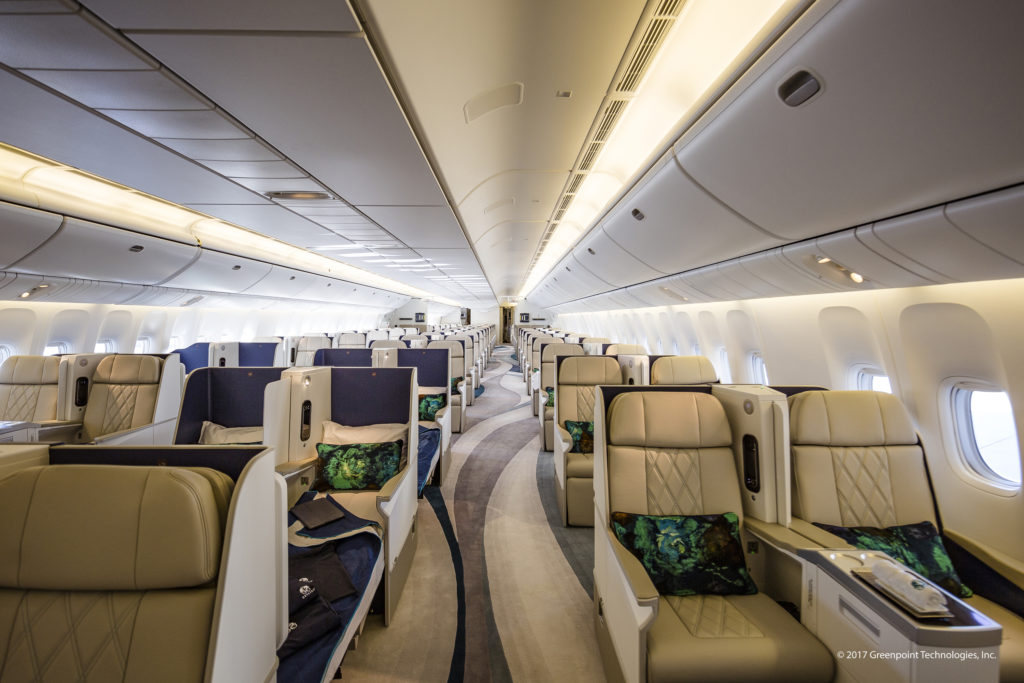
For ultimate luxury, especially for long-haul flights, Crystal AirCruises has launched a brand new private jet – Crystal Skye – which is the world’s largest and most spacious privately owned jet, perfect for large VIP groups. This is a customised Boeing 777 with seats that convert to 180-degree lie-flat beds. They offer high staffing levels, a private social area with stand-up bar and lounge seating, Michelin-inspired cuisine and fine wines, plus state-of-the-art, on-demand entertainment programming. A flight from London to New York costs around £310,000, which, for a maximum group of 80, works out at about £3,900 per head.

There are alternatives to private jet chartering, of course, if you have the wherewithal. You can buy your own jet for your own use. Priced at $7.4m (£5.3m) according to ConnectJet, the Piaggio Avanti EVO is the world’s fastest turboprop and has low operating costs, plus a considerable eco appeal.
Shared ownership distributing the cost among several people, and giving access to a set number of flying hours every year, is a popular option, similar to a timeshare. Costs vary according to the number of people involved.

It is possible to lease a private jet for a specific period. Short-term leases range from three months to three years, while long-term leases are from four years upwards. At the end of the lease, the jet can be purchased or returned to the title owner. Lease agreements generally involve no additional costs for maintenance, upkeep, operating expenses and insurance.
If you’re interested in chartering a private jet, you might want to consider Stratajet. This real-time online booking service links thousands of potential jet charters worldwide, including ’empty leg’ planes. These are flights scheduled to fly without passengers back to their home base or their next destination. The Strata website incorporates an innovative ’empty leg’ solution by diverting aircraft to your destination while en route to their original final destination. A plane may have flown from London to Madrid but gains an additional charter by flying to collect passengers from Ibiza before returning to London. This maximises efficiency and allows private jet passengers to charter flights at a reduced price.
And there’s even a subscription model now on offer in America – a kind of hybrid between charter and commercial. Surf Air is the first of its kind, flying between various destinations on the West Coast of America. It has now launched a European operation. Members pay a monthly subscription rate, which allows access to as many flights on the available fleet of jets as they wish. This is not a private jet hire in the conventional format, as the planes fly on a set timetable.
“Once a client has used charter aviation, it is hard to go back to commercial flights. They like the flexibility and versatility charter flights offer,” comments Gabriella. It becomes a way of life.

- Driven: Rolls-Royce Ghost Series II — Luxury evolved - 6 May 2025
- Driven by vision: The Aston Martin Lagonda Series 2 revisited - 22 April 2025
- Ogio Introduces Limited-Edition Agave Ahora Golf Bag Collection - 25 May 2024