
 How small UK artisans are redefining festive luxury
The festive season brings renewed interest in handcrafted goods as consumers shift away from mass production. Independent makers across Britain are responding with creations that blend tradition and innovation. Their output reflects deeper values around quality and origin. This year, the appetite for artisan products has grown stronger than many forecasters anticipated.
The rise of independent craft studios
Workshops tucked into rural barns and converted urban warehouses now produce some of the most sought-after seasonal goods in the country. Makers who once operated as hobbyists have scaled carefully, preserving the handmade ethos while meeting rising demand.
Their growth mirrors trends seen in other niche sectors where individual choice and transparency influence consumer behaviour. Similar debates also surface in digital leisure spaces, particularly around how platforms balance user autonomy with consumer protection.
In online gambling, for instance, searches for terms commonly phrased as UK casinos not on Gamstop often reflect frustration with restrictions rather than an understanding of why those safeguards exist. Gamstop is a consumer protection measure, and platforms operating outside it are not subject to the same self-exclusion requirements — a contrast that underlines the importance of transparency and accountability across all sectors, including physical retail and craft industries.
Many artisans credit their expansion to word-of-mouth referrals and social platforms that showcase process as much as product. Transparency around materials and methods builds trust. Customers appreciate seeing raw ingredients transform into finished pieces. This visibility contrasts sharply with opaque supply chains that dominate mainstream retail.
Material choices and sustainability practices
Natural fibres, reclaimed metals, and salvaged timber feature prominently in contemporary craft. Artisans source locally wherever feasible, reducing transport emissions and supporting regional suppliers. Some have adopted closed-loop systems where offcuts become raw material for smaller items. Waste minimisation is both an ethical priority and an economic necessity for small-scale producers.
Dye techniques using plant extracts and mineral pigments have returned to favour. These methods yield subtle variations that machine production cannot replicate. Each batch carries unique tonal shifts influenced by water chemistry and temperature. Buyers drawn to such imperfections view them as marks of authenticity rather than flaws.
Packaging receives equal attention. Makers favour biodegradable wrapping, recycled card, and reusable tins. Several studios invite customers to return containers for refills or exchanges. This circular approach resonates with shoppers tired of disposable culture and unnecessary plastic.
Regional specialisations and heritage techniques
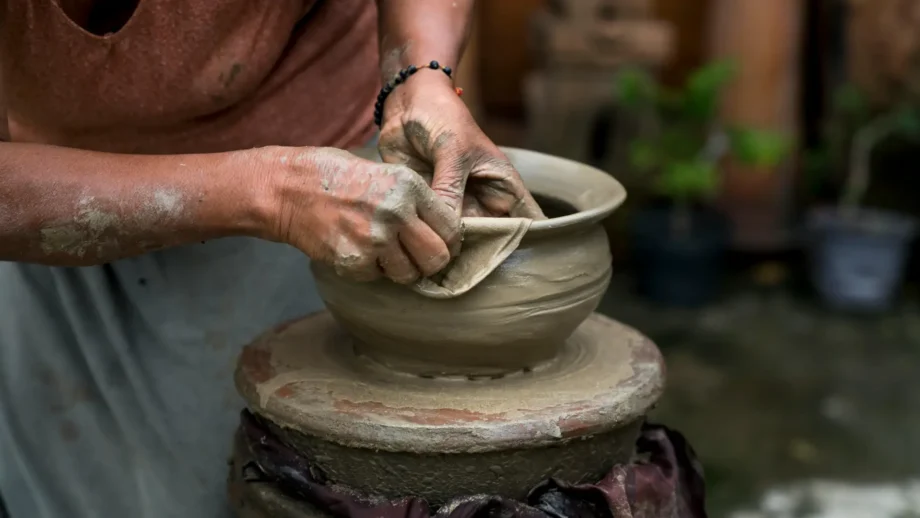
Certain areas have cultivated reputations for specific crafts. The Lake District remains synonymous with slate carving and wool textiles. Cornwall’s pottery studios draw on centuries of clay tradition. Scottish Highlands workshops specialise in leatherwork using locally reared hides. These geographic identities help artisans market their output while honouring historical practices.
Apprenticeships and informal mentorships preserve skills that were nearly lost. Experienced makers welcome newcomers into their studios, passing along knowledge through observation and repetition. This transmission occurs outside formal education structures, maintaining flexibility and personal connection. Many young artisans blend inherited techniques with contemporary design sensibilities, creating hybrid styles that appeal across generations.
Heritage crafts also adapt to modern tastes. Traditional blacksmithing now produces minimalist home accessories alongside functional tools. Lace-making incorporates architectural patterns inspired by urban landscapes. These evolutions keep old skills relevant without sacrificing their foundational character.
Economic models and direct sales channels
Most small artisans bypass wholesale distribution, selling directly through websites, seasonal markets, and studio open days. This model preserves margins and allows immediate customer feedback. Makers adjust designs based on conversations at market stalls, a responsiveness impossible within conventional retail hierarchies.
Crowdfunding platforms help finance equipment upgrades and limited production runs. Supporters receive early access to new collections or behind-the-scenes content. This funding method builds community around a maker’s practice, transforming buyers into invested participants rather than passive consumers.
Subscription boxes curated by artisan collectives have gained traction. Members receive quarterly deliveries of handcrafted items from rotating makers. The format introduces customers to diverse crafts while providing artisans predictable income. It also encourages experimentation, as subscribers expect variety and discovery.
Challenges facing small-scale producers
Scaling remains difficult without compromising quality. Increased orders tempt makers to speed production or outsource components, risking the handmade character that distinguishes their work. Finding the balance between growth and integrity tests every successful artisan.
Material costs fluctuate unpredictably. Global supply disruptions affect even locally sourced inputs, as transport and energy expenses ripple through regional suppliers. Artisans absorb some increases to remain competitive, squeezing already modest margins. Price rises alienate customers accustomed to lower costs.
Time investment per item limits output. A single leather bag may require twelve hours of cutting, stitching, and finishing. Customers sometimes baulk at prices that reflect true labour value, conditioned by mass-market benchmarks. Educating buyers about craft economics becomes part of the maker’s role.
Collaborations between makers and designers
Partnerships between artisans and established designers bring craft to wider audiences. Designers provide commercial insight and brand recognition while makers contribute technical skill and material knowledge. These collaborations often result in limited editions that command premium prices and elevate both parties’ profiles.
Some partnerships extend into residencies where designers spend weeks in artisan studios learning traditional methods. The immersion influences their subsequent collections, introducing craft details into contemporary fashion and homewares. These cross-pollinations blur boundaries between fine craft and commercial design.
Joint exhibitions in galleries and design fairs showcase collaborative work. Curators frame these pieces as cultural commentary on production, value, and labour. The context shifts perception, encouraging viewers to reconsider everyday objects as artistic statements deserving sustained attention.
This article contains references to online gambling and UK gambling regulation, including self-exclusion schemes such as Gamstop. Gambling should be treated as entertainment, not a way to make money, and you should only gamble with money you can afford to lose. Gambling is strictly for adults aged 18 and over. If you are concerned about your gambling, or the gambling of someone close to you, free and confidential support is available from BeGambleAware.org.