
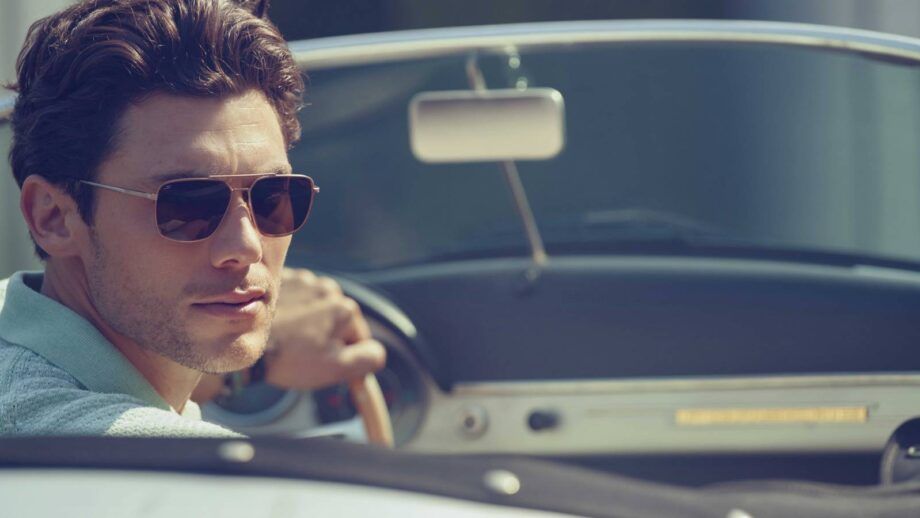
Winter’s gone, Neil Briscoe notes. The grey clouds have temporarily parted, so all of our thoughts turn to getting ourselves a nice pair of sunglasses. Which is fine — you’ll look cooler and see better — but just as a dog is not just for Christmas, so sunglasses are not just for summer.
It’s long been a bugbear of mine. Too often, you spot other drivers out on the road, squinting at what’s ahead of them, being dazzled by the sun, and not just in summer. In fact, I reckon it’s much worse in winter, where not only does the low sun inevitably get in under the car’s sun visors, but it also reflects painfully off wet roads, sometimes to the point where your vision can just be wiped out at a critical moment.
We take in 80% of all the information about the world around us through our eyes, so that means 80% of all driving decisions, decisions that affect your safety and that of those around you, are made on the basis of information that’s come from your eyes. So you’d better make sure you can see properly.
“I know opticians that I deal with really highlight that sort of thing,” said Craig McNeil, UK sales manager for Bollé Sunglasses, when I spoke to him about it. “At this time of the year, generally speaking, we have more moisture on the road because it’s been raining and the sun is quite low, so the glare is significant. You often see people cleaning the inside of their windscreens because the light is hitting smears and marks on the glass. We do make the point to our opticians, and they make the point to their customers, that good sunglasses this time of year are imperative.”

But what do we mean by good? Obviously, McNeil is a businessman, and he’s going to plug his products. Specifically, we were chatting about Serengeti sunglasses, which are often pitched at drivers (and which have in the past counted such motoring celebrities as Alain Prost and Patrick Dempsey as ambassadors). So what makes these shades so special?
“Basically, you have two types of material that a sunglasses lens is going to be made from — mineral glass or polycarbonate,” McNeil explains. “There’s another material, called CR39, which is usually used in prescription glasses, but the best materials for visual performance are mineral glass or CR39.” Polycarbonate, McNeil says, is great for impact resistance and scratch protection, but it’s never going to give you as sharp an image as glass. “So for Serengeti, we incorporate a spectral control layer into the lens, which you can think of as like filtering sound out in a recording studio. We want to highlight certain colours and reduce certain aspects of the colour spectrum — highlight the red, yellow and green, the primary colours, and we want to make sure that we also take out not all blue light, but up to 95% of blue light.”
Why is blue light so bad? Blue light is often blamed for the eye fatigue and tiredness that we experience when spending too much time on phone, computer, and TV screens (although some experts say that the biggest problem is the time spent, not the light), but there’s no question that high-energy blue light, which has the shortest wavelength of visible light, is much harder for our eyes to process. There are also studies that indicate that blue light may be a contributing factor to macular degeneration, which wreaks havoc on our eyes as we age.
You can feel it the second you put one of McNeil’s lenses in front of your eyes. Especially if it’s a bright, glare-y day, you can actually feel the little muscles that pull and twist your retina and pupil relax as the blue light is cut down. Serengeti sunglasses are also photochromic, so they darken slightly as the light intensity increases (although not to the extent that ‘Reactions’ lenses from an optician do).

“What we’re trying to do is to maximise the use of the sunglasses lens to reduce the tiredness of the eyes,” says McNeil. I’ve been testing some of his sunglasses lately and can confirm that they work. Serengeti recommends a brown-tinted lens for drivers, as this seems to have the best combination of glare reduction and blue light filtering. All of the lenses are polarised too, which cuts out that nasty reflected glare on a wet road, but the downside is that they can also reduce the effectiveness of digital screens. You may have noticed that cars are currently full of such screens, but McNeil says that it’s a trade-off. “We do a lens specifically for pilots because they’re not allowed to have polarised lenses specifically because of that instrument visibility. It seems like some car manufacturers have noted this effect with polarised sunglasses.”
For what it’s worth, I’ve now tried polarised sunglasses in several cars with digital screens, and all of the internal screens work fine, but some optional heads-up displays can look very dim through the lenses. It helps to go for a lens with a graduated tint, which is lighter at the bottom of the lens. Serengeti’s brown-tinted lens, which the company recommends for driving, is also a good choice — not only does it make the world outside look warm and welcoming, like you’re driving near the Mediterranean when you’re actually on the Swindon ring road, but there’s also research that indicates that fashionable lenses which are tinted pink, blue, or green should not be worn when driving as they can mask red light from reaching the eye properly with obvious safety implications. You can get lenses in those colours which are safe for driving, but they will be less efficient at reducing brightness and glare.
Of course, the issue for many drivers is that Serengeti sunglasses are effectively the Ferrari of the glare-reducing world. Not only are they made in Italy, but they’re also not cheap, often with starting prices above £150 (although you can get them for a lot less than that if you keep an eye out for sales and offers). Does a pair of cheap Pound Shop sunglasses do basically the same job? Or are we potentially damaging our eyes for the sake of a few Pounds?
“You can just get a basic lens and tint it grey, but all it will really do is reduce the amount of light reaching the eye,” says McNeil. “The lens material will absorb the damaging UV light, as long as the manufacturer has passed its CE Kitemark tests. That said, I’ve seen tests done on sunglasses that have passed those tests, and they haven’t actually absorbed the UVA or UVB light that they’re supposed to. You can just wear any old sunglasses for driving on bright days because, basically, they will all do the job of reducing the amount of light reaching the eyes. But you could argue that they’re not very good in changing light conditions. But optimising the driving capability of sunglasses is what we’ve always tried to do at Serengeti. I mean, they’re great sunglasses outside the car too, of course, but the driving aspect of them has always been at the forefront of our technology.”
