
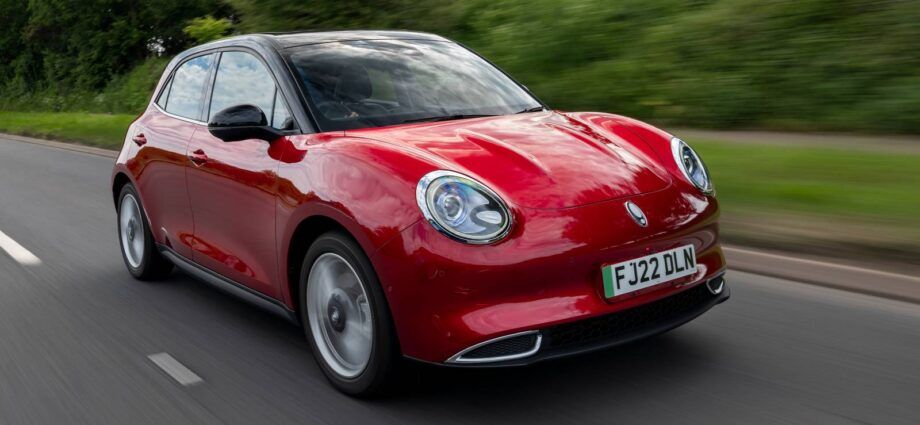
You’re looking at the next electric Mini. Well, you’re not, but the Ora Funky Cat is built as part of a joint venture between BMW and Great Wall Motor (last seen in the UK with the Steed pickup truck ), so the basic platform of this all-electric car will underpin the next-generation Mini Electric.
It won’t share the styling, which some might see as a shame; the Funky Cat looks great, with a retro design that manages to tread the fine line between pastiche and present-day.

It’s bigger than you think, too. Check the pictures, and it looks city-car compact, but the reality is that it’s just 5cm shorter than a Volkswagen Golf hatchback and precisely the same length as a Volkswagen T-Cross SUV.
Under that hides an electric motor and a surprisingly small battery pack. The motor gives out 171hp, which means it’ll sprint from standstill to 62mph in 8.3 seconds — more than enough for day-to-day motoring — while the 45.4kWh battery pack will keep you moving for 193 miles, at least according to official testing figures. We did even better than that, calculating our range at 209 miles thanks to the 4.6 miles per kWh we were getting. When the battery is getting low, it’ll top up on a rapid charger in 45 minutes, while a Funky Car connected to a home charger will happily be fully replenished overnight.
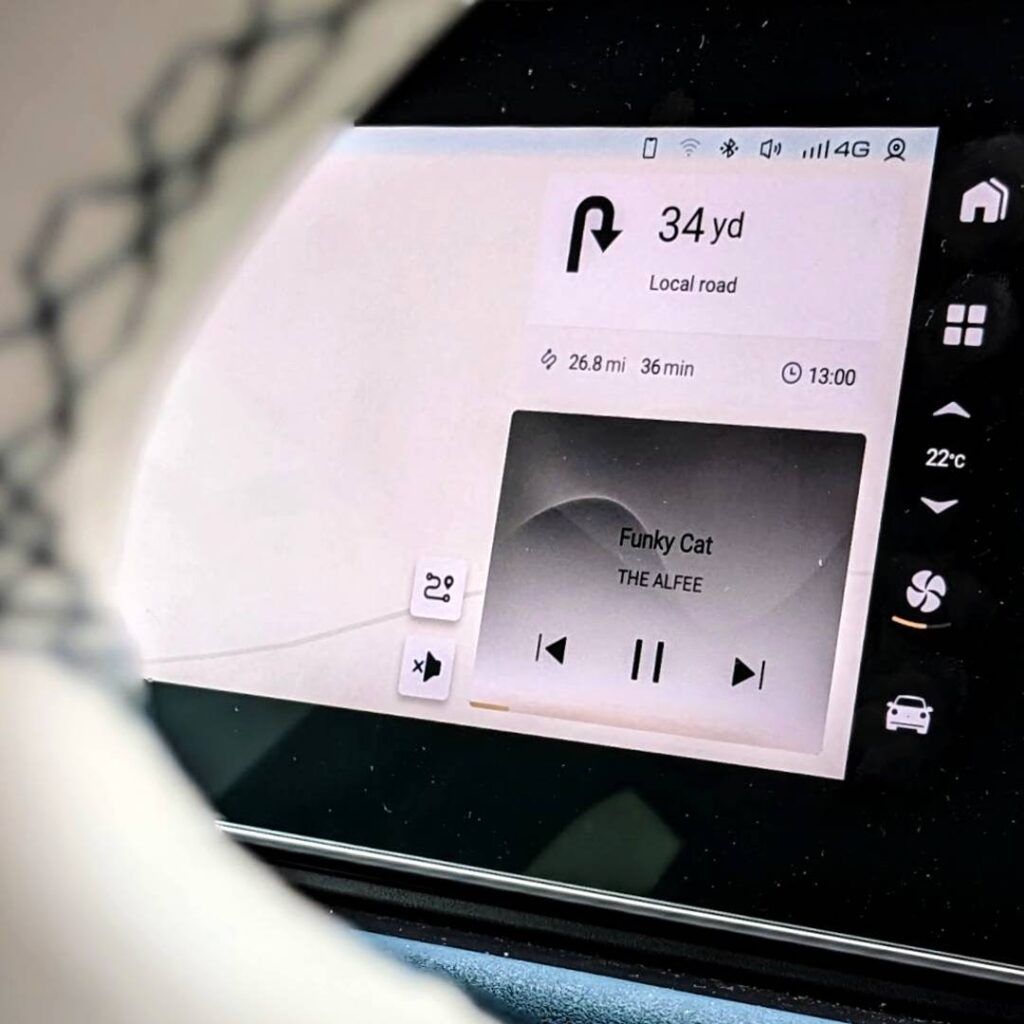
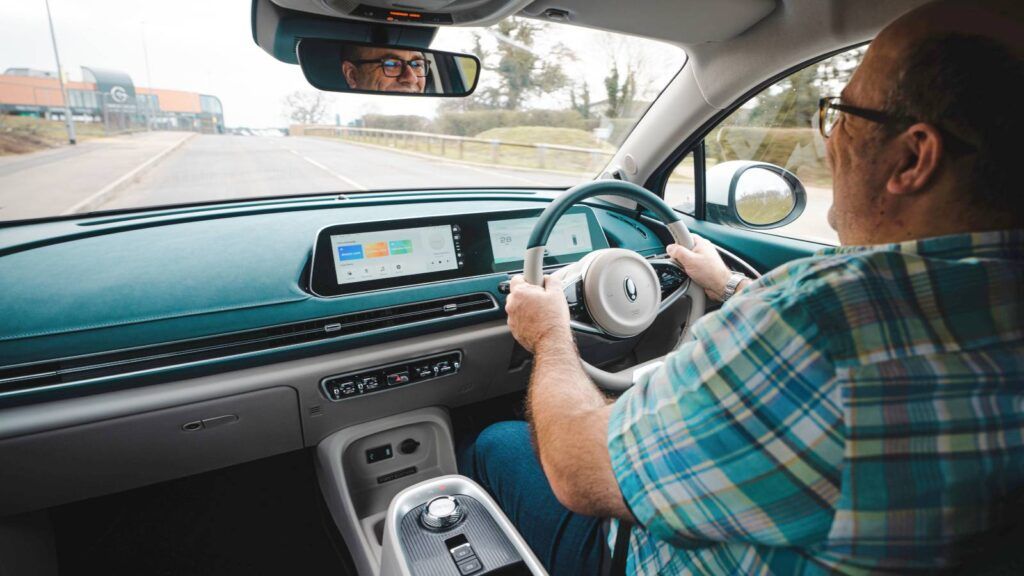
You might expect a brand-new electric car from China to be loaded with tech, and you’d be right. You get the de rigueur huge infotainment screen (10.25 inches in the Funky Cat) with voice control, 360-degree cameras, wireless phone charging, and over-the-air software updates. What you don’t get is Android Auto or Apple CarPlay, although there’s a promise that they’ll be coming soon. Until then, navigation is via Ora’s own system, which, to be fair, seems fine.
It’s not that easy to use, though. Even switching between screens seems unnecessarily complicated, especially as you can get mixed up with internet radio (is that really a thing now?) and DAB radio. Still, buy the car, and it’s something you’ll get used to, and the ‘Hi Ora’ voice control seems to work well, so it’s not that big a deal.

Ora has gone big on safety technology, with sensors, cameras and alerts for seemingly, everything. The results are a mixed bag, with some systems performing faultlessly and others leaving plenty to be desired; the car, for example, felt that I was staring blankly at something unrelated to driving for most of the time, warning me to keep focus on the road. It also felt the need to tell me to hold the steering wheel, something I was doing as I’d have found it rather tricky to steer my way through Norfolk otherwise. There’s fatigue detection, which presumably works as it didn’t feel I was fatigued enough to give me a warning, and a plethora of other alerts, some of which make more sense than others. ‘Smart Dodge Activated’ said the screen at one point, and ‘Lateral Support Expired’ at another, both for no apparent reason.
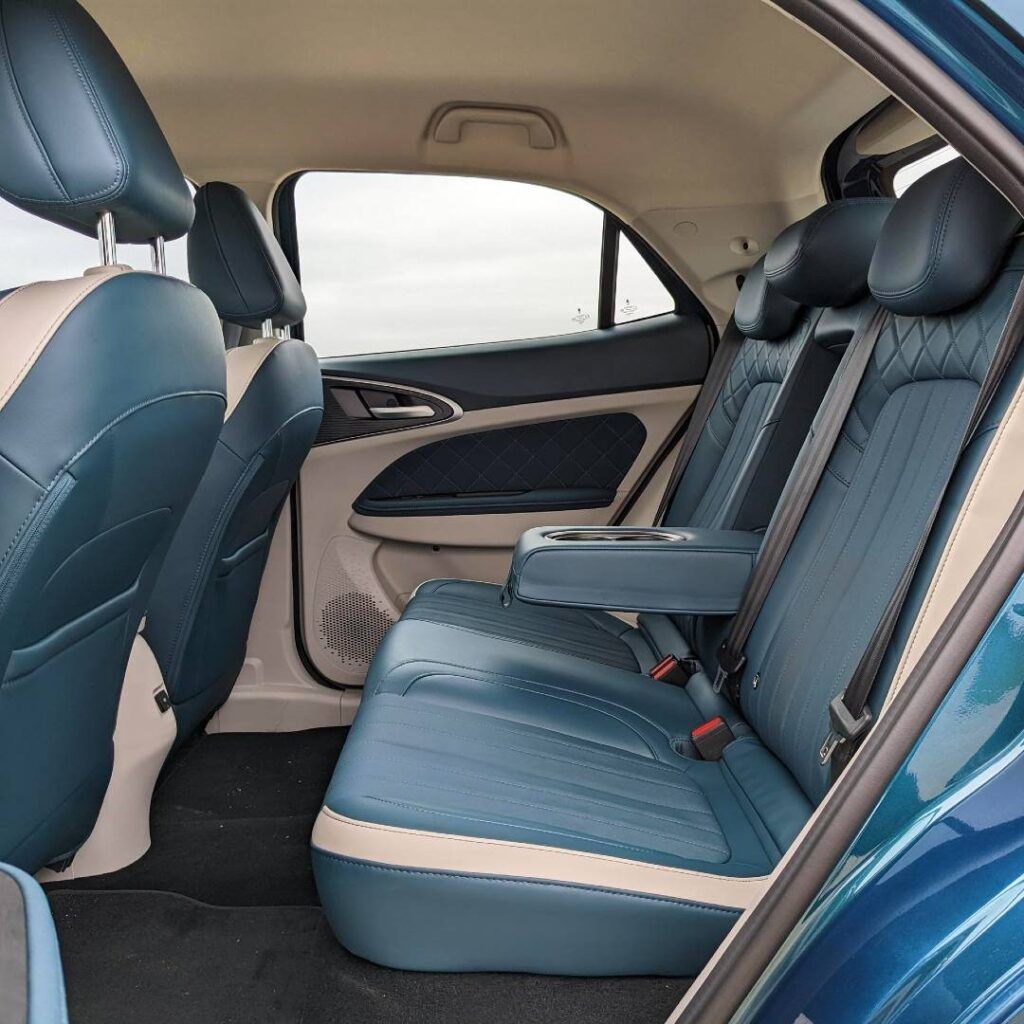
At first glance, there’s much to like about the cabin. It’s finished with quilted leather, has some retro-inspired switchgear mixed with cutting-edge digital touches, a two-tone leather-wrapped steering wheel (complete with an exclamation point in the centre), a handy raised centre console with a ridged top panel, all wrapped up in a simple and elegant design. In design terms, it all works well but is let down by some substandard materials like shiny, scratchy plastics and switches that feel a touch too cheap. The ‘First Edition’ badge glued to the centre stack is a lowlight, looking like it’s come straight from a Halfords sale. Still, it’s spacious, comfortable and quirky without being weird.

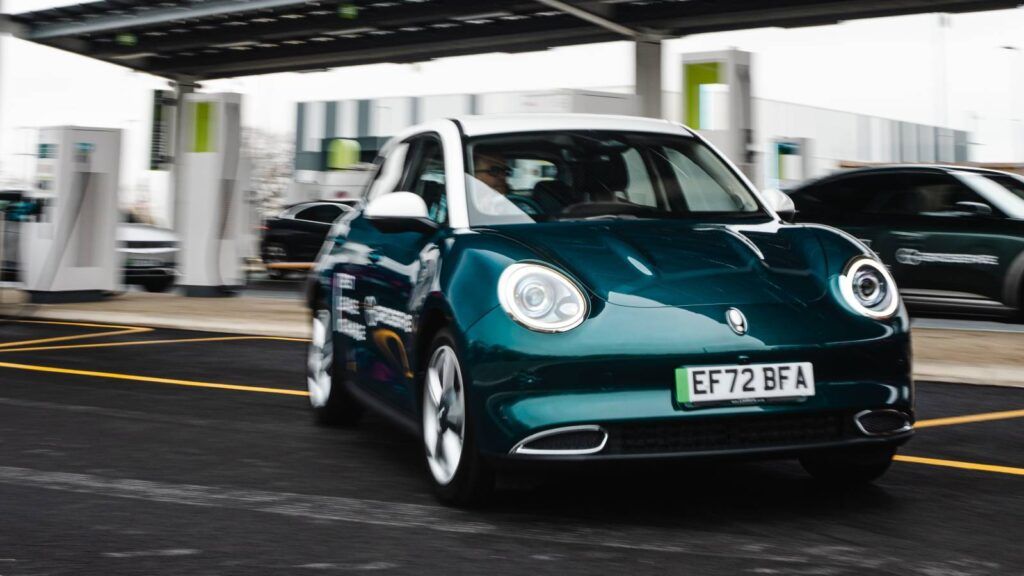
Driving the Funky Cat in town is a pleasure, as we found out after borrowing the car for a day from Gridserve — the EV charge point company also leases electric vehicles, with test drives available from its Electric Forecourts in Braintree and Norwich. Being small and relatively lightweight — at least in terms of electric cars — it zips away from the lights, while the super-light steering makes it a piece of cake to manoeuvre around tight urban areas.
It’s less convincing on the open road, but it’s no worse than any number of me-too hatchbacks from the big-selling manufacturers. It’s rapid enough and stops well enough, but there’s little body control, so it wobbles around from corner to corner, yet it’s surprisingly firm, so you get a constant jiggle even on flat, straight roads. It is a little noisy, too, thanks to the tyre roar that filters through to the cabin, but the sound system will soon mask that.
There’s much to like about Great Wall Motor’s first foray into passenger cars for Europe, with a strong design, sensible cabin and a well-judged balance between heavy and expensive battery packs and ultimate range capability. Yes, we always want to be able to go further, but will you really do more than 200 miles in one go frequently enough for it to be a problem? If you do, look elsewhere.
For the rest of us, the fact that the Funky Cat undercuts its rivals on price is a big plus, as is the fact that Mini is confident enough to use the basics of the car for its next model. It might be an unknown brand to many in the UK, but it’s backed by a vast Chinese behemoth and partnering with BMW for the new Mini is reassuring.

The tech on offer is appealing, but it falls short in some areas. The lack of sensible smartphone connectivity is a huge oversight, and some of the safety tech is intrusive rather than helpful. It’s fine to drive around town but doesn’t impress on the open road.
It’s distinctive and will stand out in a sea of similar models — we’re looking at you, Volkswagen — but the bottom line is that its rivals are better. However, at £31,995, you can save £5,000 or more over other perceived premium choices, and it all but matches lower-spec volume rivals for price, making the GWM Ora Funky Cat worth a second look.

- Andersen brings English Heritage design to the domestic EV charger - 20 July 2026
- Glen Moray Heritage whisky range: Why age is only part of the story - 19 July 2026
- Volvo ES90 Plus review: Silence is golden - 7 May 2026